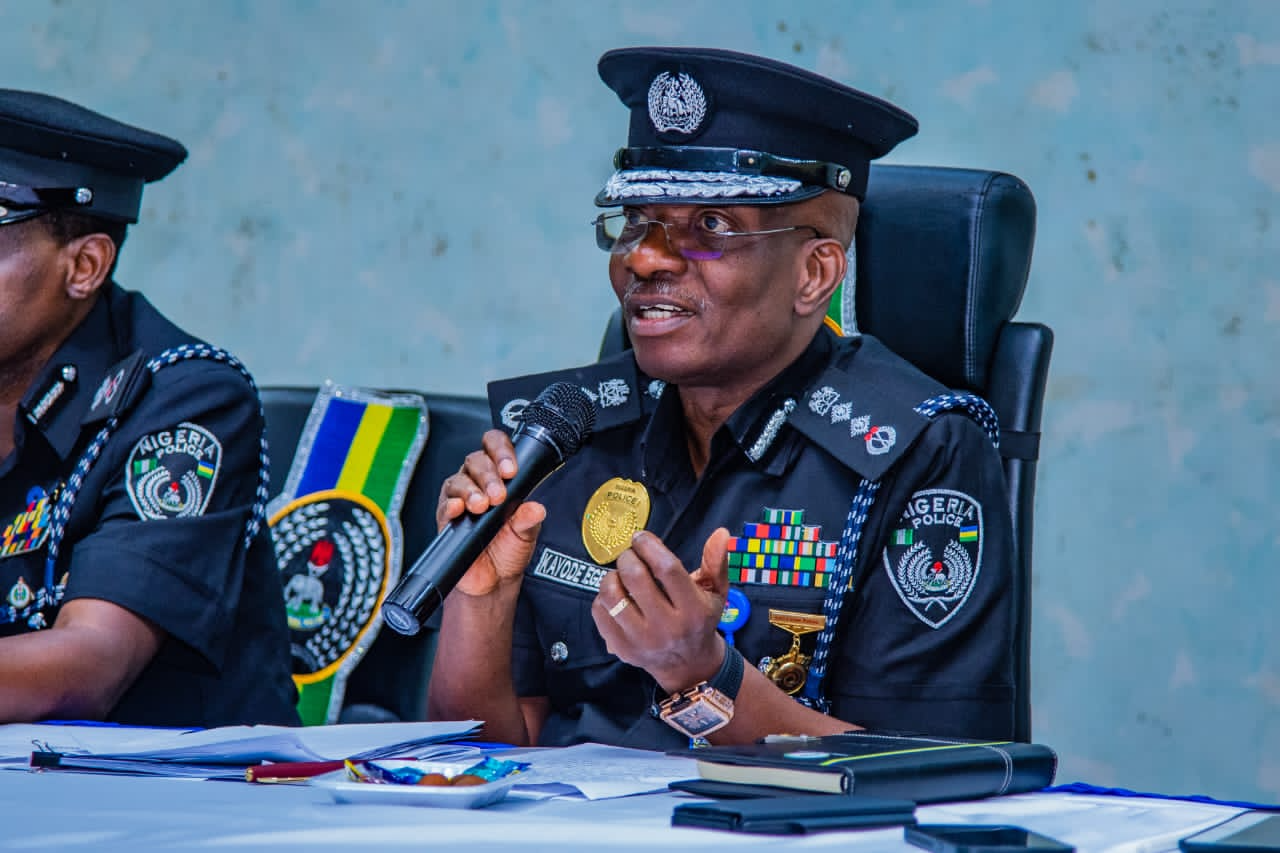
Media reports claim that about 29 senior police officers will be eased out of the force following the retirement of Kayode Egbetokun as the Police helmsman. Among them are about eight Deputy Inspectors General (DIGs) of Police.
This follows a pattern in the disciplined forces. When a comparatively junior officer is elevated to a rank above his senior colleagues, it is expected that those seniors will get the hint and move on so as not to take orders from the new boss, who may be their junior in the service.
This practice also obtains in all the arms of the security services. The army is the worst hit in this regard. As a newspaper, we have no quarrel with how the security services choose to arrange their musical chairs.
The worry, in our opinion, is the role politics plays in such situations, which often fail to adequately consider the negative impact such decisions might have on the entire security architecture, which is already plagued by the activities of non-state actors.
The disturbing scenario is compounded by the fact that most of these officers, highly trained at enormous cost to the country and exposed to the nitty-gritty of their calling, are often forced to quit when they still have years to offer in the service of the fatherland.
The recent changes in the armed forces, in which President Bola Ahmed Tinubu chose service chiefs from Course 41, paint a vivid picture of waste in times of crisis.
Following that decision, using the army as an example, what was left of course 39, which served under the exiting Chief of Army Staff, was cleared out, as was the whole of course 40. And we are talking of very senior officers, experienced and combat-ready, numbering in excess of 100. Asked to go in one fell swoop.
When replicated in the Navy and Air Force, it will become obvious that the nation is fighting terrorism, insurgency and other forms of criminality with its hands tied behind its back. Now, the Police are joining the chorus.
In the recent retirement of Egbetokun and the appointment of an Assistant Inspector General, in the person of Tunji Disu, the question on the lips of most discerning Nigerians is, how come none of the DIGs was considered a fit and proper officer to inherit the command position of the retiring Inspector General?
So as not to be misunderstood, the President, any President on the saddle, as commander-in-chief, is constitutionally empowered to select those he trusts will meet his expectations. But as stated earlier, much of this power is exercised under undue political influence and considerations laced with undercurrents of ethnic and other geopolitical tendencies.
We are compelled to point out that 2026 is an election year. The Independent National Electoral Commission (INEC) has already released the dates for the general election.
Though the electoral umpire has not yet blown the whistle for the commencement of politicking, only political neophytes will wait for that to happen before they begin to lace their boots for the upcoming race.
Nigerians are aware of the role security agencies play in determining the outcome of elections in the country. They also conjecture that all these shoves and pushes in the process of picking service chiefs are geared towards ensuring that loyal and malleable persons who can take orders without question, people who will see no reason not to mortgage their consciences, are strategically positioned for the all-important event.
In the course of this line of thinking, the common interest of ordinary Nigerians comes a distant second. And that, in our view, is the challenge
Curiously, in our opinion, fighting terrorism and crime has been inordinately politicised. No one wants to step on the toes of voting blocs. President Goodluck Jonathan, in his naivety, underplayed it, and his opponents checkmated him with the American Leahy law. He could not even take measures appropriate to the situation on the ground, and it cost him the office.
The administration in place presently is not taking any such chances, and that is why they are playing the ostrich in the face of massive decimation of Nigerians who have become pawns on the chessboard of political expediency.
We are very concerned that this line of action, which seemingly focuses solely on winning the election, might backfire, as the international community is beginning to read other meanings into what is happening in the country.
Presumably, religious persecution is gaining traction in their interpretation of what is going on in the country. Right or wrong, they are buoyed by their moral convictions. And these are people praying fervently for the dismemberment of the country.
It is compelling to posit that Nigeria is inadvertently playing into the hands of those who do not wish her well by ill-advisedly playing up political benefits in the choice of who occupies which position in the hierarchy of the security apparatus.
By embarking on this project of retiring competent and experienced professionals in the armed services at a time the nation is, unarguably, at war, is, in our opinion, indefensible.
We’ve got the edge. Get real-time reports, breaking scoops, and exclusive angles delivered straight to your phone. Don’t settle for stale news. Join LEADERSHIP NEWS on WhatsApp for 24/7 updates →
Join Our WhatsApp Channel