A fresh controversy has emerged in the nation’s political landscape as opposition parties rejected President Bola Tinubu’s denial of involvement in the wave of defections from their parties to the ruling All Progressives Congress (APC).
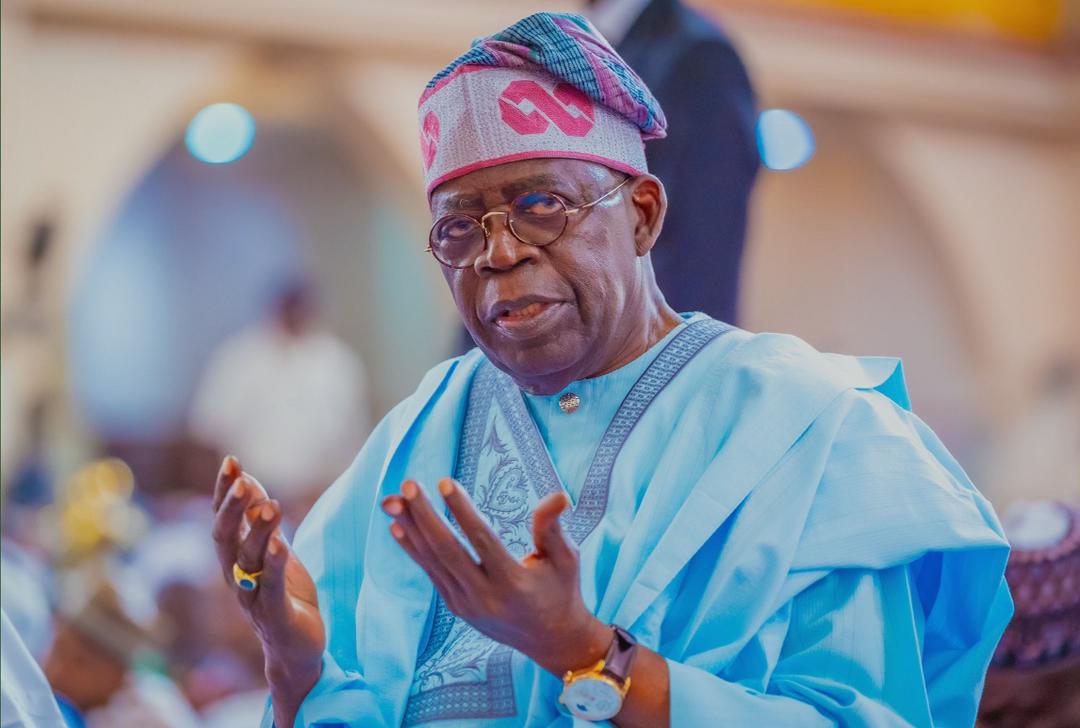
The President, while hosting senators during an interfaith Iftar at the Presidential Villa, dismissed claims that his administration was behind the collapse of structures within rival political parties.
He insisted that those abandoning their platforms were acting on their own, saying he had never pressured anyone to join the APC.
According to Tinubu, the defections were a result of the internal struggles of the parties involved.
He likened the movements to people escaping a “sinking ship”, adding that the country’s challenges, especially terrorism and banditry, had created pressures contributing to political instability.
The President urged political leaders to uphold unity and work together to strengthen constitutional democracy, which, he said, was designed to encourage cooperation rather than hostility.
His comments, however, drew swift and strong reactions from the Peoples Democratic Party (PDP) and the New Nigeria Peoples Party (NNPP), both of which accused him of distancing himself from actions linked to his allies.
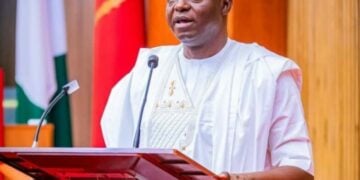
The PDP, through its National Publicity Secretary, Ini Ememobong, said the President’s remarks did not match the political realities facing the party. He alleged that key figures in Tinubu’s administration, particularly the Minister of the Federal Capital Territory, widely believed to be Nyesom Wike, had been central to the internal challenges affecting the PDP.
Ememobong said the minister’s involvement in the PDP’s crisis was not innocent, adding that it reflected the actions of a political agent carrying out the wishes of a principal.
According to him, developments within the PDP showed clear signs of external interference engineered to weaken the opposition ahead of future elections.
He explained that under the principle of political agency, an agent acts in line with the interests of the principal they represent, and that the pattern of actions seen in the PDP crisis was consistent with this principle.
Ememobong also accused the President of exhibiting what he described as “naked power”, claiming that Tinubu had demonstrated the ability to influence political events without regard for due process.
He alleged that some governors who defected to the APC did so out of fear of political and economic repercussions.
“The President’s denial should be taken with a pinch of salt,” he said, insisting that the pattern of defections and the pressure behind them contradicted Tinubu’s claims of neutrality.
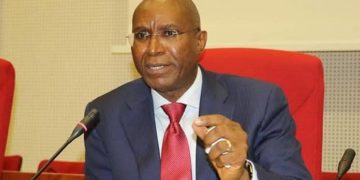
The NNPP shared a similar view, questioning the sincerity behind the President’s denial. Its National Publicity Secretary, Ladipo Johnson, in a statement made available to our correspondent in Abuja, said Nigerians could see that the defections into the APC did not appear to be driven by good governance or improved performance, as the supposed gains claimed by defectors were not being felt by citizens.
Johnson argued that there appeared to be another force influencing the political movements.
He also pointed to the PDP’s internal turmoil, especially the role of the FCT Minister and his allies, as evidence of political destabilisation linked to individuals aligned with the ruling party.
He said: “There is something pulling these people into the ruling party. It is not the work of good governance because Nigerians are not feeling that good governance.
“So, if the President says he knows nothing about what is going on in these parties, Nigerians will find that difficult to believe.”
Johnson added that the crises in the opposition were too consistent to be dismissed as coincidence, stressing that key actors connected to the Presidency had contributed to the weakening of opposition structures.
The African Democratic Congress (ADC) also said the responsibility for what it described as the decimation of political opposition lies squarely with the President.
Despite his denial, the party, in a statement by its national publicity secretary, Bolaji Abdullahi, said the President’s description of opposition political parties as a “sinking ship” betrayed his mindset.
“The president can continue to play the Pontius Pilate, but the evidence is there for everyone to see. Everything that he and his agents have done is to foist a civilian dictatorship on Nigeria so he can return unopposed in 2027.”
We’ve got the edge. Get real-time reports, breaking scoops, and exclusive angles delivered straight to your phone. Don’t settle for stale news. Join LEADERSHIP NEWS on WhatsApp for 24/7 updates →
Join Our WhatsApp Channel