
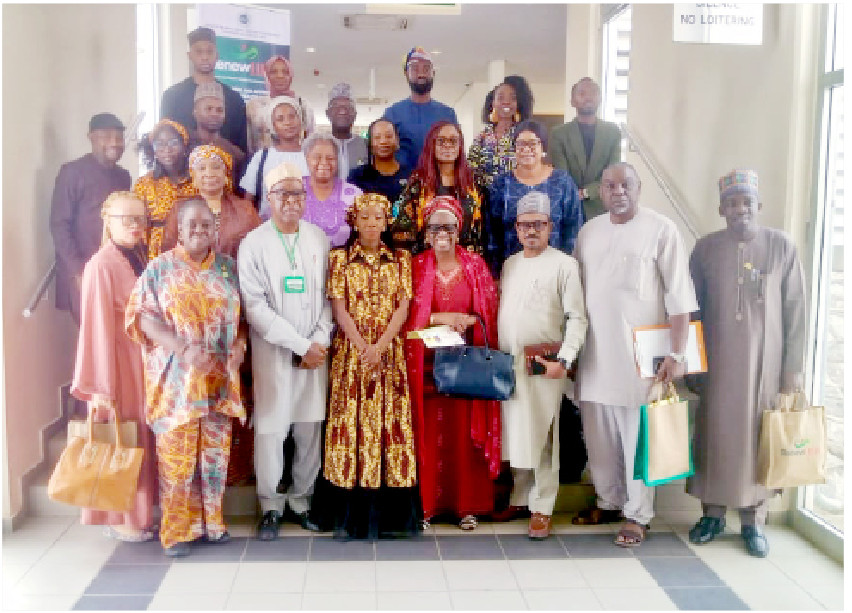
The federal government has reaffirmed its commitment to advancing women’s health in the country, following a strategic engagement with leading civil society organisations and advocacy networks.
Speaking at the meeting in Abuja, the senior special assistant to the President on Women’s Health, Dr Adanna Steinacker, said the dialogue marked the culmination of two weeks of consultations aimed at understanding women’s health challenges “from every lens, not just the government’s perspective.”
Steinacker noted that recurring themes across the engagements include maternal health, sexual and reproductive health and rights, access to family planning, menstrual hygiene, and mental health. She described maternal mortality as an ongoing national burden, citing firsthand accounts shared by women’s groups from different communities.
“Maternal mortality remains a priority. Sexual and reproductive health rights, access to commodities, health education in local languages, and mental health are all emerging as critical concerns,” she said.
She added that her office is exploring technology-driven solutions, including digital dashboards that will allow women-led organisations to provide real-time updates on pressing issues in their communities.
Dr. Steinacker commended President Bola Ahmed Tinubu for creating the Office of Women’s Health, the first in Nigeria’s history. “What this means is that women’s health is now a national priority,” she stressed.
The Association of Lady Pharmacists of Nigeria (ALPs), represented by Pharm. Zainab Shariff, raised concerns about the scarcity of essential medicines and the growing crisis of drug abuse among women and children.
She called for investment in local production of essential medicines and intensified advocacy to curb drug abuse across the country.
“Drug abuse is an emergency. Our children are dying, and women are battling mental health challenges. We need stronger advocacy and collaboration, especially with state First Ladies,” she said.
Similarly, Senior Family Planning Specialist at the Association for Reproductive and Family Health (ARFH), Esther Ishaya, warned that Nigeria may face up to 70 per cent stock-out of family planning commodities this year due to over-centralisation at the local government level.
She called on the presidency to support states with stronger advocacy to ensure family planning projects are included and sustainably funded in state budgets.
The meeting ended with a commitment to continued collaboration as stakeholders work toward developing a unified national agenda for women’s health, with vulnerable and underserved populations at the center of intervention plans.
We’ve got the edge. Get real-time reports, breaking scoops, and exclusive angles delivered straight to your phone. Don’t settle for stale news. Join LEADERSHIP NEWS on WhatsApp for 24/7 updates →
Join Our WhatsApp Channel