Ownership influence and advertisements have overwhelmed the greater public interest with essential news values relegated to the background as the highest bidders usurp the agenda – setting role of the media.
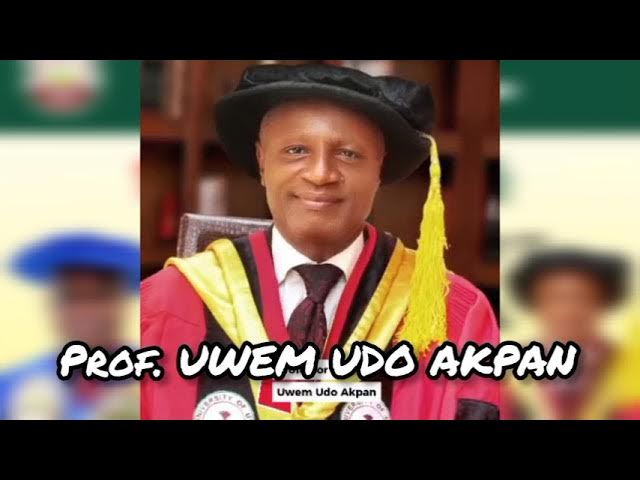
This was the position of professor of Broadcast and Media Studies at the University of Uyo (UNIUYO), Prof. Uwem Udo Akpan, while presenting the 129th in the series of inaugural lectures of the institution held at the 1,000 – capacity TETfund auditorium of the institution’s main campus, Nwaniba, Uyo, at the weekend.
He raised concerns over the declining independence of media practice, especially in broadcasting in Nigeria, warning that the industry has been under siege in what he described as “the gulag of government control and the jaws of commercialism.”
While examining the challenges confronting public service broadcasting in Nigeria, he called for urgent reforms to restore credibility and public trust in the media.
In the lecture entitled; “Between the Gulag of Government Control and the Jaws of Commercialism: Whither Public Service Broadcasting in Nigeria?”, the media scholar argued that Nigeria’s broadcast sector has gradually drifted away from its original mandate of serving the public interest.
According to him, although broadcasting in Nigeria was initially designed as a public service system, successive political developments and commercial pressures have turned many broadcast stations into instruments of political propaganda and profit-driven enterprises.
Akpan explained that government ownership of the majority of broadcast stations has resulted in excessive influence over editorial policies, thereby limiting the independence of media organisations.
“Government controls more than 80 percent of broadcast channels in Nigeria, and the multiplication of stations does not necessarily translate to diversity of voices,” he said, noting that such control often leads to the dominance of a single official narrative that is mistaken for public opinion.
He also criticized the increasing commercialization of broadcasting, describing it as a situation where profit considerations overshadow professional ethics and public responsibility.
The professor noted that under commercial pressure, advertisers and sponsors increasingly dictate media content, with news selection sometimes influenced by financial capacity rather than public relevance.
“News in the media is dictated more by the content and size of the pocket than by newsworthiness,” he warned, adding that such trends undermine the integrity of journalism and weaken the role of the media as society’s watchdog.
Akpan further highlighted the phenomenon of media capture, where external political or economic interests influence editorial decisions, leading to what he described as the blurring of boundaries between the media and the political establishment.
According to him, when media institutions align excessively with government or powerful economic actors, their traditional role as the Fourth Estate becomes compromised.
The professor also pointed out that “the commodification of news has resulted in superficial coverage of elite social events while issues affecting ordinary citizens receive limited attention.”
To address the challenges, Akpan proposed the establishment of a truly independent public service broadcasting model in Nigeria, similar to that of the British Broadcasting Corporation.
He suggested that such a broadcaster should operate under an independent charter rather than direct government legislation and be funded through public licence fees to ensure operational autonomy.
According to him, the proposed model would guarantee impartial news coverage, promote diverse viewpoints and strengthen democratic engagement.
“If broadcasting is to contribute effectively to genuine democracy, public interest must coexist with government and commercial interests,” he said.
Akpan added that establishing an independent public service broadcaster would help liberate Nigeria’s broadcast system from political manipulation and excessive commercial influence, while ensuring that the media truly serves the people.
The acting vice chancellor, Prof. Samuel Adewumi, who presided over the session, described the lecture, which formed part of the academic tradition of the school, as insightful and thought- provoking, and commended Prof. Akpan, for arriving safely at the zenith of his academic career, having fulfilled the essential requirement of a full- fledged professor.
We’ve got the edge. Get real-time reports, breaking scoops, and exclusive angles delivered straight to your phone. Don’t settle for stale news. Join LEADERSHIP NEWS on WhatsApp for 24/7 updates →
Join Our WhatsApp Channel