When Boko Haram and its activities first came to national attention, few would have imagined that nearly two decades later Nigeria would still be grappling with the insurgency and its offshoots—banditry and widespread incidents of commercial kidnapping.
Within this period, terrorists in their various forms have left a trail of destruction: loss of lives and livelihoods, the maiming of countless victims, mass displacement of individuals and communities, and endless tales of anguish among those fortunate enough to escape with their lives.
From initially contending only with Boko Haram, Nigerians have had to endure the murderous onslaught of several other violent extremist groups, including the Islamic State West Africa Province (ISWAP), Ansaru, Lakurawa, Mahmuda, Wulowulo ( Boko Haram splinter group), and JNIM (Jama’at Nusrat al-Islam wal-Muslimin), an al-Qaeda-linked group, Fulani ethnic militias, bandits operating as private armies and commercial kidnapping syndicates. What began as an ideological insurgency has gradually evolved into a complex network that now includes purely transactional criminal enterprises.
Hundreds of thousands have been killed or injured, while millions have been displaced. The areas affected have expanded far beyond Borno State in the North-East to virtually every part of the country, although the northern region has borne the greater brunt of the violence.
Disturbingly, despite enormous military spending—with security receiving the largest share of budgetary allocations—and repeated assurances by successive administrations, the insurgency has not only persisted but appears to be becoming increasingly intractable.
That is why the recent claim by Kaduna-based cleric Sheikh Ahmad Gumi—that the Nigerian government knows every terrorist by name and by location—has reignited debate and forced Nigerians to confront an uncomfortable question: is the failure to defeat terrorism a matter of capacity, or a troubling absence of political will?
Sheikh Gumi made the assertion during a recent interview, claiming that he had at various times visited bandit camps accompanied by government officials and security operatives during negotiation efforts.
The gravity of this claim cannot be overstated. Since the allegation was made, no senior government official has publicly refuted it. If the state truly possesses such detailed information about terrorist identities and hideouts, why has it not acted decisively to root them out and halt the violence across the country?
The allegation has also amplified long-standing suspicions that Nigeria’s security crisis may be sustained by vested interests and possible infiltration within the security architecture—factors that may have created inertia where decisive action is required.
As a newspaper, we believe that if government authorities possess credible intelligence on terrorists but fail to act, the issue ceases to be one of capacity and begins to suggest complicity. Such a situation represents a breakdown of the social contract between the state and its citizens, for the primary responsibility of any government is the security and welfare of its people.
Even more troubling are allegations that credible intelligence warnings are sometimes ignored. In recent years, communities have repeatedly reported suspicious movements of armed groups before attacks occurred, only for security responses to arrive too late to prevent tragedy. Across Kaduna, Zamfara, Plateau and Benue states, residents have reported impending attacks or the build-up of bandits in nearby forests, yet reinforcements often arrived after villages had already been razed.
Incidents such as the school attack in Kebbi State—where security personnel guarding the schoolgirls were reportedly withdrawn shortly before a mass abduction—and the attack on Woro, where intelligence reportedly supplied by the community was allegedly leaked to bandits, had already raised questions about government sincerity even before Gumi’s claims reinforced public suspicion.
When citizens begin to suspect that their government may be complicit—directly or indirectly—in violence consuming their communities, it inevitably erodes public trust. Such perceptions can encourage self-help, the proliferation of armed vigilante groups and the gradual weakening of state authority.
Terrorism and banditry have also been sustained by networks of collaborators, informants and financiers who largely remain beyond the reach of law enforcement. In the United Arab Emirates, authorities once convicted six Nigerians for terrorism financing and reportedly provided the Nigerian government with a list of other suspects. Yet there is little evidence that those named have faced prosecution.
More recently, Nigeria’s National Security Adviser, Nuhu Ribadu, acknowledged that some non-state actors in Kwara State had been armed with AK-47 rifles. In another instance, he was seen on television referring to terrorists as “our brothers.”
The question is obvious: if those responsible for designing the country’s security response to terrorism hold such views, how can Nigeria effectively overcome the problem?
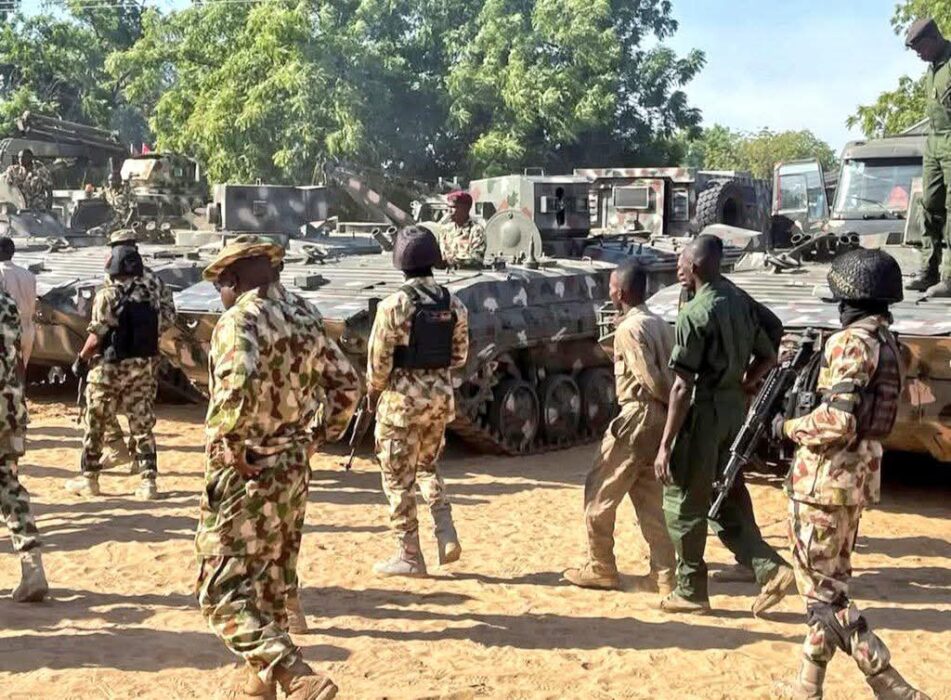
The human cost of this prolonged conflict is staggering. Tens of thousands of Nigerians have been killed, millions displaced and entire rural economies destroyed. Soldiers deployed to the frontlines continue to pay the ultimate price under extremely difficult conditions, while communities across the North-East, North-West and Middle Belt live under the constant threat of abduction, extortion and violence.
Many Nigerians find it difficult to believe that the country’s armed forces lack the capacity to defeat terrorists, especially considering their past success in restoring peace in Liberia and Sierra Leone under the Economic Community of West African States Monitoring Group (ECOMOG).
After such achievements abroad, Nigeria should not remain trapped in an endless internal war if the necessary political will exists.
Political will means acting decisively on credible intelligence. It means prosecuting sponsors of terrorism regardless of their political influence, rooting out infiltrators within the security establishment, and ensuring transparency in the management of defence budgets and security votes so that resources meant to protect citizens are not diverted.
The administration of President Bola Ahmed Tinubu must demonstrate this political will and invest far more energy in ending this scourge than in the politics of the next election cycle.
The allegations by Sheikh Gumi must not be dismissed lightly. Instead, they should trigger a thorough investigation and a renewed commitment to accountability within Nigeria’s security system.
We’ve got the edge. Get real-time reports, breaking scoops, and exclusive angles delivered straight to your phone. Don’t settle for stale news. Join LEADERSHIP NEWS on WhatsApp for 24/7 updates →
Join Our WhatsApp Channel