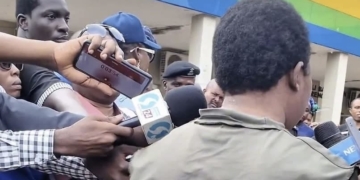
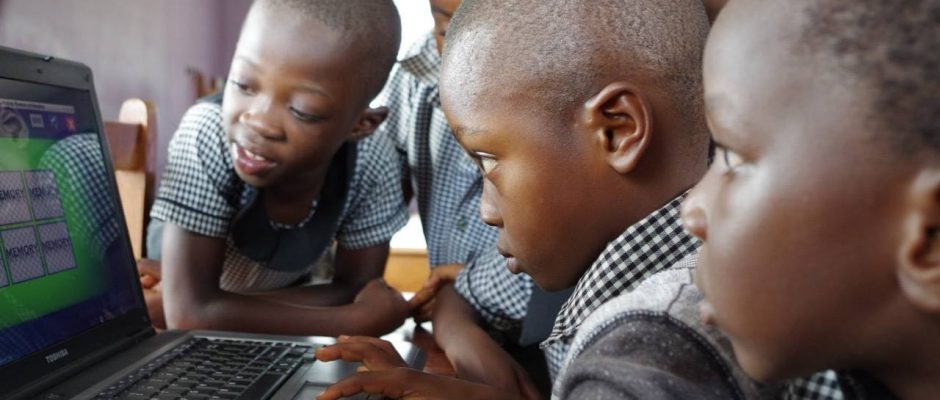
The Federal Ministry of Information and National Orientation, in collaboration with the United Nations Children’s Fund (UNICEF), has trained 80 journalists from the North East and North Central zones on ethical reporting of child rights to improve on media contents.
At a two-day training for media practitioners on ethical journalism and child rights reporting held at Emerald Royal Hills Hotel in Gombe on Monday, the permanent secretary of the Federal Ministry of Information and National Orientation, Mr Ogbodo Chinasa Nnam, said journalists play a critical role in shaping public understanding, influencing attitudes, and protecting the most vulnerable group in the society .
Represented by the assistant director and head of the Child Rights Information Bureau (CRIB), Mr. Falayi Temitoye, the Permanent Secretary noted that the media possesses immense power to inform, inspire, and hold institutions accountable.
“With that power comes a profound responsibility to report with integrity, sensitivity, and respect for human dignity. When stories involve children, that responsibility becomes even greater,” he said.
According to him, every image, word, and frame published by the media can have lasting consequences on a child’s life, safety, and future.
He explained that the training was designed to help journalists reflect on their ethical obligations, explore best practices for reporting on children’s issues, and strengthen their understanding of child rights as enshrined in national laws and international conventions.
He added that the training aims to build a media culture that protects children’s identities, responsibly amplifies their voices, and upholds the highest ethical standards.
Also speaking, UNICEF Communication Specialist, Sussan Akila, urged journalists in Nigeria to maintain the highest ethical standards when reporting child-related issues.
She noted that journalism plays a vital role in social and behavioral change.
“Editorial reporting is not simply about repeating what people say; it involves carefully examining information and presenting it in a way that helps the public understand what is truly happening,” she said.
She stressed that ethical journalism begins with the footage captured in the field, especially when covering survivors of crises or conflicts, and extends to the photographs selected for publication and the headlines written.
UNICEF also emphasised that responsible storytelling is crucial to protecting the dignity, safety, and development of Nigerian children.
“When journalists report responsibly, they protect children, build trust, and help communities heal,” she added.
Dr. Geoffrey Njoku, one of the resource persons, highlighted several challenges affecting children in Nigeria, including early marriage, human trafficking, rape, and female genital mutilation (FGM).
Dr. Geoffrey Njoku, traced the evolution of child rights from the 1948 Universal Declaration of Human Rights to the 1989 United Nations Convention on the Rights of the Child, which Nigeria ratified in 1991.
Dr. Jide Johnson discussed the social and cultural factors contributing to the challenges, he emphasised that journalists must act as watchdogs to ensure accountability and the effective implementation of child protection laws.
The training aims to deepen journalists’ understanding of the legal and ethical frameworks guiding the reporting of children in Nigeria, including the Child Rights Act and relevant international conventions.
It also seeks to equip participants with the skills to identify and mitigate risks associated with reporting on children, ensuring their safety, privacy, and dignity are protected.
Other objectives include promoting best practices in interviewing children, handling sensitive information, protecting sources, and responsibly reporting critical child rights issues such as abuse, exploitation, education, health, and the impact of conflict.
Participants were also encouraged to use compelling storytelling techniques to advocate for children’s rights without sensationalism or harm, while recognizing the unique challenges faced by children in different regions of the country.
Participants were drawn from broadcast and Newspapers including LEADERSHIP, digital media from participating states of Adamawa, Bauchi, Borno, Gombe, Yobe, Taraba and Plateau among others.
We’ve got the edge. Get real-time reports, breaking scoops, and exclusive angles delivered straight to your phone. Don’t settle for stale news. Join LEADERSHIP NEWS on WhatsApp for 24/7 updates →
Join Our WhatsApp Channel