Security stakeholders have warned that ethnic profiling and stigmatisation are major triggers of conflict in the North West and North Central regions of the country.
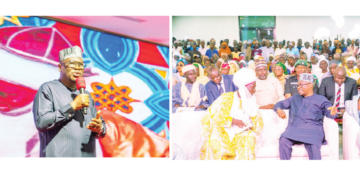
They stated this after a High-Level Virtual Dialogue with the theme “Contextualising Definitions and Terminologies to Address Stereotyping and Ethnic Profiling in Discourses and Security Operations in West Africa.”
A statement co-signed by the Managing Director of Beacon Security and Intelligence Limited (BSIL), Dr Kabir Adamu and the Founder of Whiteink Institute for Strategy Education and Research (WISER), Brig General Saleh Bala (Rtd), said the dialogue, which took place on 10 March 2026, aimed at refining the linguistic framework used in regional security operations.
They said the theme addressed how imprecise, ethnicity-based labels reinforce harmful stereotypes and undermine national stability.
“The initiative specifically focused on the North West and North Central regions of Nigeria, where profiling and stigmatisation and misused terminologies continue to trigger and ignite conflicts,” they said.
Speaking at the event, the Team Leader for the UK FCDO’s Strengthening Peace and Resilience in Nigeria (SPRING), Dr Ukoha Ukiwo, stated that, from inception, studies have clearly identified the proliferation of hate speech and divisive narratives as key drivers of violence in Nigeria.
He underscored the critical importance of “conflict sensitivity, noting that insensitive language can cause peacebuilding efforts to “boomerang” and subsequently generate further conflict.
The Executive Director of the Neem Foundation, Dr Fatima Akilu, who represented Civil Society Organizations (CSOs), stated that labels are rarely neutral and often flatten complex identities, leading to further marginalisation.
The Chairman of the Advisory Committee on Governance and Development to the Borno Governor’s Office, Amb Sarki Usman, representing Multi-Agency Organisations, argued that ethnic profiling is strategically inefficient and creates a stigma that hampers intelligence gathering and national security.
Prof. Okey Okechukwu, Professor of Strategic Management and Human Capital at Nnamdi Azikiwe University, representing academia, stressed the necessity of inclusive, grassroots peacebuilding that moves beyond theoretical “seminar bubbles.”
A Senior Research Fellow and Consultant at the Nigerian Army Resource Centre and a key member of the CDS Advisory Team, Maj. Gen. E.G. Ode (Rtd), who represented the military and security sector, called for a strategic overhaul that integrates cultural awareness and accountability into frontline operations.
Also speaking, Brig. Gen. Sani Kukasheka Usman (Rtd), a Consultant Director at the Nigerian Army Resource Centre and CEO of Mahangi Communication Services, representing the media, urged practitioners to prioritise criminal behaviour over ethnic identity to avoid “dog-whistle” tactics.
According to the statement, Mr George Lyua’a, a community leader from an affected area in the North Central, emphasised that security terminology must remain behavioural rather than identity-based to protect innocent civilians and restore public trust.
According to the statement, the conference conclusions will support the resourcing of a physical conference on the same topic, to be held in Abuja on April 01 and 02, 2026, during which a draft toolkit designed to deflect labelling and stereotyping and a policy brief will be produced.
“These final documents will serve as guidance manuals for policy language in defence, law enforcement, and judicial institutions, as well as a sensitisation guide for the media and educational sectors,” they stated.
We’ve got the edge. Get real-time reports, breaking scoops, and exclusive angles delivered straight to your phone. Don’t settle for stale news. Join LEADERSHIP NEWS on WhatsApp for 24/7 updates →
Join Our WhatsApp Channel