
Last week, LEADERSHIP Lifestyle reviewed ‘I’m Late’ (2025), one of the four short animations made accessible to the global audience by Miyu Productions, in commemoration of International Women’s Day and the month.
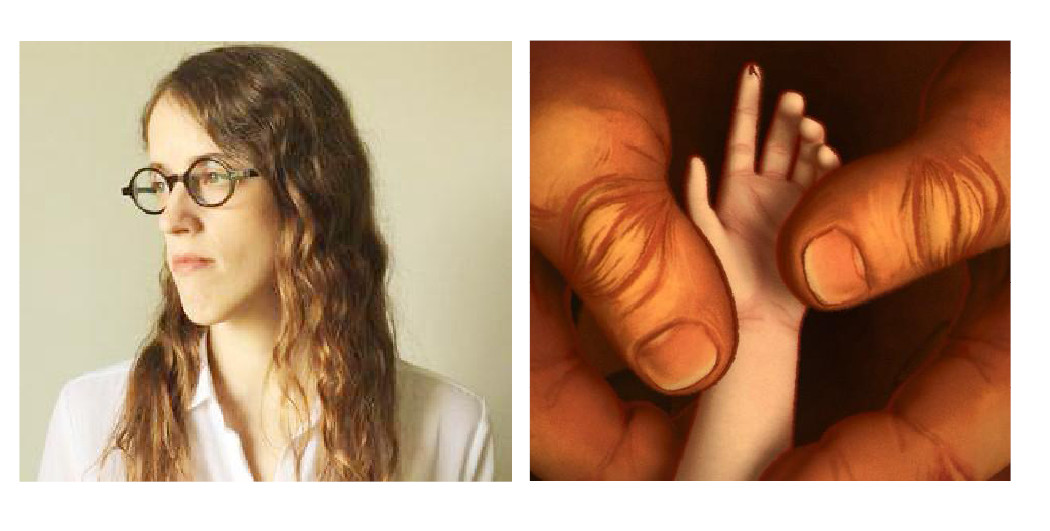
This week, it focuses on Stéphanie Clément’s ‘Pachydeme’, a film that unearths what lies beneath the deafening silence of children, particularly the girl-child, in families that make them end up becoming damaged adults.
The monster is fast becoming widespread in today’s societies, where little girls, even babies entrusted in the care of their supposed loved ones, father, uncle, aunts, or relatives, are sexually abused, and threatened or shamed into silence by their abusers. More often than not, the abuse that stretches over a long period of time, or at intervals, happens right beneath the nose of their family members.
‘Pachyderme’ is the story of six-year-old Louise, whose parents drop her off to vacation with her grandparents in the countryside in France.
At night, however, the idyllic landscape and the neatly ordered house of her grandparents turn into a monster’s lair, as she is sexually abused by the hunched, grunting old grandfather both in her room and in transit, on the pretext of fishing.
On the day of her departure home, Louise wakes up to find her grandfather dead, and his proudly displayed elephant tusk broken in half.
‘Pachyderme’ deals with the themes of incest, sexual abuse, mental health, betrayal, and silence, deafening silence – the kind that one feels even when surrounded by noise or voices.
It also raises similar questions as one would hear people ask in similar real-life scenarios, “How often has the abuse been happening?”
It was never clearly stated, but Louise’s demeanour upon arriving at her grandparents’ home seemed one of dread.
“Where was the grandmother when all this was happening?
The viewer never saw the grandmother or any signs of her presence in the house until the day they got back from fishing, when she greeted them at the door.
Also, “Who killed the grandfather?”
The night of the fishing trip, the old man did return to his granddaughter’s room, and Louise, as usual, withdrew into herself; hence, she didn’t hear the clashing noises that followed after that.
Until she woke up the next morning to the news of her grandfather’s death, and the broken elephant tusk on the floor.
Clément further highlights the fact that the death of an abuser does not necessarily ensure justice for the abused or their healing.
She implies this in a short scene in which Louise, as an adult, travels back to her grandparents’ home and sees a reflection of herself in a river, still, as the scared, half-naked girl, curled into herself as if to disappear from the rest of the world.
To say that ‘Pachyderme’ is sad is an understatement. But what it does show us is that we can never be too careful about the people we entrust our children to.
While we may not be with them 24/7, we must build a culture of trust with them that enables them to open up to us whenever they encounter people or situations that make them uneasy.
It reminds us to constantly check in with our children, to have these serious talks about safety with them, unfortunately, today, at an earlier age than before. More importantly, we must be observant of our children and notice the people or things they feel uneasy around, or simply don’t like.
Written and directed by Stéphanie Clément, ‘Pachyderme’ was nominated at the 2024 Oscars for Best Animated Short Film. It is produced by Thomas Giusiano, Matthieu Rey, and Mark Rius, with TNZPV Productions and Folimage, France.
We’ve got the edge. Get real-time reports, breaking scoops, and exclusive angles delivered straight to your phone. Don’t settle for stale news. Join LEADERSHIP NEWS on WhatsApp for 24/7 updates →
Join Our WhatsApp Channel