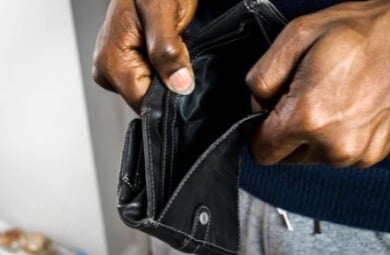
Nearly three in five Nigerians earn below N100,000 monthly or have no income at all, according to the Piggyvest Savings Report 2025, highlighting mounting financial pressure on households amid rising living costs.
The report revealed that close to 60 per cent of Nigerians fall within the lowest income bracket or remain without any steady earnings, underscoring a widening gap between economic reforms and everyday realities.
Despite signs of macroeconomic stabilisation, only six per cent of Nigerians expressed confidence in their financial situation. Piggyvest noted that while indicators may appear positive on paper, many citizens continue to struggle with the impact of inflation and declining purchasing power.
“On paper, the economy is stabilising… On the ground, however, the strain hasn’t let up,” the report stated, adding that Nigerians are adapting with resilience but within increasingly tight financial margins.
The findings also showed that nominal income growth has not translated into improved living standards, as inflation—peaking above 33 per cent in 2024—continues to erode earnings.
Odun Eweniyi, co-founder and Chief Operating Officer of Piggyvest, said rising incomes do not reflect real financial improvement. She explained that while people may be earning more, the value of the naira has declined significantly, leaving many worse off in real terms.
The report highlighted stark inequalities across age and gender. Younger Nigerians, particularly Gen Z, are more likely to earn below N100,000 or have no income, while higher earnings are concentrated among older demographics. Women were also found to be disproportionately represented in lower income brackets.
According to financial analyst Dsione Oseni-Elamah, persistent wage inequality, especially affecting women, could have broader economic consequences by limiting productivity and leading to underutilisation of skills.
The report further showed that about two-thirds of Nigerians rely on a single source of income, increasing vulnerability to economic shocks. Food and groceries account for the largest share of household spending, followed by transportation, housing and utilities.
Additionally, more than half of income earners support extended family members, a responsibility often referred to as “black tax,” further stretching already limited resources.
Savings culture appears to be weakening, with about half of Nigerians not saving at all, while only four in 10 have emergency funds. Among those who save, the primary goal is to build a financial buffer against uncertainties.
Eweniyi noted that many Nigerians who intend to save are forced to redirect funds toward essential expenses. “These aren’t discretionary expenses you can cut,” she said.
On debt, the report found that about one in five Nigerians is currently indebted, with most borrowing driven by necessity rather than consumption. Many rely on informal sources such as friends and family due to limited access to formal credit systems.
Piggyvest’s treasury and investments lead, Damilola Arogundade, said low and irregular incomes have shaped financial behaviour, forcing many into short-term decision-making focused on immediate needs.
Despite these challenges, the report acknowledged the resilience of Nigerians, who continue to cope through budgeting, side hustles and informal support systems. However, it warned that financial satisfaction remains low, with many unsure if their income can meet basic needs each month.
The report concluded that improving financial resilience will require not just economic reforms, but systems that promote stability, savings and confidence in the future.
We’ve got the edge. Get real-time reports, breaking scoops, and exclusive angles delivered straight to your phone. Don’t settle for stale news. Join LEADERSHIP NEWS on WhatsApp for 24/7 updates →
Join Our WhatsApp Channel