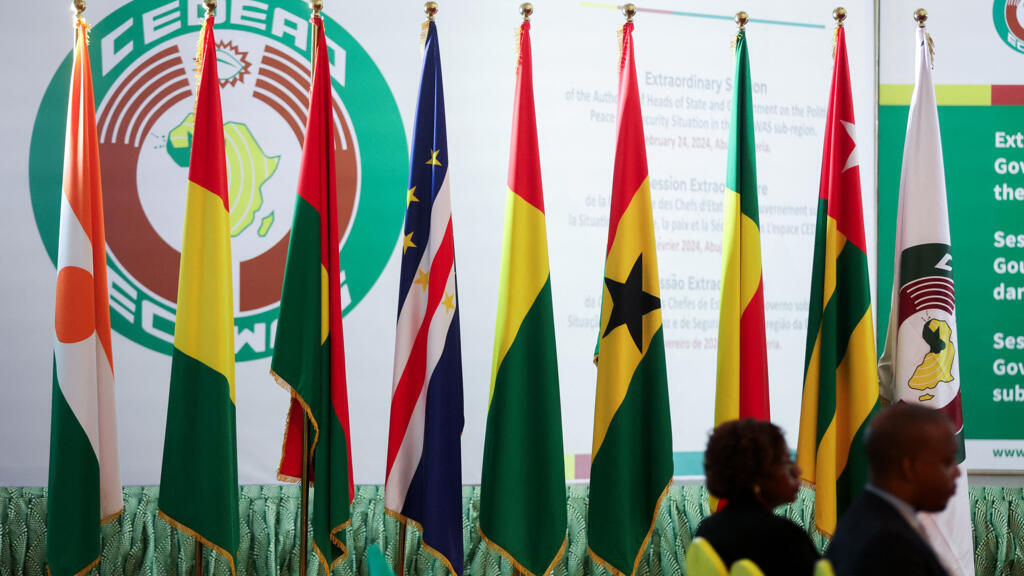
The Economic Community of West African States (ECOWAS) and the Energy China International (CEEC), are striking a deal to promote critical energy development infrastructure that would enable electricity supply chain capability across key states in the region.
Both parties held critical talks on Monday in Abuja to discuss potential cooperation on electricity infrastructure development across West Africa.
Representatives from the West African Power Pool (WAPP) also attended the meeting, which reviewed several project portfolios, the Chinese company’s technical capabilities and financing options aimed at speeding up implementation of regional energy infrastructure.
Projects discussed include major electricity interconnection initiatives involving Côte d’Ivoire, Ghana, Nigeria and Senegal. These are part of the regional energy master plan (2019 to 2033), which outlines 75 priority projects with an estimated total cost of $36.39 billion.
The talks also focused on financing opportunities for these projects, as ECOWAS seeks to attract additional investors to help close the region’s infrastructure gap. The initiatives aim to share generation capacity and improve electricity supply stability across member states.
West Africa continues to face a significant energy deficit. Installed capacity stood at 26 GW in 2020, according to IRENA, far below the needs of a population estimated at 401.9 million, much of it concentrated in Nigeria.
Wide disparities persist between countries. In 2023, the average electricity access rate across ECOWAS member states reached 61.6 per cent, but dropped to 32.1 per cent, in the Alliance of Sahel States, namely Burkina Faso, Mali and Niger.
Despite recent progress, electricity supply remains unreliable. Transmission and distribution networks are underdeveloped, while generation capacity lags behind demand driven by urbanisation and population growth.
Recurring blackouts, high production costs and reliance on fossil fuels continue to weigh on regional economies. Against that backdrop, WAPP-led interconnection projects are seen as structural solutions to optimize resource use and strengthen regional integration.
The engagement with Energy China International reflects broader cooperation between ECOWAS and China. Over the past two decades, Beijing has emerged as a key partner in West African infrastructure development.
Trade between China and Africa reached $348 billion in 2025, up 17.7 per cent from 2024. The increase was largely driven by Chinese exports, which totaled more than $225 billion, compared with $123 billion in African imports from China.
According to the China-Africa Economic Bulletin 2024 by the Global Development Policy Center, Chinese creditors extended about $170.08 billion in loans to African states between 2000 and 2022, mainly through the Export-Import Bank of China and the China Development Bank, making China the continent’s largest bilateral creditor.
Over the same period, Chinese companies announced $112.34 billion in greenfield investments and completed $24.60 billion in mergers and acquisitions across Africa.
The report also shows that around 34 per cent of Chinese loans to Africa, or about $52.4 billion, went to the energy sector, with fossil fuels accounting for 51 per cent of that total, while renewable energy received just 2 per cent.
Several West African countries have become key partners for China, which continues to expand its investment footprint in the region as it deepens its presence in infrastructure.
We’ve got the edge. Get real-time reports, breaking scoops, and exclusive angles delivered straight to your phone. Don’t settle for stale news. Join LEADERSHIP NEWS on WhatsApp for 24/7 updates →
Join Our WhatsApp Channel