The African Petroleum Producers Organization (APPO) is pushing for stronger national oil companies across the continent and improved negotiations with international oil companies (IOCs) to ensure host countries derive greater benefits from their oil and gas resources.
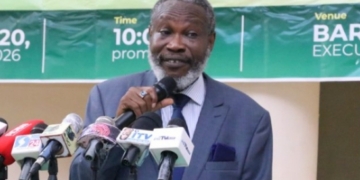
The Secretary-General of APPO, Farid Ghezali, disclosed this during Africa Energy Week in Cape Town, South Africa, where oil-producing countries showcased exploration opportunities to attract foreign investment.
Ghezali told Platts that the organisation was advocating stronger partnerships as African producers opened promising oil and gas basins to international investors.
“We are also going to present a new strategy on how to think about new partnerships with IOCs,” he said.
On the growing use of reconnaissance agreements, Ghezali called for stronger commitments from foreign investors, noting that previous pledges to drill exploration wells had not always been fulfilled.
“We need more commitment,” he said.
The call comes as African countries intensify efforts to attract investment into their oil and gas sectors amid shifting projections about peak oil and geopolitical conflicts, including the wars in Ukraine and Iran, that have renewed interest in exploration opportunities across the continent.
At the annual conference, countries ranging from Senegal and Algeria to Namibia and Uganda pitched their upstream opportunities to potential investors.
A growing feature of the investment drive is the use of reconnaissance agreements and memorandums of understanding (MOUs), which allow international oil companies to examine geological data from offshore exploration licences before committing to major investments.
Some of the world’s largest oil companies have increasingly used these arrangements to secure access to promising acreage across Africa, prompting debate over whether the deals will lead to actual investment, drilling, production and government revenue or simply allow companies to expand their exploration portfolios without significant financial commitments.
The past year has witnessed a series of reconnaissance agreements and MOUs between African countries and major oil companies, leading some industry observers to describe the development as an exploration renaissance.
International oil companies had previously shown limited enthusiasm for African exploration amid environmental opposition to major projects, including TotalEnergies’ East African Crude Oil Pipeline (EACOP), and growing emphasis on the global energy transition.
Recent agreements include an MOU between ExxonMobil and Gabon to examine offshore exploration opportunities and a reconnaissance agreement between Shell and Sierra Leone.
Italy’s Eni has also signed agreements with Sierra Leone, Guinea-Conakry and Equatorial Guinea, while TotalEnergies and Chevron have entered into arrangements with Liberia and Equatorial Guinea, respectively. Petrobras, BP and other companies have also secured exploration acreage across the continent.
Unlike conventional production-sharing contracts, which typically establish the framework for exploration and production, reconnaissance agreements generally do not impose immediate drilling commitments.
For Equatorial Guinea, however, the arrangements offer a way to attract investors by allowing them to assess geological prospects before making substantial financial commitments.
The Central African country has witnessed a sharp decline in crude oil production, from a peak of about 380,000 barrels per day in 2005 to approximately 50,000 barrels per day, amid underinvestment, maturing fields and limited exploration.
Speaking to journalists on the sidelines of Africa Energy Week, the country’s Minister of Hydrocarbons, Antonio Oburu Ondo, said the quality of geological information was critical to investment decisions.
“It is an instrument that actually focuses the companies on seeing how is the geology,” he said of reconnaissance licences.
“To me this is a great instrument because it achieves exactly what the company wants to achieve.”
Ondo said the arrangements also allowed companies to assess offshore acreage without immediately incurring local content obligations, which he argued could improve the prospects of eventual drilling.
“A commitment to drill, it has to be based on the information,” he said, adding that removing obligations that could discourage investors would make it easier for companies to proceed with exploration.
Sierra Leone’s top oil official, Foday Mansaray, also defended the approach, arguing that imposing drilling commitments too early could discourage investment.
“There’s no use in putting a drill option in the contracts if it’s going to negatively impact investors and us,” Mansaray told Platts in an interview earlier this year.
“Nobody wants a dry hole,” he added.
Similarly, Jim Swartz, chairman and managing director of Chevron’s Nigeria and Mid-Africa operations, said reconnaissance agreements enabled companies to evaluate geological data before entering into more substantial arrangements.
He described them as “a way for companies to say we’re going to spend some time and look at the data before we make bigger agreements.”
An oil company source with operations in Africa said the agreements could lead to actual investment and drilling but could also enable companies to secure acreage ahead of their competitors.
The source added that the deals allowed African governments to signal growing interest in their upstream sectors and attract further investor attention.
For oil and gas-producing countries, the agreements could prove decisive in determining whether renewed international interest translates into long-term economic benefits.
The trend has gained momentum amid disruptions to global energy markets linked to the Iran war, which has sent oil prices soaring and increased the importance of geographically diversified production portfolios.
With oil and gas flows from the Middle East curtailed through the Strait of Hormuz, international oil companies are searching for alternative sources of supply to meet projected global demand.
African officials see the development as an opportunity to attract capital, expand production and increase export revenues.
Chevron’s President of Offshore, Brent Gros, said the company’s global presence had helped it manage geopolitical risks, noting that less than five per cent of its production came from the Middle East.
“What it highlights for us is the positive aspects of having a diverse portfolio. And Chevron operates all across the world. We’ve only got less than 5% of our production in the Middle East,” he told reporters in Cape Town.
He added that Africa was well positioned to benefit from increased demand for alternative energy supplies because of its substantial resources and improving fiscal and investment environment.
Gros said Chevron had expanded its exploration acreage in Africa by about 70 per cent over the past two years.
However, he warned that African countries faced stiff competition from investment destinations in the Americas, the Middle East, Asia and the Mediterranean.
He stressed that resource availability and geographical advantages alone would not guarantee investment, as companies would prioritise projects offering commercially attractive returns and stable fiscal arrangements.
“Competitive fiscal terms are not just important at the onset of investment,” Gros said. “These should be durable and offer long-term win-win propositions for both the host nation and the operator.”
For African oil producers, the challenge will be to convert the growing interest reflected in reconnaissance agreements into firm exploration commitments, new discoveries, higher production and sustainable government revenues. While the agreements provide a relatively low-cost entry point for investors to evaluate geological prospects, their long-term value will depend on whether companies progress from preliminary assessments to drilling and commercial development.
We’ve got the edge. Get real-time reports, breaking scoops, and exclusive angles delivered straight to your phone. Don’t settle for stale news. Join LEADERSHIP NEWS on WhatsApp for 24/7 updates →
Join Our WhatsApp Channel