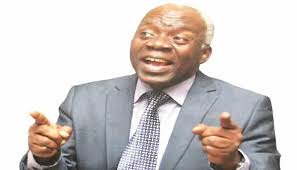
Human rights lawyer, Femi Falana (SAN), has criticised Nigeria’s political system, saying the cost of contesting for the presidency has made it an exclusive space for billionaires.
Falana, who spoke during a recent public discussion on electoral reforms that started trending on Thursday, said the financial demands placed on aspirants effectively shut out the majority of Nigerians from seeking the country’s highest office.
Falana argued that the law itself creates an uneven playing field by making political participation too expensive for ordinary citizens.
He said, “If you look at that law, it’s saying if you want to contest for the Presidency of Nigeria, you must have 10 billion naira or I think 5 billion naira. That already excludes professors, workers, lawyers and the majority of Nigerians who are not billionaires.”
According to him, discussions around electoral reform should go beyond the electronic transmission of election results and focus on the deeper structural barriers within the political process.
He said, “All the young people are talking about, many people, is about electronic transmission of results from the polling unit to the central server of INEC. It’s gone beyond that.”
He maintained that the financial realities of contesting elections in Nigeria favour only the wealthy, while excluding professionals, workers, young people and other qualified citizens.
Falana also alleged that many laws in the country are designed to protect elite interests rather than serve the broader public.
According to him, “The law is not neutral. It’s made by people in the National Assembly, who though are representing us, but who at the end of the day are representing the bourgeoisie.”
He added that this is why legal activism must focus not only on defending just laws, but also on challenging what he described as bad and obnoxious laws through the courts and sustained public campaigns.
Falana said his commitment to justice did not begin with his legal profession, insisting that his activism has always been rooted in social consciousness and the pursuit of fairness.
He said, “I didn’t start defending the rule of law as a lawyer… I went to court not just to ask for judgement in my cases. I want justice.”
We’ve got the edge. Get real-time reports, breaking scoops, and exclusive angles delivered straight to your phone. Don’t settle for stale news. Join LEADERSHIP NEWS on WhatsApp for 24/7 updates →
Join Our WhatsApp Channel