As political parties prepare for the 2027 general elections, the All Progressives Congress (APC) has already held its zonal and national conventions, while other major parties, including the Peoples Democratic Party (PDP), Labour Party (LP), and African Democratic Congress (ADC), are yet to conclude theirs. Amid these developments, the question of women’s inclusion remains pressing. Across party lines, the visible absence of women in leadership positions continues to raise concerns about Nigeria’s commitment to inclusive democracy.
As political activities gather momentum ahead of the 2027 general elections, a troubling pattern is once again emerging, the visible absence of women in Nigeria’s political landscape.
From party leadership structures to elective offices, the pattern remains largely the same. Women are still significantly underrepresented, not just in one party but across the political spectrum, highlighting systemic barriers that go beyond partisan politics.
Despite decades of advocacy and policy commitments, Nigeria continues to fall short of global expectations on gender inclusion.
With barely a year to the 2027 general elections, Nigerian women risk remaining largely excluded from the corridors of legislative power, as 13 states still operate all-male Houses of Assembly, while a long-awaited constitutional amendment to guarantee seats for women hangs in the balance.
From Bauchi to Zamfara, not a single woman currently sits in the state assemblies of Bauchi, Borno, Gombe, Imo, Jigawa, Kano, Katsina, Kebbi, Abia, Osun, Sokoto, Yobe, and Zamfara. This stark reality underscores the deep-rooted structural barriers confronting women in Nigerian politics and serves as a warning that, without deliberate intervention, meaningful change may not materialise in the 2027 electoral cycle.
Women’s rights advocates say the clock is ticking on the Reserved Seats for Women Bill, a proposed constitutional amendment sponsored by the Deputy Speaker of the House of Representatives, Benjamin Kalu. The bill seeks to guarantee special seats for women in both the National Assembly and State Houses of Assembly. Analysts are however pressing that, without swift legislative action, the bill risks stalling, further delaying progress on gender inclusion.
Without decisive political will, advocates warn that Nigeria’s gender imbalance in governance could persist well into the next legislative term.
Beijing Promise, Nigerian Reality:
In 1995, the Beijing Declaration set a global benchmark of at least 30–35 per cent women’s representation in governance. More than two decades later, Nigeria remains far from that promise. Despite being a signatory, women occupy less than 10 per cent of elective positions at federal and state levels. The gap between global commitments and Nigeria’s reality highlights the entrenched cultural, structural, and institutional barriers that continue to limit women’s political participation.
The commitment made in Beijing was expected to drive reforms in political inclusion, but implementation has remained weak, largely due to cultural, institutional, and financial barriers.
A Look Back: Women in Nigeria’s Democratic Journey
Since the return to democracy in 1999, women’s political representation has fluctuated but has never significantly improved.
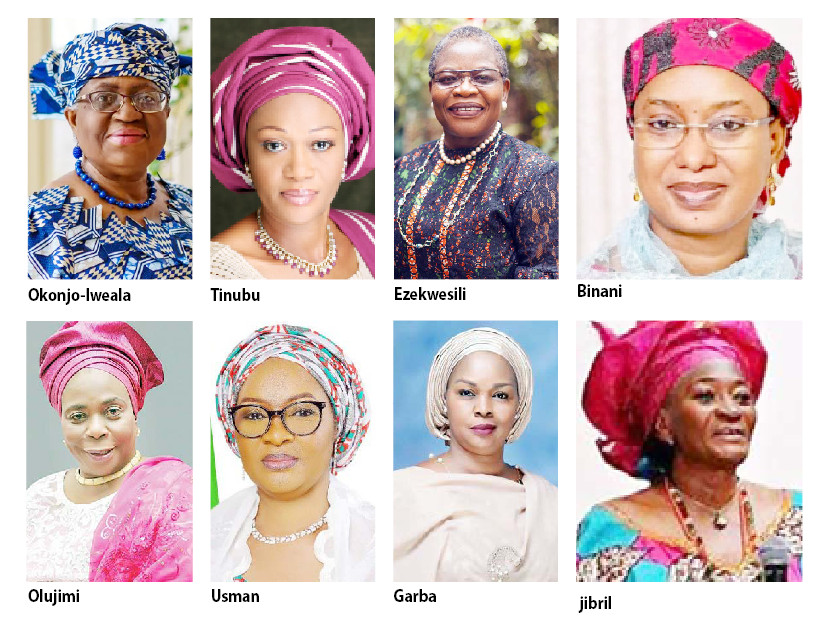
Under Olusegun Obasanjo (1999–2007), there was modest progress. Women such as Ngozi Okonjo-Iweala and Oby Ezekwesili held key ministerial roles, and female representation in the National Assembly slightly improved, though it remained below global standards.
During the administration of Umaru Musa Yar’Adua (2007–2010), gains slowed, with fewer women in strategic positions and limited policy focus on gender inclusion.
During Goodluck Jonathan’s administration, several prominent women held key positions that showcased the potential of female leadership in Nigeria. Ngozi Okonjo-Iweala served as Finance Minister, Diezani Alison-Madueke headed Petroleum Resources, and Princess Stella Oduah led Aviation.
In addition to Ngozi Okonjo-Iweala and Obiageli Ezekwesili, other women who held influential positions during Goodluck Jonathan’s administration included Sarah Alade (Deputy Governor, Central Bank of Nigeria), Amina C. Mohammed (Minister of Environment), Jumoke Akinjide (Special Adviser on Legal Matters), Florence Ita-Giwa (Special Adviser on Niger Delta Affairs), and Ruth Nwosu (Presidential Aide on Social Development). These appointments highlighted women’s growing, though still limited, presence in strategic decision-making roles in the Nigerian government.
However, under Muhammadu Buhari (2015–2023), there was a noticeable decline. Women’s presence in the Federal Executive Council declined, and representation in the National Assembly fell further, sparking criticism from civil society groups and gender advocates.
Now, under Bola Ahmed Tinubu, concerns persist. While a few women hold ministerial and advisory roles, overall representation remains low, particularly in elective offices. The 10th National Assembly has one of the lowest numbers of female lawmakers in recent history, raising questions about the country’s commitment to gender inclusion.
Why The Decline?
Political analysts across various platforms attribute the persistent marginalisation of women to a mix of structural and cultural factors, warning that without intervention, female participation in politics may remain severely limited.
Fielding questions from LEADERSHIP Sunday, women’s rights advocate and founder of Great Women, Greater Future, Barrister Etimbok Uket Ebong, highlighted party politics as a major barrier. She noted that major parties, including the All Progressives Congress (APC) and the Peoples Democratic Party (PDP), have often been criticised for failing to provide a level playing field for female aspirants. She said, “High nomination fees, the absence of internal quotas, and male-dominated leadership structures within parties continue to limit women’s participation.”
Party officials from the Peoples Democratic Party, All Progressives Congress, African Democratic Congress, Labour Party, and other parties, however, argue that the challenge goes beyond party policies. A chieftain of one of the major parties noted, “Women are encouraged to participate, but many do not come forward in large numbers, and when they do, they face stiff competition like everyone else.”
For other political analysts, financial constraints pose a major challenge. They strongly view Nigerian politics as one that is widely regarded as capital-intensive, making it difficult for many women to compete effectively against well-funded male counterparts.
There is also a cultural dimension, where societal expectations and gender norms discourage women from active political engagement. In many communities, politics is still seen as a male-dominated arena.
Additionally, violence and intimidation during elections have been identified as deterrents. Female aspirants often face higher risks of harassment, which discourages participation.
Experts, Advocates Call For Urgent Reforms
Speaking to LEADERSHIP Sunday , political analyst, Suleiman Gimba highlighted the deep-rooted challenges responsible for the continued underrepresentation of women in politics across Nigeria, describing the issue as a complex mix of structural, socio-cultural, and institutional barriers.
According to Gimba, patriarchal norms remain a dominant force shaping political participation, often pushing women to the margins despite constitutional guarantees of equality.
He pointed to data from the Inter-Parliamentary Union, which shows that women currently occupy less than 5 per cent of elective positions in Nigeria, one of the lowest rates globally.
Financial constraints were also identified as a major obstacle. The high cost of nomination forms and election campaigns, Gimba noted, disproportionately affects women, who generally have less access to political financing.
He further criticised internal party structures, describing them as opaque and heavily controlled by male political elites, thereby limiting women’s chances of securing nominations.
In addition, the analyst cited political violence and the adversarial nature of elections as significant deterrents.
He emphasised that the lack of adequate institutional protection makes the political environment particularly discouraging for female candidates.
To address these challenges, Gimba called for comprehensive reforms. He suggested that Nigeria adopt legislated gender quotas similar to those in Rwanda, which has achieved over 60% female parliamentary representation, according to the Inter-Parliamentary Union.
He also recommended that political parties implement internal quotas and provide financial support, including subsidised nomination forms, to encourage female participation.
Campaign finance reforms, he added, are essential to creating a more level playing field.
Beyond legal changes, Gimba stressed the need for stronger enforcement of laws against electoral violence and improved security protections for female candidates.
He concluded that long-term progress will depend on sustained investment in education, leadership training, mentorship programmes, and civic reorientation aimed at challenging discriminatory cultural norms.
“Without addressing both structural and cultural barriers,” Gimba warned, “progress will remain slow and incremental.”
CSO Calls For Structural Reforms To Boost Women’s Political Participation
Similarly, the executive director of the Women Inclusion Empowerment and Leadership Development Initiative (WIELD-I), Amarachi Okeke, emphasised that the underrepresentation of women in politics in Nigeria stems from systemic barriers rather than a lack of competence or interest.
In an exclusive interview with LEADERSHIP Sunday in Abuja, Okeke identified entrenched cultural norms, high costs of political participation, male-dominated party structures, and concerns over political violence and intimidation as key factors limiting women’s access to leadership positions.
According to her, these longstanding challenges continue to restrict women’s ability to fully engage in the country’s democratic processes, despite growing awareness of the need for inclusive governance.
Okeke stressed that addressing the imbalance requires practical and enforceable solutions, not just policy rhetoric.
She called for the implementation of gender inclusion policies, the reduction of financial barriers for female candidates, and internal reforms within political parties to ensure fair access to nomination tickets.
She also highlighted the importance of sustained investment in leadership development initiatives for women, alongside stronger safeguards to create a safer and more enabling political environment.
The WIELD-I executive director reaffirmed the organisation’s commitment to advancing women’s participation through advocacy, stakeholder engagement, and capacity-building programmes designed to improve representation in governance.
“Improving women’s participation is not about advantage, but about fairness, representation, and strengthening Nigeria’s democratic process,” she said.
WIELD-I continues to work with partners and stakeholders to push for inclusive reforms aimed at closing the gender gap in political leadership across the country.
Looking Ahead To 2027
With 2027 on the horizon, advocacy groups are calling for deliberate action, including the enforcement of affirmative action policies, the reduction of nomination costs, and stronger support systems for female candidates.
Analysts warn that without intentional reforms, Nigeria risks further regression in women’s political participation.
The question remains whether political parties, policymakers, and the electorate will take concrete steps to change the narrative, or whether, once again, women will remain largely absent when the ballots are cast.
We’ve got the edge. Get real-time reports, breaking scoops, and exclusive angles delivered straight to your phone. Don’t settle for stale news. Join LEADERSHIP NEWS on WhatsApp for 24/7 updates →
Join Our WhatsApp Channel