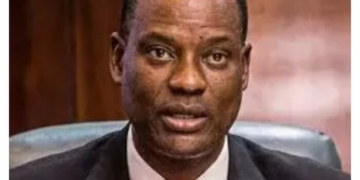

In what could signal a major shift in Nigeria’s long-troubled housing sector, Managing Director of the Federal Mortgage Bank of Nigeria (FMBN), Shehu Usman Osidi, has declared that the era of inaccessible mortgages is giving way to a new system designed to put homeownership within the reach of ordinary Nigerians.
In an exclusive interview with Leadership, Osidi said the Bank is undergoing a sweeping transformation from a rigid, process-driven institution into a dynamic, people-focused mortgage engine, powered by innovation, digital access and mass-oriented housing products targeting low- and middle-income earners.
At the heart of the shift, he revealed, is a bold expansion of mortgage offerings, including Rent-to-Own, Home Renovation Loans, Rent Assistance, Non-Interest Mortgages and a Diaspora Mortgage Scheme products he said are dismantling long-standing barriers that have kept millions locked out of the housing market.
The impact, according to him, is already visible: “Over 24,000 Nigerians have accessed renovation loans exceeding ₦21.2 billion, while the Rent-to-Own scheme is enabling families to move into homes without the burden of upfront equity, paying gradually in a system designed to mirror rent,” he said.
Beyond policy pronouncements, Osidi pointed to a sharp surge in housing delivery explaining that FMBN financed 6,911 housing units in 2025 which he said is a dramatic leap from 2,165 units of 2024. He said Across Abuja, Lagos and Enugu, large-scale developments under the Renewed Hope Housing Programme are advancing, backed by billions in funding and guarantees.
He, however, acknowledged a deeper structural problem: “Nigeria’s housing crisis is no longer just about shortage, but affordability. We have houses people cannot afford and people who cannot access the houses they need,” he said, underscoring the Bank’s renewed focus on bridging that gap.
To counter rising inflation and high lending rates, Osidi maintained that FMBN mortgages remain among the most affordable in the country, offering single-digit interest rates of six to seven percent and flexible repayment structures designed specifically for low-income earners.
Dismissing criticisms that mortgage financing still serves the elite, he insisted that the Bank’s interventions are reaching the grassroots, with teachers, civil servants, artisans and small business owners now forming the bulk of beneficiaries. Partnerships with labour unions and cooperatives, he added, are further deepening inclusion.
On performance, he drew a direct line between improved financial health and housing delivery. With an operational surplus rising to ₦19.5 billion in 2025 and over ₦79 billion injected into projects, FMBN is scaling up capacity, while aggressive loan recovery efforts have reclaimed more than ₦27 billion from delinquent accounts.
Despite the progress, Osidi admitted challenges remain, particularly undercapitalisation, but expressed optimism over an ongoing ₦750 billion recapitalisation drive. He stressed that while Nigeria’s housing crisis cannot be solved overnight, the current reforms mark a decisive turning point.
“The transition has begun,” he said. “For many Nigerians, owning a home is no longer a distant dream—it is becoming a realistic, achievable goal.”
We’ve got the edge. Get real-time reports, breaking scoops, and exclusive angles delivered straight to your phone. Don’t settle for stale news. Join LEADERSHIP NEWS on WhatsApp for 24/7 updates →
Join Our WhatsApp Channel