
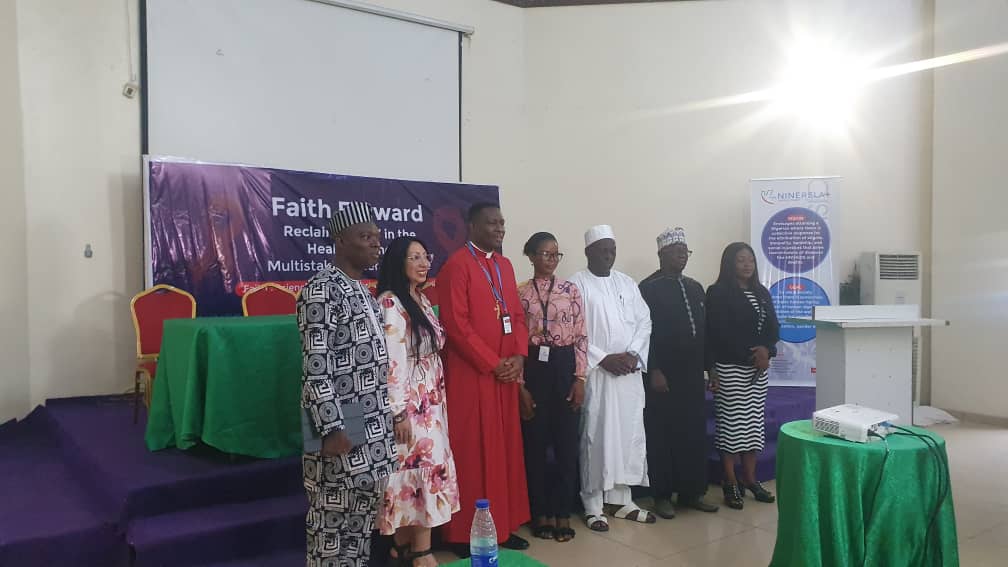
The World Council of Churches (WCC) through its HIV, reproductive health and pandemics programme with support from ViiV Healthcare in alliance with the Nigerian Network of Religious leaders living with or Personally affected by HIV NINERELA+, have called for a strengthened collaboration between faith institutions and medical practitioners to sustain Nigeria’s HIV response, as the country rolls out its 2026–2030 National HIV Prevention Plan.
The call was made at a high-level symposium titled “Sustaining the HIV Response: A Synergy of Faith and Science,” held in Abuja, where stakeholders emphasised the need for a whole-of-society approach to tackling the epidemic amid shifting global funding realities.
Participants at the summit stressed the urgency of increasing domestic financing for HIV programmes, improving access to innovations such as long-acting injectables, and integrating HIV services into primary healthcare systems to ensure sustainability.
Speaking at the event, Imam Fuad Adeyemi, national chief imam of Al-habibiyyah Islamic Society, pledged the commitment of religious leaders to addressing stigma and discrimination against people living with HIV.
Similarly, Most Rev. Dr. Benubo Fubara-Manuel, the immediate-past president of Christian Council of Nigeria, highlighted the need to close funding gaps and sustain progress made over the years, particularly in the face of declining international support.
Adding a personal perspective, Oluchi Ndubisi Elizabeth of the International Community of Women Living with HIV West Africa (ICWWA) underscored the far-reaching impact of the disease.
“Living with HIV, we were always able to access care, and if we are not infected, we are affected one way or another,” she said, stressing the importance of inclusive care and community support systems.
Also speaking, Gracias Violeta Ross called on the media to sustain awareness campaigns, describing HIV as a national issue that requires consistent public engagement.
Stakeholders at the event urged traditional rulers, religious leaders and faith-based organisations to intensify awareness campaigns aimed at promoting stigma-free and inclusive communities, noting that this would improve uptake of prevention, treatment and care services. They also committed to reinvigorating the HIV response through coordinated advocacy for sustainable national and global financing, while expanding equitable access to scientific innovations.
At the close of the symposium, participants signed a joint pledge to sustain gains recorded over the past decade and strengthen community-driven interventions.
Director of Public Health at the Federal Capital Territory Administration, Dan Gadzama, emphasised the importance of local ownership of the HIV response. “We are Nigerians, and we must take care of ourselves. This is our response, our communities, and our future,” he said.
Stakeholders noted that the renewed collaboration between science and faith communities signals a critical step toward achieving the goal of ending AIDS as a public health threat by 2030.
We’ve got the edge. Get real-time reports, breaking scoops, and exclusive angles delivered straight to your phone. Don’t settle for stale news. Join LEADERSHIP NEWS on WhatsApp for 24/7 updates →
Join Our WhatsApp Channel