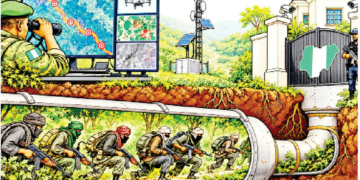
War in Iran has jolted energy markets, sparking a crisis far beyond the battlefield. This geopolitical clash exposed flaws in the production, refining, and distribution of fuel. Fortunately, Dangote’s mega-refinery aided Nigeria.
At the center of the disruption is the Strait of Hormuz, a narrow maritime corridor through which nearly one-fifth of global oil and gas moves. With traffic severely constrained, the impact goes beyond rising prices. In many parts of the world, the issue is no longer affordability but outright availability.
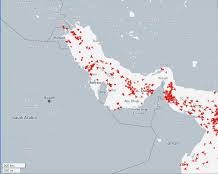
The Strait of Hormuz: A critical maritime artery now under severe logistical strain.
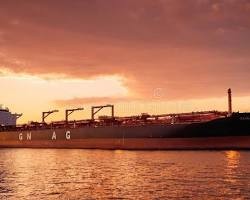
Global shipping routes face unprecedented delays as energy tankers await safe passage.
Major metropolitan areas face rolling blackouts as energy reserves reach critical lows.
A clear pattern is emerging. Countries with weak currencies, low reserves, and heavy fuel imports are most affected. In these nations, the crisis means empty petrol stations, rationed cooking gas, grounded flights, and slowing economies. Nigeria, however, is charting a different course—defined by strategic resilience and growing self-sufficiency, not vulnerability.
A World Divided by Energy Vulnerability
Across South and Southeast Asia, strain is already acute. In Pakistan, which imports over 80 percent of oil, authorities have moved quickly to conserve fuel. Schools have closed, government workers have been sent home, and commuters have been urged to limit travel. Long queues stretch across major cities like Karachi and Lahore as petrol stations struggle to keep up with demand. Prices have surged in recent days, with ripple effects across transport, commerce, and sport.
Sri Lanka, still recovering from its 2022 financial crisis, has returned to familiar but painful measures. Fuel rationing has been reintroduced through a QR-based system that strictly limits weekly consumption. For households already under pressure, the result is a renewed cycle of queues, uncertainty, and rising living costs. Disruptions to fertilizer imports have also raised concerns about food inflation, linking the energy crisis to broader economic instability.
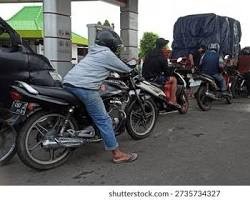
Motorists in Sri Lanka wait for hours under strict QR-based fuel rationing protocols.
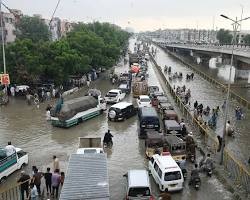
Urban centers in Pakistan experience significant commercial slowdowns due to scarcity.
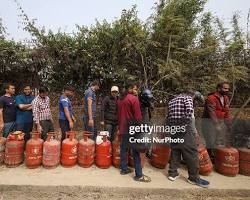
Empty LPG cylinders line the streets as families struggle to secure basic cooking fuel.
In Nepal, daily life is disrupted. Liquefied petroleum gas, essential for cooking, is in short supply. Families wait hours for partially filled cylinders; others resort to firewood or electric stoves. Nepal’s supply issues predate the conflict, but the global shock has exposed more weaknesses. In the Philippines, LPG shortages worsen as stations close, while authorities urge conservation and seek more imports.
Vietnam and Thailand present contrasting but telling cases. In Vietnam, surging diesel prices strain airlines, manufacturers, and logistics. In Thailand, a spike in diesel demand has stressed supply, prompting rationing and emergency measures. In East Africa, Kenya faces rolling shortages, with stockouts in cities and rural areas. In Haiti, where insecurity fuels shortages, the effect is the same: scarcity, disruption, and economic strain.
These cases show that nations without refining capacity remain vulnerable during global crises.
A snapshot of the global situation further illustrates the scale and urgency of the disruption. Across continents, countries are grappling with varying degrees of fuel scarcity and supply instability. In South Asia, Sri Lanka continues fuel rationing while Pakistan faces severe shortages marked by long queues and surging prices. India, despite its size, reportedly holds only limited days of fuel reserves, highlighting underlying vulnerability.
In Africa, South Africa reports relative stability, yet many stations experience dry pumps, pointing to supply chain stress beneath the surface. Across Europe, the United Kingdom has issued fuel shortage warnings, while Germany and France contend with rising fuel costs and tightening supply.
Major global economies are not immune. In the United States, authorities are responding with strategic measures to stabilize supply, while China accelerates stockpiling efforts to cushion against prolonged disruption. In East Asia, Japan and South Korea are closely monitoring reserves as the crisis unfolds.
This is now a truly global energy shock—cutting across developed and developing economies alike. Notably, this marks about 35 Days of the Strait of Hormuz blockade, underscoring both the persistence of the disruption and the growing pressure on global supply chains.
Nigeria: A Narrow Escape with Strategic Implications – The Emergence of Dangote Refinery
Nigeria appears, at first glance, to fit squarely into this category of vulnerable countries. Despite being Africa’s largest oil producer, the country has historically depended on imported refined petroleum products. For decades, this paradox has constrained growth, strained foreign exchange, and exposed the economy to shocks.
Today, that story is changing—decisively.
Dangote Refinery marks a turning point for Nigeria and Africa. By supplying most petrol, diesel, and aviation fuel domestically, it reshapes Nigeria’s energy landscape. It achieves what years of policy could not: large-scale, reliable refining, insulating the economy from global volatility.
While many nations grapple with shortages, Nigeria maintains relative stability. There are no nationwide queues, shutdowns, or emergency rationing seen elsewhere. This resilience is not accidental but stems from private investment aligned with national priorities.
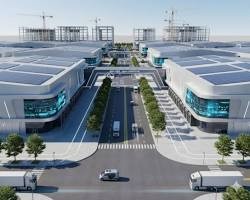
An aerial view of the Dangote Refinery, a cornerstone of Nigeria’s new energy independence.
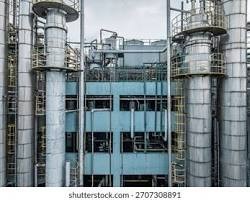
Sophisticated industrial infrastructure at the refinery replaces the need for foreign fuel imports.
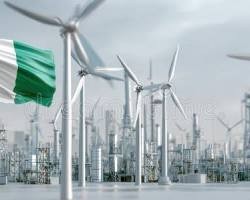
National energy security becomes a reality as domestic production takes center stage.
Beyond stability, the refinery brings broader opportunities. It conserves foreign exchange, improves energy security, and paves the way for Nigeria to export refined products. Nigeria may become a regional energy anchor amid global uncertainty.
More than infrastructure, Dangote Refinery proves that Nigeria can deliver complex industrial projects that yield real national benefits.
But this momentum must be harnessed further.
The Nigerian government now has a unique opportunity to build on this momentum by accelerating its broader industrialization drive. Energy security must serve as the backbone for a new phase of economic transformation, one that prioritizes agriculture, textiles, manufacturing, and power infrastructure.
In agriculture, a stable fuel supply can reduce production and transport costs while boosting food security and exports. In the textile sector, reliable energy can revive domestic production and reduce dependence on imports. In manufacturing, consistent fuel and power availability can enhance productivity, attract investment, and create jobs at scale. In the power sector, sustained investment is essential to complement refining gains and ensure that industries operate efficiently and competitively.
A national summit on power and industrial development is both timely and necessary. The Dangote Refinery shows what is possible. The next step is to replicate this success across key sectors.
The New Map of Energy Insecurity
The unfolding situation highlights a deeper shift in how energy security should be understood. For decades, crude oil production has been treated as the primary measure of energy strength. The current crisis proves otherwise. By implication, all petroleum product derivatives that serve as intermediate raw materials in the ‘Asian Tigers’ industries, such as helium, sulfur, and aluminum, have faced supply challenges.
What matters most is not only oil production but the ability to refine, store, and distribute domestically. Countries controlling these steps handle shocks better. Nigeria’s evolving experience offers a clear lesson: past dependency is costly, and strategic investment has vast potential.
Conclusion
The global energy crisis triggered by the Iran conflict is not affecting all countries equally. In much of Asia and Africa, fuel shortages are stalling transport, industry, and daily life, forcing governments into reactive measures and intensifying economic pressures. Nigeria, by contrast, is shifting from vulnerability to strength. The Dangote Refinery now buffers against global disruption and promotes long-term economic transformation.
More importantly, it signals a new direction not just for Nigeria, but for Africa. The importance of building domestic capacity, investing in industrial infrastructure, and lessening reliance on external supply chains is now unmistakable. The lesson is clear: in an era defined by geopolitical uncertainty, true energy security lies in self-sufficiency, industrial capacity, and strategic foresight. Nigeria has taken a decisive step in that direction. Now is the time to boldly build on this foundation—expanding industrialization across agriculture, textiles, manufacturing, and power—to claim not only energy independence, but lasting economic prosperity for generations
Dan D. Kunle 4 April 2027
We’ve got the edge. Get real-time reports, breaking scoops, and exclusive angles delivered straight to your phone. Don’t settle for stale news. Join LEADERSHIP NEWS on WhatsApp for 24/7 updates →
Join Our WhatsApp Channel