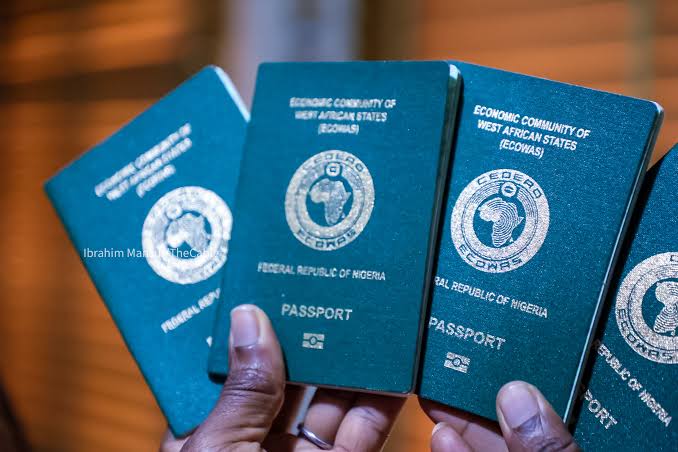
For a country that likes to call itself the giant of Africa, the latest assessment of what its passport is worth makes painful reading. In a ranking published on October 20 by the travel platform IziVisa, Nigeria placed 181st out of 196 countries. Holders of the green passport, according to that index, can enter only 24 destinations without a visa, obtain a visa on arrival in 16 others and apply online for 43 more.Everywhere else, a Nigerian traveller must queue at an embassy, pay heavily, surrender bank statements and wait, often for months, with no assurance of a favourable answer.
Some caution is in order. Several reports have presented the figure as a collapse from 90th place in July, but that earlier position came from the Henley Passport Index, which measures access to 227 destinations by a different method. On the Henley index released this month, Nigeria sits at 92nd, two places better than a year ago. The two numbers cannot be laid side by side, and this newspaper will not pretend otherwise. Yet the honest reading offers little comfort. Whatever the yardstick, the Nigerian passport sits in the lower reaches of every table, and the long view shows a steady slide.
READ ALSO: Federal Govt Mum As Nigeria Loses 20 Visa-Free Destinations In Latest Passport Ranking
In 2006, the Henley index placed Nigeria 62nd in the world. Two decades later, with both the population and the economy far larger, its citizens find more doors shut than open. The deterioration shows in policy as well as in rankings. Last year, Washington cut the validity of most non-immigrant visas issued to Nigerians to a single entry over three months. From January 1 this year, it partially suspended the issuance of visitor and student visas to Nigerians under a presidential proclamation that placed the country among 19 nations facing restrictions. Within the past few years, the United Arab Emirates also shut its doors to Nigerian applicants for a long spell.
It is instructive to note that a passport is a statement of trust. When a foreign consulate weighs an application from a Nigerian, it is weighing the country behind the applicant: whether its records can be relied upon, whether its citizens are likely to return home, and whether its government will take back those who overstay. On those questions, the record has been poor. Fraudulent documents obtained with the connivance of officials, a weak identity system, visa overstays and the exploits of a small but notorious band of internet fraudsters have shaped a reputation that the honest majority now pays for at every border.
There is a deeper cause, and it lies at home. People leave countries where they cannot find security or a livelihood, and receiving countries know it. The wave of emigration that Nigerians call japa, along with the young people who risk the Sahara and the Mediterranean to reach Europe, tells foreign governments that many Nigerians who obtain a visa have strong reasons not to return. Insecurity across large parts of the North has also attracted foreign travel advisories that make reciprocity harder to win. No amount of diplomatic charm can disguise what visa officers read daily in the newspapers.
A nation’s standing abroad cannot rise above its condition at home. The government cannot negotiate its way out of a reputation it has done little to repair. Even so, the Ministry of Foreign Affairs has room to do far more than it has done. A large share of the visa-free access Nigerians enjoy comes from ECOWAS neighbours under the regional protocol on free movement. Beyond West Africa, the country has secured few reciprocal waivers, while smaller African states such as Ghana, Mauritius and Seychelles have built networks of agreements that let their citizens travel far more freely than ours.
Nigeria also needs to look at its own front door. A country that wants others to open up must be willing to do the same. Nigeria has taken useful steps, including visa on arrival for African travellers and an electronic visa platform, and the test now is whether they work smoothly at the airport and online. The African Continental Free Trade Area depends on people moving as freely as goods. Quick and predictable entry for African visitors, backed by proper screening, would strengthen Nigeria’s hand when it asks for reciprocity elsewhere. Diplomacy runs on exchange, and a country that offers nothing should not be surprised to receive little in return.
At home, the integrity of the passport itself must be beyond question. The Nigeria Immigration Service has made progress in clearing backlogs and moving applications online, and that deserves credit. But the passport is only as credible as the identity data behind it. Linking every issuance firmly to the National Identification Number and prosecuting officials who sell documents would show consulates abroad that the green booklet means what it says. Open cooperation with foreign authorities on fraud cases would help as well. Sanctions on the few who abuse the system protect the many who carry it honestly.
The cost of a weak passport falls hardest on ordinary citizens, not on the political class, whose diplomatic passports and connections spare them the humiliation of the visa queue. It falls on the student who loses an admission because an appointment date came too late, and on the trader who cannot attend a fair in Guangzhou while a competitor from a smaller country flies in with ease. Each refusal carries a fee that is never refunded. Multiplied across millions of applications, it amounts to a heavy tax that Nigerians pay to foreign treasuries for the failures of their own government.
Rankings will rise and fall with each new index and each new methodology. What matters is the direction of travel, and for twenty years it has pointed the wrong way. The federal government should treat the standing of the passport as a measure of its own performance, set out what it intends to do to restore it, and report back to Nigerians on progress at regular intervals. A country whose citizens are welcomed abroad is almost always a country that works for them at home.The world reads a passport the way it reads a country, and at the moment it does not like what it sees.
We’ve got the edge. Get real-time reports, breaking scoops, and exclusive angles delivered straight to your phone. Don’t settle for stale news. Join LEADERSHIP NEWS on WhatsApp for 24/7 updates →
Join Our WhatsApp Channel