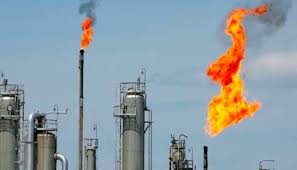
Nigeria has squandered $56.75 billion in direct revenue from natural gas flaring since 2002, the World Bank reported, as the volume of wasted energy reveals a massive untapped resource capable of powering the nation’s grid – and potentially the global AI boom.
Every day, the country torches approximately 192 million standard cubic feet of natural gas at oil fields, a byproduct with no buyers, no pipelines, and no commercial use. It simply flares into the atmosphere, contributing to emissions and lost economic opportunity.
The World Bank’s 2025 report confirmed Nigeria’s second-highest global increase in gas flaring intensity that year, underscoring a persistent challenge in Africa’s largest oil producer.
Technology analyst Simi Ajayi, author of The Overflow – which covers technology, infrastructure, energy, and capital markets in Africa and emerging economies – quantified the stakes.
“This wasted energy matches national grid output and could power data centers,” Ajayi said.
The flared gas holds potential to generate roughly 3,400 megawatts of electricity, nearly equivalent to Nigeria’s entire current grid capacity, which leaves 85 million citizens without reliable power.
Ajayi tied the issue to a global crisis: The artificial intelligence sector faces acute energy shortages. Data centers – the physical backbone of AI training and operations – now consume electricity at scales rivaling heavy industry.
The International Energy Agency (IEA) projects global data center power use will nearly double by 2030, expanding four times faster than other sectors.
Ajayi noted that giants like Microsoft, Google, and Amazon are securing unprecedented energy deals, but traditional hubs such as Northern Virginia, Dublin, and Singapore report grid connection wait times exceeding four years.
Nigeria’s Petroleum Industry Act (PIA) of 2021 offers a legal pathway through the Nigerian Gas Flare Commercialisation Programme (NGFCP).
It allows private investors to capture flared gas at near-zero fuel costs, with 38 companies already awarded permits. “The regulatory architecture exists,” Ajayi noted.
“What’s missing is a strategy to direct it toward AI data centers before rivals do.”
Lagos bolsters the case with superior connectivity. Major submarine fiber optic cables, including Google’s Equiano and the 2Africa network linking 33 countries, land there – providing some of Africa’s highest international bandwidth, a key prerequisite for hyperscale data centers after power.
African peers are racing ahead. Kenya clinched a $1 billion Microsoft-Google data center investment in 2024, anchored by geothermal energy. South Africa operates Google and AWS cloud regions. Egypt advances with European Union and hyperscaler support.
OpenAI’s recent appointment of infrastructure expert Adebayo Ogunlesi – founding partner of BlackRock-acquired Global Infrastructure Partners – signals the scramble for capacity.
On the policy front, minister of Communications, Innovation and Digital Economy Bosun Tijani has advanced a national AI strategy, forging international partnerships and prioritising computing power alongside clean energy. Annual flaring losses now total $720 million, amplifying the urgency amid Nigeria’s infrastructure challenges like regulatory hurdles and supply reliability.
Analysts warn the window is narrow.
“The question isn’t if the opportunity exists – the data confirms it,” Ajayi said. “It’s whether Nigeria acts with the speed this global convergence demands.”
We’ve got the edge. Get real-time reports, breaking scoops, and exclusive angles delivered straight to your phone. Don’t settle for stale news. Join LEADERSHIP NEWS on WhatsApp for 24/7 updates →
Join Our WhatsApp Channel