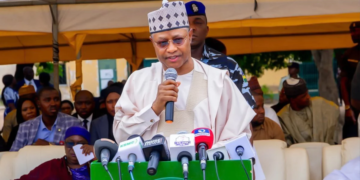
The Federal Government is advancing plans to establish a Coventry University campus in Nigeria through a Transnational Education (TNE) partnership aimed at expanding access to globally recognised degrees. Speaking on the development, the Honourable Minister of Education, Dr. Maruf Olatunji Alausa, stated that “we want Nigerian parents to enjoy their children being at home while still receiving a world-class UK education.”
The logic behind inviting foreign universities appears sound. Nigeria has a large youth population, limited university capacity, and declining public confidence in its tertiary institutions. Foreign campuses promise global standards, improved infrastructure, and access to international degrees without the cost of studying abroad. For policymakers under pressure to deliver quick results, this is an attractive proposition.
But policy must not be judged by intentions alone; it must be assessed by its structural consequences. The Academic Staff Union of Universities (ASUU) has expressed its opposition to this new agreement. ASUU President, Christopher Piwuna, made the union’s position known at a public lecture organised by the Academic Staff Union of Universities, Sa’adu Zungur University branch. Piwuna described the proposed establishment of a Coventry University campus in Nigeria as unacceptable, alleging that it is part of a broader agenda that could undermine Nigeria’s university system.
Nigerian students face stringent visa regimes, financial barriers, and immigration uncertainties when seeking education in the United Kingdom. Yet British institutions are being granted relatively seamless access to operate within Nigeria. This reflects a broader asymmetry in global education flows, where Nigeria is positioned as a market rather than a partner.
The opposition to the establishment of a British campus university should not be framed as a mere labour dispute; or between government and ASUU; it is a profound policy moment that forces Nigeria to confront an uncomfortable question: is the country building a competitive higher education system, or quietly conceding failure by importing one?
More importantly, the establishment of foreign campuses risks institutionalising a two-tier education system. Elite and upper-middle-class families will gravitate towards these foreign-branded universities operating locally, perceiving them – rightly or wrongly – as superior. Meanwhile, the majority of Nigerians will remain in underfunded public universities plagued by inadequate infrastructure, overstretched faculty, and frequent disruptions. Over time, this divide will deepen inequality, not just in education but in opportunity, employability, and social mobility.
There is also a question of national confidence. Countries that have successfully internationalised their education sectors – such as the United Arab Emirates and Malaysia – did so from a position of strategic intent, not institutional desperation. They invested heavily in their local systems while inviting foreign institutions under tightly regulated frameworks designed to enhance, not replace, domestic capacity. Nigeria, by contrast, risks sending a different signal: that it no longer trusts its own universities to deliver quality education.
That signal has consequences. It affects how Nigerian degrees are perceived globally. It influences where research funding flows. It shapes the aspirations of students and academics alike. In the long run, it may even accelerate the brain drain the policy ostensibly seeks to mitigate.
None of this is to suggest that foreign universities should be excluded. Global collaboration in education is both inevitable and desirable in a knowledge-driven world. The presence of institutions like Coventry University can introduce new pedagogical approaches, foster research partnerships, and raise competitive standards. But these benefits will only materialise if they are embedded within a coherent national strategy.
Nigeria’s core problem in higher education is not a lack of foreign participation; it is chronic underinvestment, weak governance, and policy inconsistency. Public universities remain underfunded relative to their enrolment demands. Academic staff are overburdened and underpaid. Infrastructure deficits persist across campuses. These are not problems that can be solved by importing foreign institutions. If anything, such a move risks diverting attention from the urgent need for systemic reform.
It is our belief that the responsibility, therefore, lies with the government to demonstrate that this policy is not a substitute for reform but a complement to it. This requires clear regulatory frameworks that ensure foreign universities contribute to local capacity building, not merely profit extraction. It demands reinvestment in public universities to prevent their marginalisation. It calls for policies that promote reciprocity in international education, ensuring that Nigerian students are not perpetually disadvantaged in global mobility.
Ultimately, the question is not whether Coventry University should operate in Nigeria. The question is whether Nigeria is prepared to build a higher education system that can stand alongside it.
If the answer is no, then this policy will mark the beginning of a quiet surrender—an admission that the country has chosen to import excellence rather than cultivate it. But if the answer is yes, then the presence of foreign institutions must be leveraged as a catalyst for transformation, not a replacement for responsibility.
Nigeria must decide which path it is taking. Because in education, as in nation-building, shortcuts rarely lead to sustainable success.
We’ve got the edge. Get real-time reports, breaking scoops, and exclusive angles delivered straight to your phone. Don’t settle for stale news. Join LEADERSHIP NEWS on WhatsApp for 24/7 updates →
Join Our WhatsApp Channel