Between 1 May and 7 June 2026, Médecins Sans Frontières (Doctors Without Borders) also known by its French acronym as MSF, recorded 7,850 suspected cholera cases and 74 deaths across 14 local government areas and 50 wards in Borno State, treating an average of 230 patients daily at its treatment centres in Maiduguri, with a single peak of over 500 admissions on 5 June alone.
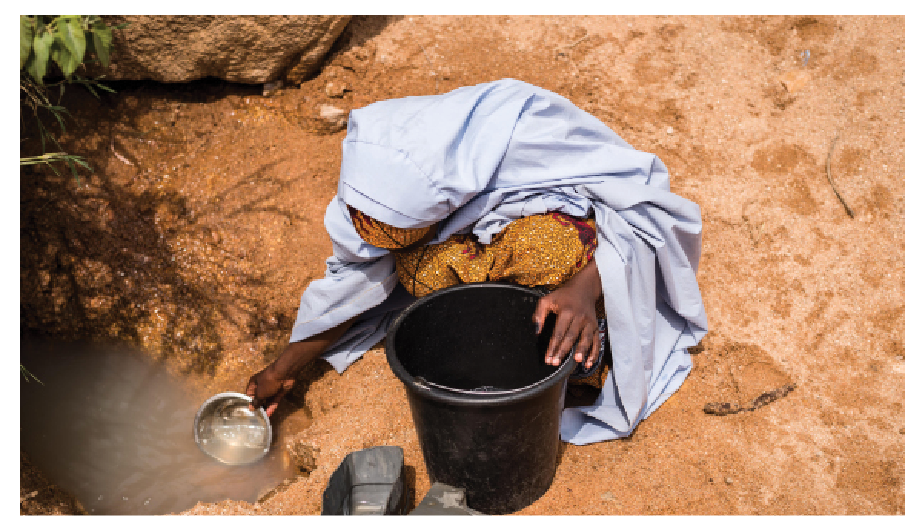
That figure 500 people flooding a treatment facility in one day is not a statistic to be read and set aside. It is an indictment. It is the sum total of decades of failure to provide the people of Borno with the most elementary guarantee of civilised governance: clean water.
We have watched this pattern repeat itself with the grim regularity of a wound that is never quite allowed to heal. Cholera, it must be stated plainly, is not a mysterious affliction. It does not require elaborate scientific explanation. It spreads where human waste contaminates drinking water. It kills where treatment is absent or too distant to reach in time. That it continues to claim lives in Nigeria in 2026 in a state that has already endured years of insurgency, mass displacement, and a humanitarian catastrophe that shamed the international community tells us something specific and damning about the priorities of those who govern this country. We are talking about a disease that was largely eliminated from the developed world over a century ago, through the straightforward provision of clean water and effective waste management.
MSF’s Bienfait Tombola, the Project Medical Coordinator for the cholera surge response in Borno, described patients arriving daily with severe watery diarrhoea and dehydration, many of whom had travelled long distances to reach care. Consider what that means in practice. A mother carries a child through the heat because the nearest treatment point is hours away. A man weakened by fluid loss walks because there is nothing closer. These are not scenes from another century. They are happening now, in a country that earns hundreds of billions of naira annually from oil revenues and taxation.
The response mounted by MSF and the Borno State Ministry of Health deserves acknowledgement. A Cholera Treatment Centre was established in Ngarannam on 7 May and rapidly expanded from 121 to 271 beds. A second treatment unit was opened in the Dalaram area. Health workers were trained, oral rehydration points established, water chlorination conducted, and surveillance systems strengthened. These are serious efforts made under serious pressure. But they are also compensatory efforts , the patching of holes that should not exist in the first place.
MSF itself made the point with characteristic directness: the scale and speed of the outbreak continue to exceed response capacity. That is humanitarian language for a system overwhelmed. And what overwhelms it is not the cholera bacterium so much as the structural void that allows the bacterium to thrive. Poor access to clean water, collapsing sanitation infrastructure, inadequate health facilities spread too thin across a population still partly displaced by years of conflict , these are the conditions in which 74 people died between May and June while the rest of the country attended to other business.
We have stated on this page, in the context of other disease outbreaks and public health failures, that Nigeria’s recurring health crises are not acts of God but acts of governance or more precisely, of its chronic absence. The cholera epidemic in Borno fits that pattern with uncomfortable precision. Water, Sanitation and Hygiene, what public health professionals group together as WASH, has been underfunded and deprioritised at every level of government for so long that the deficit has become structural.
Local governments, which bear constitutional responsibility for primary healthcare and environmental sanitation, have been hollowed out by years of financial strangulation and administrative capture by state executives. The result is a grassroots public health apparatus that exists largely on paper.
The state government has indicated plans for a cholera vaccination campaign, and this is welcome. Vaccination interrupts transmission chains and must proceed without delay. But MSF’s caveat carries the more urgent message: vaccination without durable improvements to water and sanitation infrastructure is a temporary repair on a permanent problem.
Oral cholera vaccine does not make contaminated water safe. It does not build a functioning sewage system. It does not ensure that the next rainy season which in the Lake Chad basin brings predictable flooding and predictable outbreaks will not reproduce the exact crisis now unfolding across 50 wards.
What is required, and what successive administrations at federal and state level have failed to deliver, is a sustained commitment to WASH infrastructure in Borno and across Nigeria’s north-east, treated as the development emergency it has been for years.
The North-East Development Commission, established precisely to address the humanitarian and infrastructure deficit left by the insurgency, must account for how much of its mandate has been directed at water and sanitation provision, and how much has dissipated in the familiar channels of procurement fraud and bureaucratic inertia. The federal Ministry of Water Resources and Sanitation must be pressed to explain what measurable progress has been recorded in the region, with specifics rather than the broad assurances that typically substitute for accountability in this country.
Nigeria has the resources and the technical knowledge to end cholera as a recurrent epidemic. What it consistently lacks is the political will to treat the lives of poor Nigerians in the north-east and elsewhere as deserving of the same urgency brought to other national concerns. Seventy-four people are dead. Thousands more were brought to the precipice. The response must now match the gravity of what has occurred not with condolences alone, but with pipe networks, treatment plants, and a public health system that does not require a foreign medical organisation to function at the scale and speed this crisis demands.
We’ve got the edge. Get real-time reports, breaking scoops, and exclusive angles delivered straight to your phone. Don’t settle for stale news. Join LEADERSHIP NEWS on WhatsApp for 24/7 updates →
Join Our WhatsApp Channel