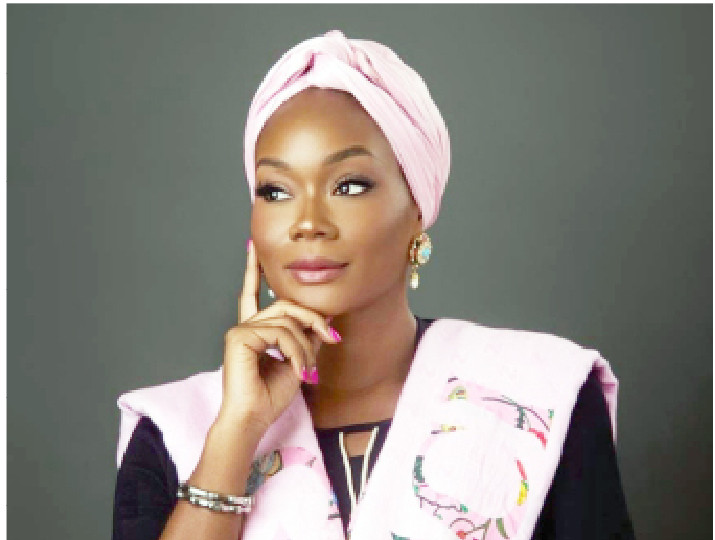
Chief Mrs Osasu Igbinedion Ogwuche, founder of TOS Foundation Africa, speaks with ZULEIHAT CHATTA on the structural barriers limiting women’s participation in politics, the push for the Reserved Seats Bill, and why representation in Nigeria remains a systemic challenge rather than a question of capacity, as well as the strategic outlook ahead of the 2027 elections.
What moment stands out as a turning point in your advocacy?
The turning point was not a speech or a summit; it was a pattern. When we began tracking representation data across Nigeria and comparing it with countries like Rwanda and Senegal, the gap became impossible to ignore. Nigeria, at under 4 per cent, versus Rwanda, at over 60 per cent, is not a coincidence; it is a design outcome. At TOS Foundation Africa, that realisation shifted our approach from advocacy to systems intervention.
What problem were you trying to address when you began this work?
The core problem was not a lack of qualified women. It was a broken pipeline. Women are active at community levels, in markets, schools, and health systems, but disappear at the point of political selection and decision-making. The closer you get to power, the narrower the door becomes.
In practical terms, how has your work impacted women at the grassroots?
We focus on translating visibility into access. While the Reserved Seats for Women Bill has not yet passed, it has already reframed the conversation from participation to structural inclusion. Through TOS Foundation Africa’s work, women are not just mobilised, they are connected to real pathways into leadership. Through the HerCademy Leadership Institute, in partnership with the Swiss Embassy, we are preparing women with the skills, networks and confidence to run for office. The shift is from supporting politics to participating in politics.
What gaps still exist despite this progress?
Three major gaps remain: the structural access gap, the transition gap and the influence gap. The system still favours incumbency, money and patronage networks that exclude women. Many women are active socially but cannot convert that into political capital. And even where women are present, they are not always positioned to shape outcomes.
How do you measure success in this work?
Numbers matter, but they are not enough. We measure success across three layers: whether more women are entering decision-making spaces, whether they are shaping policy, budgets and priorities, and whether the system is becoming easier for the next woman to enter. The real success is when participation no longer requires exceptional resilience.
With the recent local government elections, what stood out about women’s participation?
What stood out was the imbalance between input and outcome. Women were highly visible in mobilisation, coordination and voter engagement. But when you track who actually secured candidacy and decision-making positions, the numbers decline sharply. This is a pipeline distortion.
Do these elections reflect progress or deeper challenges?
They expose the ceiling of organic progress. There is increased participation, but the system itself has not changed. And systems are designed to reproduce their outcomes.
What are the real barriers preventing more women from stepping into these spaces?
The barriers are embedded in the system’s organisation. Access to party structures and candidacy pathways is controlled and often exclusionary. Financial and political capital are unevenly distributed. Participation does not translate into candidacy or influence, and the system does not intentionally build a pipeline of women ready to compete.
“Collaboration is the difference between presence and power. It strengthens negotiating power and enables collective influence within competitive systems.”
As we look ahead to the 2027 elections, what should women do differently?
Two things must happen simultaneously: women must run and align. More women need to step forward as candidates, but beyond that, there must be strategic collaboration across interests and networks. Individual ambition without collective alignment will not produce the level of change required.
What practical steps should women begin to take now?
Positioning is intentional, and it starts early. Women must take part if they want to take charge. They need to actively engage in political and civic processes, build strong networks, and be known for solutions, not just for presence. Opportunities often come through people you have not yet met.
Some argue that conversations around women’s leadership remain at the level of talk. Is that fair?
The frustration behind that criticism is understandable, but the conclusion is incomplete. Countries that have implemented quotas and reserved-seat systems have moved from minimal representation to as high as 30, 40, and even 60 per cent. That is not symbolic; it is systemic. What is true, however, is that conversation alone is not enough. It must translate into design, and design must be followed by implementation.
There is a perception that only a certain class of women benefits from these efforts. How inclusive is the work?
The reality is that access to leadership in Nigeria has historically been concentrated. So when a few women break through, it can seem as if only a certain group is benefiting. But what we are doing is deliberately expanding the pipeline. The goal is not to replace one class with another, but to widen the system so more women can enter and compete.
What is one uncomfortable truth about women and leadership?
The burden of multiplicity. Women are often expected to be everything at once, a professional, a leader, a wife, a mother and more, and to perform each role at a high level without visible strain. That has real implications for how women engage with leadership.
If nothing changes before the next general election, what are we still getting wrong?
The legislators we are voting into office. Because systems do not change by accident, they are shaped by choices. If outcomes remain the same, it means we are still selecting leaders who are comfortable with the status quo and not prioritising inclusive governance.
We’ve got the edge. Get real-time reports, breaking scoops, and exclusive angles delivered straight to your phone. Don’t settle for stale news. Join LEADERSHIP NEWS on WhatsApp for 24/7 updates →
Join Our WhatsApp Channel