Nigeria is recalibrating its investment engagement strategies amid the snail’s pace of its oil and gas industry operations.
While the country’s gas reserves have grown by more than 2.2 per cent over the last year, oil resources have fallen slightly.
According to the Nigerian Upstream Petroleum Regulatory Commission (NUPRC), the hydrocarbon powerhouse’s proven and probable gas reserves totalled an impressive 215.19 trillion cubic feet as at 1 January 2026.
The NUPRC said this represents a 2.21 per cent increase from last year’s 211.2 Tcf, largely due to discoveries and more detailed reservoir studies.
This reserve figure comprises 114.98 Tcf of non-associated gas and 100.21 Tcf of associated gas.
As for proven-plus-probable oil and condensate reserves, this figure was estimated at 37.01 billion barrels at the start of 2026, down 0.74 per cent year-on-year due to production, reserve updates, and subsurface studies.
The comparable figures for January 2025 and January 2024 were 37.28 billion and 37.5 billion barrels, respectively.
The January 2026 number comprises 31.09 billion barrels of oil and 5.92 billion barrels of condensate.
According to NUPRC, the reserves’ lives of these resources are 85 years for gas and 59 years for oil and condensate.
Given the situation and this troubled scenario, top government officials from Nigeria are preparing to engage with global stakeholders at the Invest in African Energy Forum (IAEF), scheduled to hold in Paris next month.
The government is positioning the country’s oil and gas sector for renewed investment and has reported increased upstream activity supported by recent reforms, new project approvals, and a shift in asset ownership, according to APO Group.
In 2025, Nigeria approved 28 field development plans valued at $18.2 billion, targeting an estimated 1.4 billion barrels of reserves.
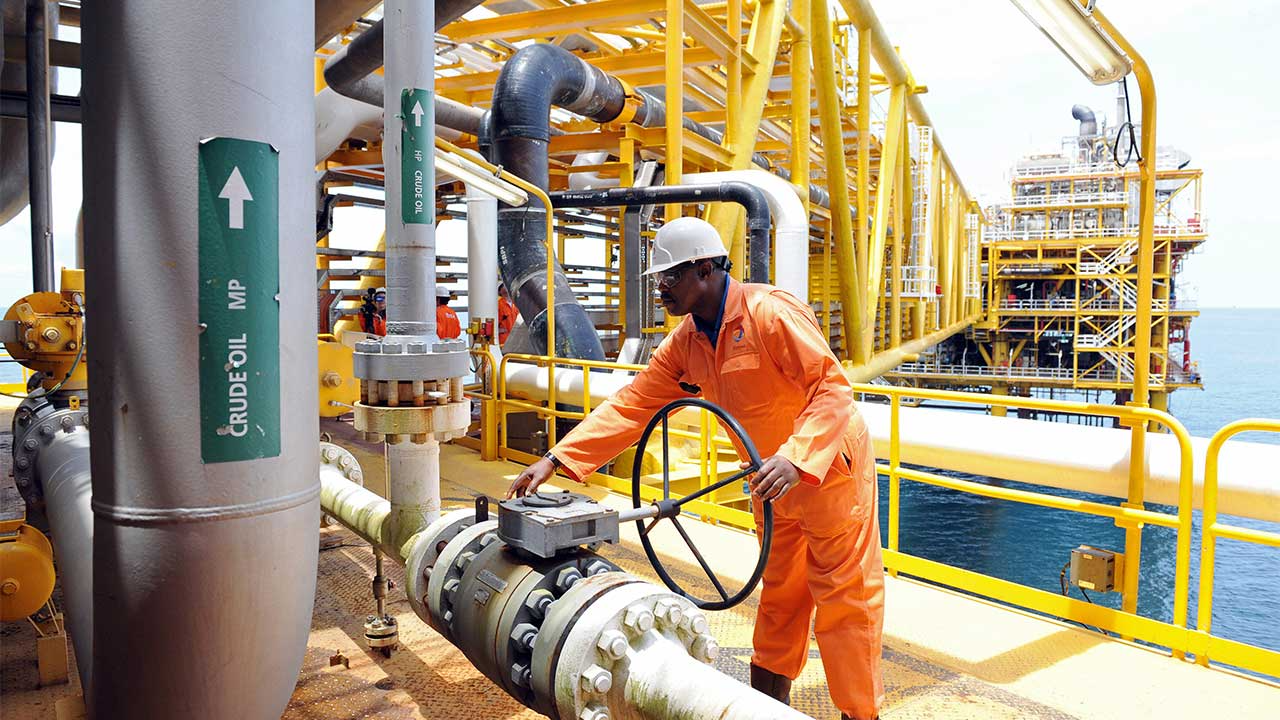
Crude production has rebounded to approximately 1.6–1.7 million barrels per day (MMbpd), driven by increased drilling activity and government-led initiatives to restore output. Additional gains have come from greater participation by indigenous operators following divestments by international oil companies, which have contributed an estimated 200,000 barrels per day (bpd) to national production.
The implementation of the Petroleum Industry Act (PIA) has also reshaped the fiscal and regulatory framework, with officials citing improved transparency and investment conditions.
Beyond upstream developments, Nigeria continues to expand infrastructure across the value chain.
The Dangote Refinery, with a capacity of approximately 650,000 bpd, is ramping up operations, while pipeline rehabilitation and expansion efforts aim to improve crude transport and export reliability.
Gas monetisation remains another focus area, with projects such as the Ajaokuta–Kaduna–Kano pipeline targeting increased domestic utilisation and industrial growth.
Nigeria’s petroleum minister is expected to highlight licensing opportunities, investment-ready assets, and partnership prospects at the Paris forum, as the country seeks to re-establish itself as a key destination for global oil and gas capital.
Also, Nigeria is pushing forward policies to fully integrate indigenous oil companies into the mainstream oil and gas industry following asset divestments by international oil companies (IOCs).
We’ve got the edge. Get real-time reports, breaking scoops, and exclusive angles delivered straight to your phone. Don’t settle for stale news. Join LEADERSHIP NEWS on WhatsApp for 24/7 updates →
Join Our WhatsApp Channel