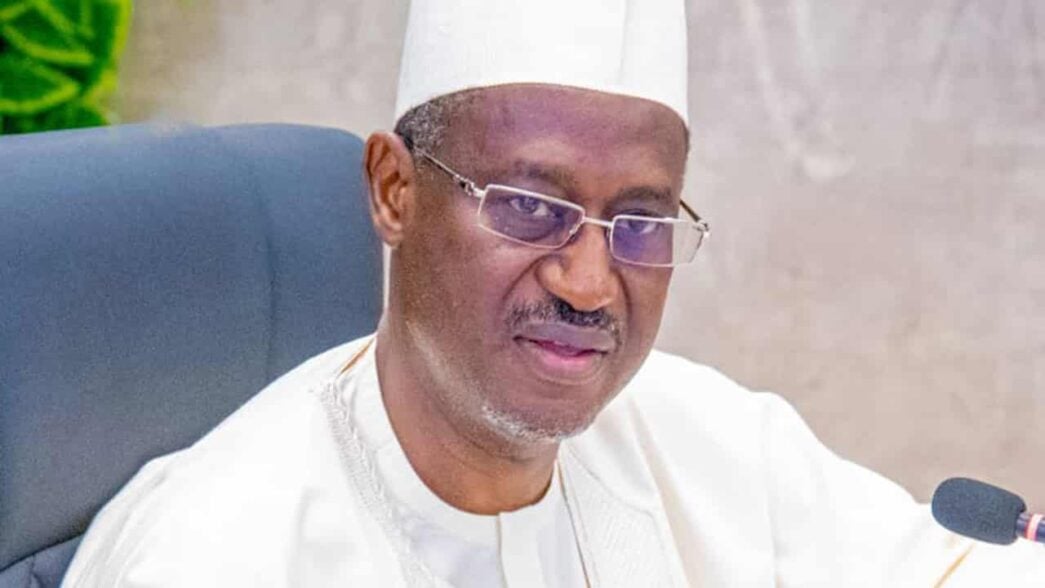
Nigeria’s urban renewal and slum upgrading programme has reached more than 150 communities nationwide in the past two years, the Minister of Housing and Urban Development, Ahmed Musa Dangiwa, disclosed on Thursday, signalling what officials describe as a major step toward improving living conditions in underserved areas.
The minister said the interventions, which cut across the provision of water, sanitation, roads, drainage, electricity and other basic amenities, are part of a broader strategy to tackle urban decay while advancing Nigeria’s commitment to global development targets.
Speaking in Abuja while receiving the Society for Water and Sanitation (NEWSAN), Dangiwa said the ministry is intensifying efforts to align its urban development agenda with the United Nations Sustainable Development Goals, particularly SDG 11 and SDG 6.
“Our focus is not just on housing, but on creating liveable communities,” he said, noting that access to clean water and sanitation remains central to achieving sustainable cities.
Dangiwa revealed that over 60 per cent of constituency projects channelled to the ministry by lawmakers are tied to water and sanitation, reflecting what he described as growing recognition of their impact on public health and quality of life.
He explained that the ministry’s Special Projects Unit has been at the forefront of delivering these interventions, while other departments such as Urban and Regional Development and Engineering Services also contribute through budgetary and technical support.
Despite the progress, the minister admitted that funding constraints have limited the scope of interventions, stressing that expanded budgetary allocations and stronger partnerships would enable the ministry to scale up its impact nationwide.
He, however, pledged deeper collaboration with NEWSAN, particularly in data sharing, advocacy and project monitoring, adding that the ministry will begin documenting projects before and after execution to demonstrate measurable impact.
Permanent Secretary of the ministry, Shuaib Belgore, said ongoing efforts already address sanitation gaps but acknowledged that inadequate funding remains a major challenge. He added that the ministry is considering integrating the construction of safe public toilets in markets and other high-traffic areas into its interventions.
Earlier, NEWSAN National Coordinator, Benson Attah, urged the government to intensify action on water, sanitation and hygiene, warning that Nigeria still lags behind in achieving nationwide open defecation-free status.
He recalled the 2018 declaration of a national emergency in the sector and noted that only two states have attained open defecation-free certification, underscoring the need for stronger federal-state collaboration.
Attah also called on the ministry to mandate water and sanitation provisions in construction contracts and use its influence to push states toward meeting national and continental obligations on hygiene and sanitation.
The renewed push for collaboration, stakeholders say, could prove critical in bridging infrastructure gaps and accelerating Nigeria’s journey toward safer, more sustainable urban communities.
We’ve got the edge. Get real-time reports, breaking scoops, and exclusive angles delivered straight to your phone. Don’t settle for stale news. Join LEADERSHIP NEWS on WhatsApp for 24/7 updates →
Join Our WhatsApp Channel