
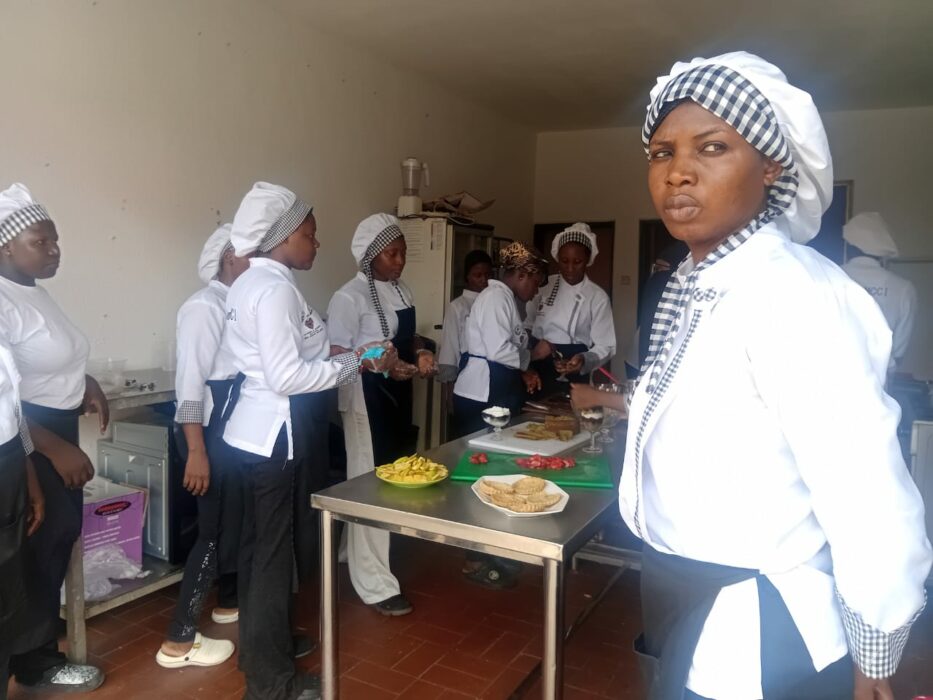
About 100 young Nigerians has completed a six-month culinary and hospitality training programme under the federal government-backed Innovation, Development and Effectiveness in the Acquisition of Skills (IDEAS) initiative.
The training, implemented by Masterminds Catering and Culinary Institute, is supported by the Federal Ministry of Education in collaboration with the World Bank, aimed at tackling unemployment and bridging skills gaps in key sectors.
At the closing ceremony of the training in Abuja, the chief executive officer of the institute, Khadijat Fashina, said the organisation was established about five years ago to address the shortage of skilled professionals in the hospitality and catering industry.
“I discovered there was a major skills gap in the industry, and that was affecting many entrepreneurs. That is why we decided to focus on bridging that gap,” she said.
Fashino explained that the programme runs for six months, comprising three months of intensive training and another three months of internship in the open market, equipping participants with hands-on experience.
“At the end of the programme, they are better positioned to either start their businesses or become more employable,” she added.
She noted that participants were trained using the National Skills Qualification Framework (NSQF), developed by the National Board for Technical Education (NBTE), ensuring competency-based learning and certification.
Also, the special assistant to the President on Arts, Culture, Tourism and Creative Economy, Ayomide Adeagbo, said the initiative reflected the government’s recognition of the evolving global economy where skills and talent were increasingly critical.
“The world is moving beyond traditional nine-to-five jobs. Skills and talent now matter a lot, and that is why the government is investing in programmes such as this to empower young people,” he said.
“We are not just training people and leaving them. There are follow-up plans, including access to funding through initiatives like the Creative Economy Development Fund, which will help beneficiaries start and grow their businesses,” he stated.
On creating an enabling environment, he emphasised the role of policy reforms, noting that the Ministry of Arts, Culture and Creative Economy, had developed key frameworks such as intellectual property policies to support creatives,” he added.
Similarly, Mrs Blessing Ogwu, the national project coordinator of the IDEAS-TVET initiative, Federal Ministry of Education, commended the participants for their dedication throughout the training.
Ogwu described them as “fortunate” to benefit from the initiative, which he said was designed to reduce unemployment and take young people off the streets.
A beneficiary, Patience Anaja, called for the expansion and continuity of the initiative, citing its impact on her life and career prospects.
Driven by a long-standing passion for cooking and baking, Anaja explained that the programme provided her with the platform to turn her interest into a practical skill.
We’ve got the edge. Get real-time reports, breaking scoops, and exclusive angles delivered straight to your phone. Don’t settle for stale news. Join LEADERSHIP NEWS on WhatsApp for 24/7 updates →
Join Our WhatsApp Channel