
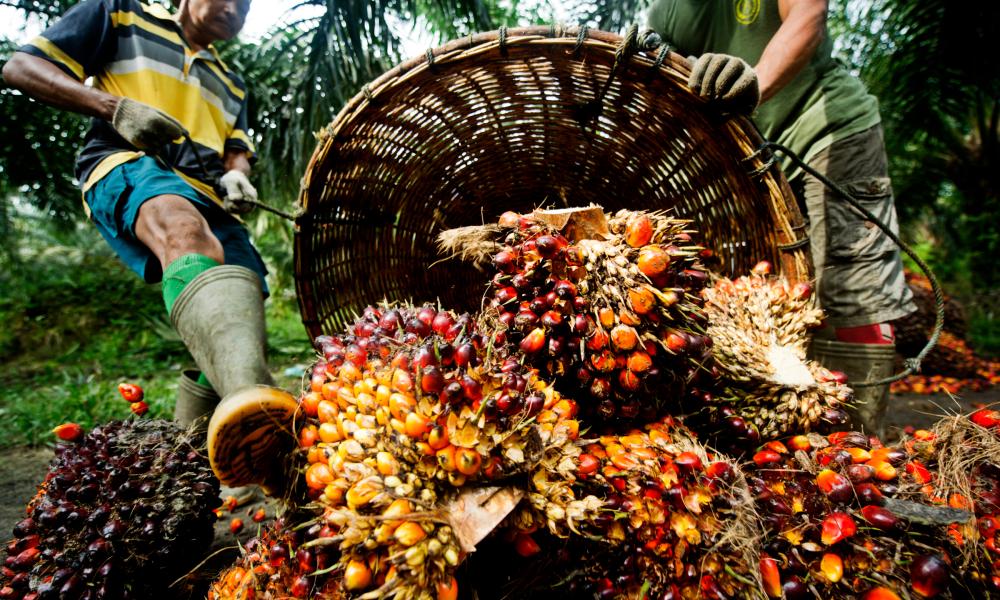
Nigeria is ramping up efforts to reverse its growing palm oil import bill, as the federal government and private-sector investors move to scale up domestic production to close a supply deficit that currently costs up to $600 million annually.
Nigeria currently produces about 1.4 million metric tonnes of palm oil annually, while domestic demand exceeds 2.5 million metric tonnes, leaving a shortfall of over 1 million metric tonnes each year.
The deficit has led to a heavy reliance on imports, draining foreign exchange and limiting the growth of local agro-industrial value chains.
However, the Minister of Agriculture and Food Security, Abubakar Kyari, yesterday said the renewed partnership with private investors aims to expand cultivation, improve yields, strengthen processing capacity, and integrate smallholder farmers into structured value chains.
The minister who spoke through his senior special assistant (technical), Ibrahim Alkali, at the national stakeholders’ meeting on the joint development of Nigeria’s palm oil production capacity in Abuja, explained that the government’s response is anchored on the National Oil Palm Development Strategy.
A key component of the plan is a private sector-led proposal by Mass Industrial Development and Logistics Limited to establish seven integrated oil palm estates of 10,000 hectares each across participating states.
The estates, according to the minister, are designed as full-scale agro-industrial hubs that combine cultivation with processing, logistics, and community development.
“This strategy is practical, inclusive, and action-oriented. It brings together government institutions, research bodies, private sector operators, commodity associations, and development partners under a shared framework designed to expand production, improve yields and strengthen processing capacity.
This initiative has the potential to create over 100,000 direct and indirect jobs, save up to 500 million dollars annually through import substitution, and generate new streams of export revenue”, the minister said.
The project is expected to unlock value across the palm oil chain, from production to manufacturing, while positioning Nigeria to compete in both domestic and export markets.
With over three million hectares of suitable land and rising global demand estimated at more than $70 billion, stakeholders at the event said Nigeria has the capacity to significantly reduce imports and reclaim its position in the global palm oil market.
Managing Director of Mass Industrial Development and Logistics Limited, Engr. Emmanuel Obiorah said the investment model prioritises inclusive ownership and local participation, with about 350,000 beneficiaries projected across the seven estates.
He added that each 10,000-hectare plantation could produce up to 40,000 metric tonnes of crude palm oil annually, supporting downstream industries and boosting revenue generation.
We’ve got the edge. Get real-time reports, breaking scoops, and exclusive angles delivered straight to your phone. Don’t settle for stale news. Join LEADERSHIP NEWS on WhatsApp for 24/7 updates →
Join Our WhatsApp Channel