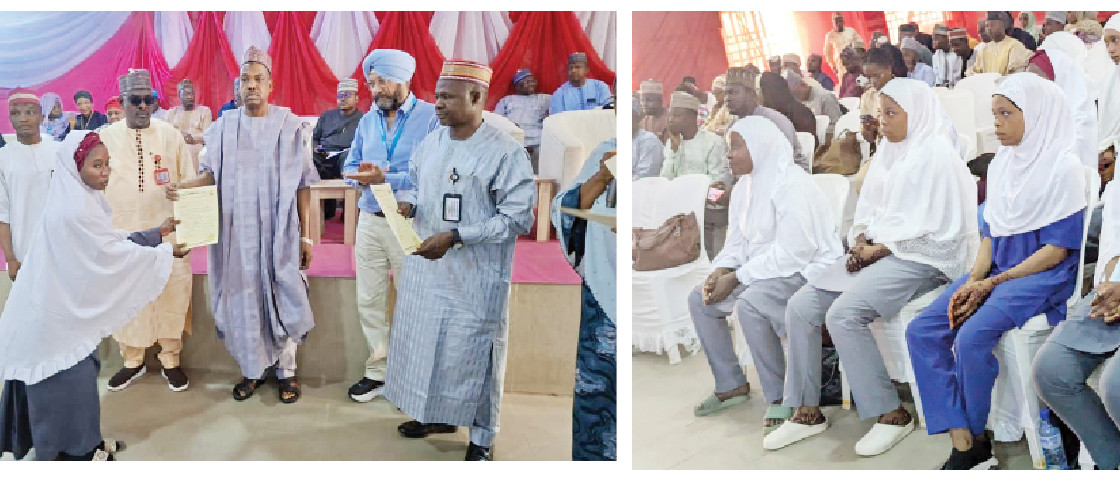
Kano State Government has intensified efforts to tackle rising maternal and neonatal deaths with the inauguration and deployment of 1,018 frontline health workers to 18 high-burden local government areas.
The intervention, implemented in partnership with the United Nations Children’s Fund (UNICEF) and other stakeholders, includes 380 Skilled Birth Attendants (SBAs) and 716 Community-Based Health Workers (CBHWs) under the Maternal and Neonatal Mortality Reduction Innovation and Initiative (MAMII).
Speaking at the event, the Commissioner for Health, Dr Labaran Yusuf, said the recruitment and deployment of the personnel was part of deliberate measures to address critical health challenges confronting the state.
He explained that the workers had been engaged through the State Primary Health Care Management Board with support from the National Primary Health Care Development Agency to strengthen service delivery at the community level.
Yusuf identified major health concerns in the state to include high maternal and neonatal mortality, widespread malnutrition, and a significant number of zero-dose and unimmunised children.
He said the newly recruited personnel would focus on maternal and child health services, immunisation, and nutrition interventions to improve health outcomes.
While acknowledging improvements recorded in the sector in recent years, the commissioner urged the workers not to relent in their duties.
“They are to integrate fully with the communities and intensify efforts towards achieving zero maternal mortality, zero neonatal mortality and zero malnutrition in Kano State,” he said.
He expressed confidence that the deployment of the health workers would strengthen primary healthcare delivery and significantly reduce preventable deaths among women and children in the state.
Delivering a goodwill message at the event, UNICEF Officer-in-Charge and Chief of Field Office Kano, Dr Karanveer Singh, described the initiative as a major milestone towards achieving Universal Health Coverage (UHC) in the state.
He noted that strengthening and digitising the roles of community health workers and skilled birth attendants would enhance access to quality healthcare services, particularly in rural and underserved communities.
We’ve got the edge. Get real-time reports, breaking scoops, and exclusive angles delivered straight to your phone. Don’t settle for stale news. Join LEADERSHIP NEWS on WhatsApp for 24/7 updates →
Join Our WhatsApp Channel