As the world marks World Malaria Day on April 25, Nigeria finds itself in the uncomfortable position it has occupied for decades, centre stage in the worst possible way. The country accounts for 27 per cent of all global malaria cases and 31 per cent of all malaria deaths.
One nation. Nearly a third of the world’s malaria fatalities. In 2022 alone, over 180,000 children under five died from a disease that is, by every scientific measure, preventable and treatable. That figure deserves to be read again slowly.
The global picture is not entirely grim. Since 2000, 2.3 billion malaria cases have been averted worldwide and 47 countries have been certified malaria-free. The Greater Mekong Subregion once plagued by drug-resistant strains has cut cases by nearly 90 per cent. Progress is real and replicable. But while the world moves, Nigeria largely stagnates, weighed down by funding failures, system-wide negligence and a political class that has never treated this disease with the urgency its death toll demands.
The cost of this inertia falls hardest on the poorest. Walk into any general hospital in Abuja and other major cities today and treating a single malaria episode will cost between N7,000 and N17,000. That covers consultation, diagnosis and medication assuming the Rapid Diagnostic Test kits supplied by the government are not quietly set aside by health workers who consider them too unreliable to use.
A mother in Abuja recently spent over N30,000 treating malaria in a single month. For a household on Nigeria’s minimum wage, that is not a medical expense. It is a financial catastrophe. When the cost of getting well exceeds a monthly salary, people delay treatment, turn to herbal mixtures, or simply wait it out. Some do not survive the wait.
According to reports ,a good antimalarial drug that once cost under N1,500 now starts at N2,500 and can reach N7,000. Widely used artemether injections have jumped from N5,000 to N7,000 in a short period. The government announced an import duty waiver, but as the former chairman of the Pharmaceutical Society of Nigeria, FCT chapter, Ifeanyi Ikebudu, has observed, the waiver has not translated into lower prices for core medications. The reason is structural.
Most Active Pharmaceutical Ingredients are imported, and as long as local API production remains absent, every exchange rate swing and logistics cost feeds directly into the price of the medicine a sick child needs tonight.
Minister of Health, Prof. Ali Pate has estimated that malaria costs Nigeria over $1.1 billion annually in lost productivity. This is more than a health crisis , it is a sustained economic haemorrhage. And yet the global funding that has historically underwritten Nigeria’s malaria response is now under severe threat.
In 2024, international malaria funding stood at $3.9 billion against a target of $9.3 billion ,a shortfall of $5.4 billion. Aid cuts are already disrupting health systems and surveillance across the continent. Nigeria, which has depended heavily on the Global Fund and the World Bank to drive its mosquito net distribution and vaccine rollout, must now confront a question it has long deferred: what happens when the donors stop?
The signs of neglect are everywhere. In communities across Nigeria ,open drains, stagnant water and clogged gutters provide perfect mosquito breeding conditions. More alarming still is the awareness gap: some residents in these communities do not know that mosquitoes cause malaria.
Drug resistance compounds the threat. Artemisinin partial resistance is confirmed in four African countries and spreading. Insecticide resistance has been reported in 48 of 53 countries worldwide, threatening the effectiveness of the very nets being distributed. Diagnostic failures, caused by gene deletions that make rapid tests useless, are now reported in 46 endemic countries. Incomplete treatment, widespread self-medication and the circulation of fake and expired drugs problems are accelerating local resistance patterns at a time when the world can least afford it.
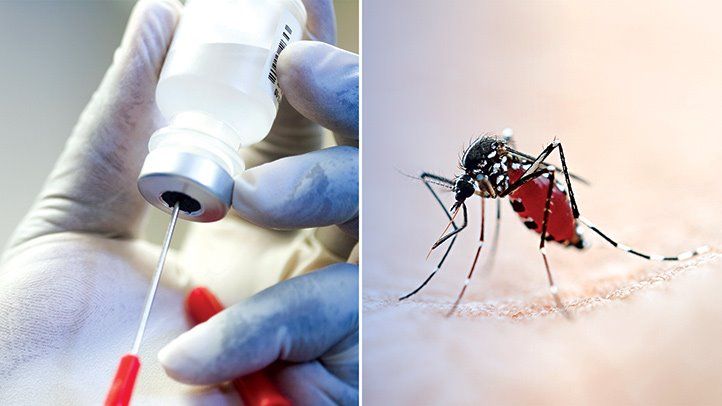
There is progress worth acknowledging. Malaria prevalence in Nigeria has fallen from 22 per cent to 15 per cent, according to the Malaria Indicator Cluster Survey. The vaccine piloted in Kebbi and Bayelsa states has been extended to Ondo and Bauchi. The Advisory on Malaria Elimination in Nigeria, inaugurated by the health ministry in 2024, signals at least an institutional awareness that the fight requires real coordination.
These gains are real, and the officials responsible for them deserve credit.
But 15 per cent prevalence in a country of over 220 million people means millions of Nigerians disproportionately women and children under five remain at daily risk. Vaccine deployment in four states when there are 36 is not a national malaria programme; it is a pilot that has not been scaled. And a government that distributes nets at World Malaria Day outreaches in mosques and churches while slum drains go uncleaned is managing optics, not eliminating a disease.
What Nigeria needs is what it has long resisted: a properly funded, nationally owned malaria programme that does not collapse the moment a foreign donor redirects its priorities.
The federal government must close the gap between the rhetoric of elimination and the reality of chronically underfunded state health systems. State governments must stop treating malaria as Abuja’s problem. Local governments ,the tier closest to the stagnant gutters and unprotected households must be equipped and held accountable for the environmental sanitation that every expert identifies as non-negotiable.
The tools exist. The knowledge is there. The science has long been settled. What is missing is the political will to treat 180,000 dead children a year as a national emergency rather than a footnote in a donor proposal.
We’ve got the edge. Get real-time reports, breaking scoops, and exclusive angles delivered straight to your phone. Don’t settle for stale news. Join LEADERSHIP NEWS on WhatsApp for 24/7 updates →
Join Our WhatsApp Channel