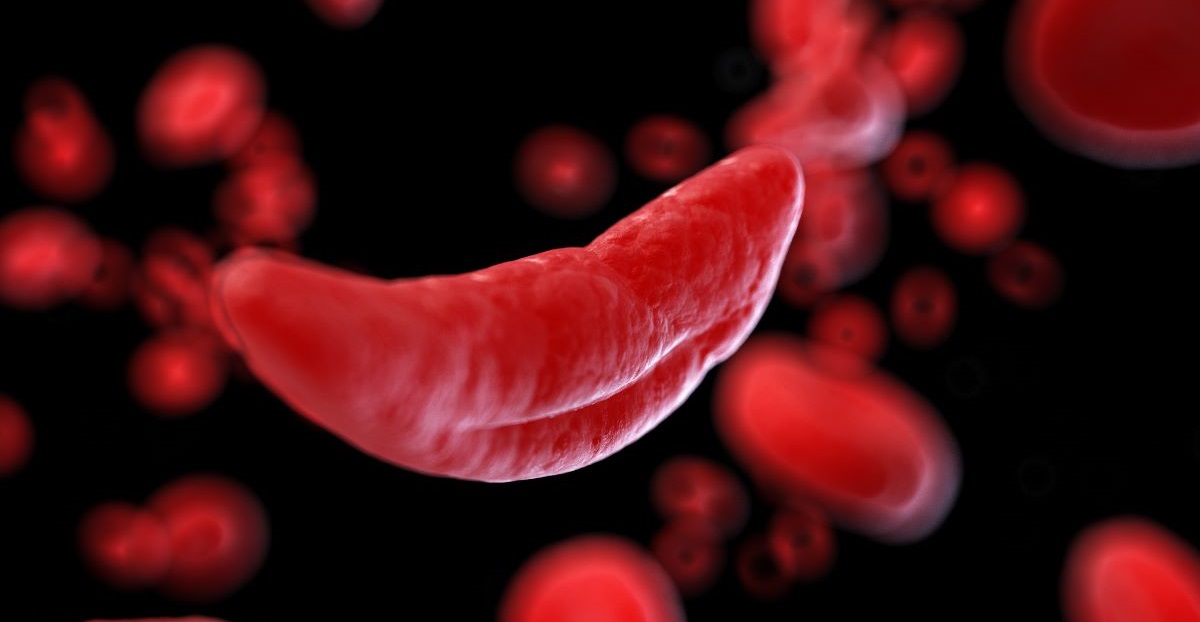
Every year on June 19, the world pauses to reckon with sickle cell disease , a hereditary blood disorder that has stalked humanity for centuries. This year’s theme, “Closing the Survival Gap: Equity in Sickle Cell Care,” carries a particular sting for Nigeria. Not because we are bystanders in this global health conversation, but because we are, by cold statistical measure, its primary victim.
Nigeria bears the heaviest burden of sickle cell disease anywhere on earth. And the numbers are not abstractions: roughly 150,000 babies are born with the condition in this country every year. More than 100,000 of them will not live to see their fifth birthday.
Read that again. 100,000 children. Every year. Dead before they reach school age, not from war, not from flood or famine, but from a disease that modern medicine can diagnose at birth and, in many cases, manage effectively with a drug as old and affordable as Hydroxyurea. There is a word for this kind of death toll. It is not tragedy. It is failure.
We have stated on this page before that Nigeria’s healthcare crisis is not primarily a medical problem. It is a governance problem. The science of sickle cell disease is well understood. Screening tools exist. Treatment protocols have been established. Genetic counselling, when accessible, can reduce new cases dramatically.
What has been missing for decades, across successive administrations is the political will to take these tools seriously and deploy them at scale for a population that desperately needs them.
To be fair, the Federal Government marked this year’s World Sickle Cell Day with a press briefing that contained some genuinely encouraging announcements. The Coordinating Minister of Health and Social Welfare, Professor Muhammad Ali Pate, reiterated commitments under the Nigeria Health Sector Renewal Investment Initiative. Six Centres of Excellence for Sickle Cell Disease one per geopolitical zone have been established and equipped with High-Performance Liquid Chromatography machines for screening and diagnosis. A Universal Newborn Screening Policy is being piloted in Lagos, Kano, and the Federal Capital Territory. The national guidelines have been reviewed to strengthen the use of Hydroxyurea therapy. More than 700 genetic counsellors have reportedly been trained. The ministry has screened over 38,000 babies in the FCT and built a disease registry containing upwards of 10,000 patients across 25 centres nationwide.
These are positive steps in the right direction. We acknowledge them as genuine steps that are sustainable if the political will is there.and we commend the ministry for taking the occasion seriously. But we would be dishonest with our readers, and with the 40 million Nigerians who carry the sickle cell trait, if we did not place these announcements in their proper context. A pilot programme in three states is not a national policy. Six centres of excellence for a country of 220 million people spread across a terrain as vast and as infrastructurally neglected as ours is not adequate coverage. Reviewing guidelines means little if primary healthcare workers across the country remain untrained, underpaid and undersupplied.
The gap between government announcements and ground-level reality in Nigerian healthcare has always been wide. Health policy in Nigeria suffers from a chronic affliction: a surfeit of frameworks and a poverty of implementation. The National Health Insurance Authority exists. Universal Health Coverage is official government policy. Newborn screening has been discussed at ministerial level for years. Yet research published in The Lancet Haematology found that children with sickle cell disease in Nigeria are four times more likely to die before age five than children without the condition. That figure is not improving fast enough.
There is something particularly troubling about how sickle cell disease has been treated in our national conversation ,as a medical curiosity rather than a public health emergency. Malaria gets mosquito nets and mass campaigns. Polio gets presidential task forces. HIV/AIDS attracted billions in international attention. Sickle cell disease, which kills more Nigerian children under five than almost any other single cause, gets a press briefing once a year and a handful of pilot schemes. This disproportion is unconscionable and must be corrected.
What is needed now is not more frameworks but a time-bound, funded, and monitored national action plan with measurable targets. The Universal Newborn Screening Policy must be expanded beyond three states within a clear timeline. Hydroxyurea must be made available and affordable at primary healthcare level, not merely mentioned in revised guidelines. The National Health Insurance Authority must be pressed to include sickle cell screening and treatment in its essential benefits package not as a future aspiration, but as an immediate obligation. States and local governments, which remain the weakest links in healthcare delivery, must be compelled to prioritise this disease and fund their own intervention programmes.
On the question of prevention, the ministry’s appeal for Nigerians to know their genotype before marriage is both correct and insufficient. A government that is serious about reducing new sickle cell births cannot rely on public service announcements alone. Genotype testing must be cheap, widely available, and integrated into pre-marital health requirements, school health programmes, and antenatal care. The churches and mosques, which exercise enormous influence over marriage decisions in this country, must be formally engaged as partners in this effort.
We are also watching with particular interest the promise to integrate sickle cell services into the Nigeria Package of Essential Non-Communicable Disease (NCD) Interventions. The logic is sound. But the history of NCD integration in Nigerian primary healthcare is a cautionary tale of good ideas that died between the ministry and the local government clinic. Implementation must be tracked.
Nigeria will not close its sickle cell survival gap through press briefings alone especially as 100000 children die each year from a manageable disease that has become a national emergency. It demands the urgency, sustained funding, and strict accountability that real emergencies require. The government has shown it knows the right words. Whether it has the genuine will to act is the question events of June 19 must now force.
We’ve got the edge. Get real-time reports, breaking scoops, and exclusive angles delivered straight to your phone. Don’t settle for stale news. Join LEADERSHIP NEWS on WhatsApp for 24/7 updates →
Join Our WhatsApp Channel