
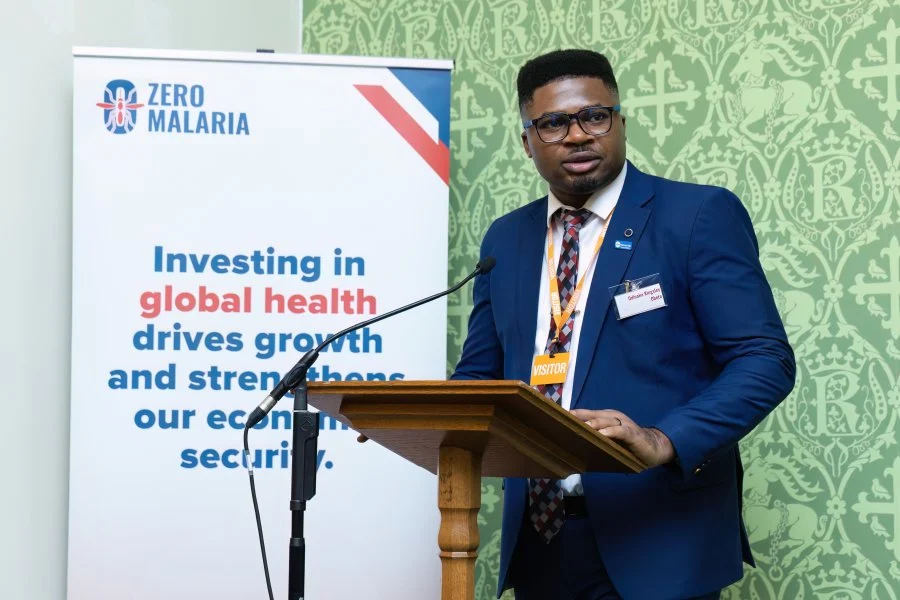
In commemoration of World Malaria Day, a Nigerian malaria advocate, Odinaka Kingsley Obeta, has called for a shift from conventional awareness campaigns to sustained community-driven interventions in the fight against malaria.
He said lasting impact depends on behavioural change and local ownership.
Obeta, who leads the initiative Block Malaria Africa, said experience from grassroots engagements across communities showed that awareness alone has not been sufficient to curb the disease, particularly in high-burden areas.
He noted that malaria continues to affect livelihoods and education in many Nigerian communities despite years of public health messaging.
According to him, interventions in communities such as Jenta Mangoro in Jos demonstrated that involving residents in sanitation efforts, environmental management and health education yields more sustainable outcomes.
He explained that poor sanitation, including stagnant water and waste disposal challenges, remains a major driver of malaria transmission, adding that community-led clean-up initiatives and improved use of preventive tools have contributed to gradual reductions in cases.
“Malaria is preventable, yet it persists largely because solutions are not always aligned with how people live,” he said, stressing the need to design interventions that reflect local realities.
Data generated from such interventions, he added, has supported wider responses, including the distribution of over 2,500 insecticide-treated mosquito nets in affected areas.
In a report published by London School of Hygiene and Tropical Medicine said Obeta’s advocacy has gained international attention. The report said in December 2025, he addressed policymakers at the UK House of Commons during a World Malaria Report event, where he urged stronger political commitment and equitable access to prevention and treatment tools.
Beyond Nigeria, he currently serves as co-chair of the Youth Workstream of the RBM Partnership to End Malaria and vice chairperson of the Youth Advisory Council of the African Leaders Malaria Alliance, where he promotes youth-led strategies across the continent.
Through these platforms, he has supported the expansion of youth-focused malaria initiatives in over 19 African countries, aimed at strengthening community participation in disease prevention.
Obeta, currently a Chevening Scholar studying for a MSc in health policy, planning and finance in the United Kingdom, maintained that bridging the gap between grassroots realities and policy decisions is critical to reducing the malaria burden.
He emphasised that sustained engagement, trust-building, and community ownership are essential to complement existing medical tools in the fight against the disease.
We’ve got the edge. Get real-time reports, breaking scoops, and exclusive angles delivered straight to your phone. Don’t settle for stale news. Join LEADERSHIP NEWS on WhatsApp for 24/7 updates →
Join Our WhatsApp Channel