The recent, but needless, controversies surrounding the coronation of “Igbo kings” in foreign lands have not only caused a disconcerting misrepresentation of culture, but also generated diplomatic embarrassment and social tension. From protests in Ghana to violent unrest in South Africa, host communities have sent a strong message that they will not accept migrants asserting parallel traditional authority.
In Ghana, the installation of Eze Chukwudi Ihenetu as “Eze Ndi Igbo Ghana” ignited public outrage in July 2025, with protesters in Accra and beyond rejecting what they perceived as a foreign monarch on their soil. Placards reading “No Foreign Thrones in Ghana” captured a deeper anxiety — that such titles could erode established chieftaincy systems and create competing centres of influence. That anxiety was only heightened by reports, however unverified, of land acquisitions and plans for an “Igbo kingdom”.
Earlier this year, a similar, but more violent, scenario unfolded in South Africa, where the reported coronation of Solomon Ogbonna Eziko as “Igwe Ndigbo in East London” triggered protests that spiralled into violence on 30 and 31 March, leading to arson attacks targeting Igbo-owned businesses. Authorities and traditional institutions, including those within the Eastern Cape, were swift in condemning the move as unlawful and provocative.
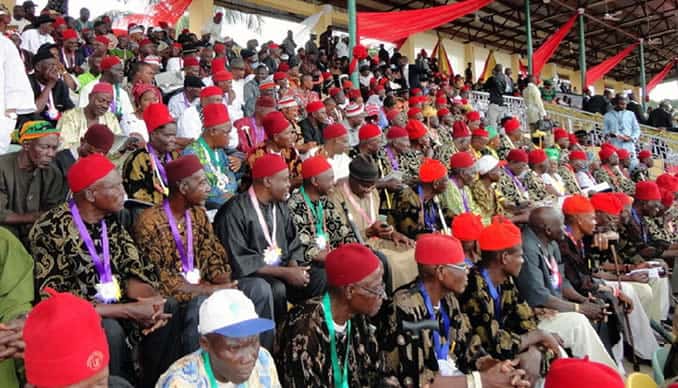
While the organisers insist these titles are merely cultural and ceremonial, the lavish coronation activities that project royal authority — complete with palaces, regalia, and elaborate ceremonies — by non-indigenous groups are bound to provoke suspicion. In any case, the Igbo titles Eze or Igwe are not merely decorative; they carry responsibilities tied to a specific people and territory.
Other Nigerian cultures offer a more conservative model. Among the Hausa, the institution of Sarkin Hausawa, for instance, exists across Nigeria and even abroad, but functions as a community leadership role — mediating disputes, organising welfare, and liaising with authorities — without claiming sovereign or royal equivalence. Similarly, Yoruba diaspora communities tend to rely on associations and elected leaders rather than attempting to recreate full-fledged monarchies. These models show a clearer understanding of the limits of cultural expression in a foreign land.
Even more condemnable is the underlying motive. Many of these so-called coronations have less to do with culture and more to do with massaging the personal egos of the self-styled “kings”. They are usually extravagant and often marked by opulence that borders on the obscene — lavish palaces, flamboyant ceremonies, and conspicuous consumption in environments where such excess can easily offend.
In Igboland, there is often a rigorous process in determining who becomes Eze or Igwe. Considerations typically include lineage, character, and service to society, among others. These so-called kings in foreign lands often rely solely on the wealth they have amassed — whether by fair or questionable means — as their primary credential. They are hardly known for meaningful contributions either in their home communities or in their host societies.
Tellingly, at a time when Nigerians at home are struggling with underdevelopment, poor infrastructure, and limited opportunities, the decision by some diaspora members to expend such vast resources on ostentatious displays of royalty abroad suggests not just misplaced priorities, but also a disconnect from the very communities whose heritage they claim to uphold.
Equally condemnable is the insensitivity to host societies. To erect symbols of kingship in foreign lands that already have established traditional systems is to invite conflict. The backlash in Ghana and South Africa is, therefore, not unexpected. Indeed, the South African incident might have been avoided had the organisers learnt from the earlier events in Ghana. In a country where Nigerians have faced intermittent xenophobic attacks, embarking on such a vainglorious pursuit is nothing short of reckless.
It is true that diaspora communities have the right to celebrate their heritage and maintain a connection to their origins; however, such expressions must promote peace and unity with host communities, not division or tension.
Titles such as “Onyendu” (Leader), as now recommended, offer a more appropriate alternative, emphasising leadership without any pretence of sovereignty.
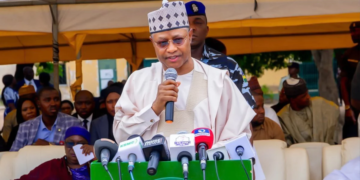
As a newspaper, we align with the commendable decision by Igbo cultural leadership bodies — Ohanaeze Ndigbo Worldwide and the South East Council of Traditional Rulers — to ban the coronation of “Eze Ndigbo” outside Nigeria. Their position — that such titles are alien to Igbo tradition and capable of provoking unnecessary conflict — is incontrovertible and grounded in practical wisdom. The unrest in Ghana and South Africa provides ample evidence of this. The support of the Federal Government, through the intervention of the Minister of State for Foreign Affairs, Bianca Odumegwu-Ojukwu, further underscores the seriousness of the issue. Nigerians abroad should not be exposed to backlash from host communities over a needless ceremonial institution.
The response of Nigerian diplomatic missions, particularly in distancing themselves from these coronations and urging restraint, is equally appropriate. However, they should go a step further by engaging Nigerian communities abroad on the importance of respecting the cultural norms of their host societies at all times.
We’ve got the edge. Get real-time reports, breaking scoops, and exclusive angles delivered straight to your phone. Don’t settle for stale news. Join LEADERSHIP NEWS on WhatsApp for 24/7 updates →
Join Our WhatsApp Channel