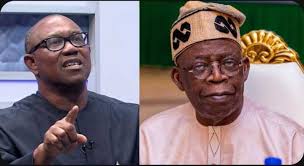
The Presidency on Thursday fired back at former presidential candidate, Peter Obi, over his criticism of Nigeria’s borrowing profile, insisting that debt acquisition by the current administration is targeted at infrastructure development and not reckless consumption.
Special Adviser to the President on Information and Strategy, Bayo Onanuga, in a post on his X (formerly Twitter) handle, dismissed Obi’s position as “demagoguery,” maintaining that borrowing by sovereign nations is a standard economic practice.
“Every sovereign nation borrows, and as President Bola Ahmed Tinubu rightly said, borrowing is not leprosy,” Onanuga wrote.
He argued that Nigeria’s ability to access loans from international and domestic lenders is a sign of credibility and confidence in the country’s capacity to repay its obligations.
According to him, the Tinubu administration has been deliberate in deploying borrowed funds toward critical infrastructure projects rather than financing consumption, urging Obi to engage in more “rational argument” instead of what he described as emotional reactions.
The presidential aide’s remarks were in direct response to Obi’s earlier statement warning that borrowing, when not tied to productive investment, could become “a killer cancer” to the economy.
Obi had contended that Nigeria’s rising debt profile poses significant risks, particularly when loans are not linked to measurable economic value, job creation, or improved living standards.
“Borrowing for consumption slowly eats away at the health, reputation, and autonomy of a nation,” Obi stated, adding that “one of the major leprosy afflicting Nigeria today is not just debt, but debt without productivity.”
He stressed that responsible borrowing must be anchored on clear economic returns and aligned with the provisions of the Fiscal Responsibility Act 2007, which requires governments to specify the purpose of loans and provide a cost-benefit analysis.
The former Anambra State governor also warned that Nigeria’s high debt servicing ratio could constrain future investments in key sectors, arguing that the focus should shift from debt-to-GDP metrics to the country’s ability to service its obligations without undermining development.
“What matters is not debt-to-GDP as much as debt-to-debt servicing ratio, because the latter constrains our capacity to finance sectors that drive human development and economic growth,” he said.
Obi further cautioned that borrowing for non-productive purposes creates a “double jeopardy,” where current revenues are used to service debts that do not enhance future productivity or national capacity.
“A responsible government does not merely defend borrowing; it explains it, justifies it, and most importantly, ensures it works for the people,” he added.
We’ve got the edge. Get real-time reports, breaking scoops, and exclusive angles delivered straight to your phone. Don’t settle for stale news. Join LEADERSHIP NEWS on WhatsApp for 24/7 updates →
Join Our WhatsApp Channel