
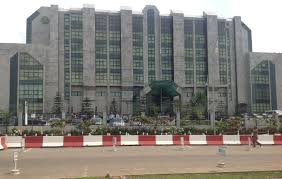
Civil society groups have insisted on legally challenging provisions of the Company and Allied Matters Act (CAMA) 2020, which they believe violate the right to fair hearing as enshrined in the Nigerian Constitution.
Global Rights in conjunction with Open Society Initiative Foundation, Network of University Legal Aid Institutions (NULAI) Nigeria and TAP Initiative, in an interactive session with journalists at the weekend, contended that specific powers granted to the Corporate Affairs Commission (CAC) are inconsistent with constitutional guarantees on freedom of association, fair hearing, and protection of the civic space.
Noya Sedi, Project Manager at Global Rights, in her speech, noted that the strategic litigation was not only about CSOs but that all Nigerians should be concerned when laws are made that abridge the civil liberties of persons, whether individuals or organisations.
According to her, what the advocacy groups are pursuing in court is to ensure that regulatory powers under CAMA 2020 are exercised within constitutional limits and do not unduly restrict the operations and autonomy of incorporated trustees and civil society organisations in Nigeria.
LEADERSHIP learnt that the plaintiffs in the case are the incorporated trustees of Global Rights, Advocates of Sustainable Justice, and the incorporated trustees of TAP Initiative, while the defendants are the Senate President, the Speaker of the House of Representatives, the Corporate Affairs Commission, and the Attorney General of the Federation (AGF).
The litigation particularly challenges Section 824 – CAC’s power to determine classification of association; Section 824(4) – CAC authority over objections to registration of incorporated trustees; and Section 850(1)(d) and (2)(e) – CAC powers relating to dissolution and revocation of registration.
One of the lawyers to the CSOs, Professor Sam Erugo (SAN), told journalists that some of the provisions breached rights protected by the Constitution as they gave the CAC the power to sanction incorporated trustees without recourse to the courts.
“What we advocate is litigation, not arbitrary punishment,” he said, adding that such powers could be abused.
The professor and Senior Advocate of Nigeria noted that the case had suffered an initial setback at the Federal High Court in October 2025, but that they were going on appeal.
When asked why they lost at the court of first instance, he said the judge upheld the defendants’ argument that the plaintiffs lacked locus standi to institute the suit and that they did not demonstrate how they had suffered direct impact from the CAMA provisions at issue.
Prof Erugo explained that in public interest litigation, judges usually try to play safe by invoking the issue of locus standi and throwing out cases without going into their merits, adding that they sometimes take such action in order not to contradict other arms of government.
He, however, stated that the Constitution allows a person to approach the court if he or she feels that their rights are likely to be infringed upon in the future.
He pointed out that such public interest litigation often fails at the first hurdle due to lack of funds to continue the fight, but that with the support of Global Rights and partners, they are ready to test the law all the way to the Supreme Court.
The CSOs told journalists that after a technical review of the judgment, they decided to proceed on appeal, and that they filed a notice of appeal on January 2 this year, with the records compiled and filed at the Court of Appeal on January 29.
Barrister Innocent Lagi, one of the lawyers for the plaintiffs, argued that CAMA 2020 made the CAC both accuser, prosecutor, and judge in its own case, saying these omnibus powers are against the letter and spirit of the Constitution, which guarantees fair hearing to an accused person before an arbiter.
He said: “We have the constitutional right to challenge any law that seeks to abridge the rights of the citizen, whether they are NGOs or individuals. Defending the inalienable rights of the citizen is in itself a valid locus standi, and we shall test the CAMA 2020 provisions that breach these rights in court. The National Assembly cannot grant them powers they should not have.
“The body that makes accusations against NGOs should not be the one to impose punishment without giving the NGOs a hearing before a different body – the court.
“Instead of just imposing fines or dissolving the executive of incorporated trustees, the CAC should sue the CSO before a judge who would determine if a breach has been committed or not before the stated punishment is applied.”
According to him, the present practice of unilaterally and arbitrarily deciding that an offence has been committed and going ahead to mete out punishment without recourse to the courts is against the right to fair hearing, which is a cardinal principle of justice.
He further noted that there are extenuating factors in laws and wondered how such factors can be considered when no hearing is held on the alleged infraction.
We’ve got the edge. Get real-time reports, breaking scoops, and exclusive angles delivered straight to your phone. Don’t settle for stale news. Join LEADERSHIP NEWS on WhatsApp for 24/7 updates →
Join Our WhatsApp Channel