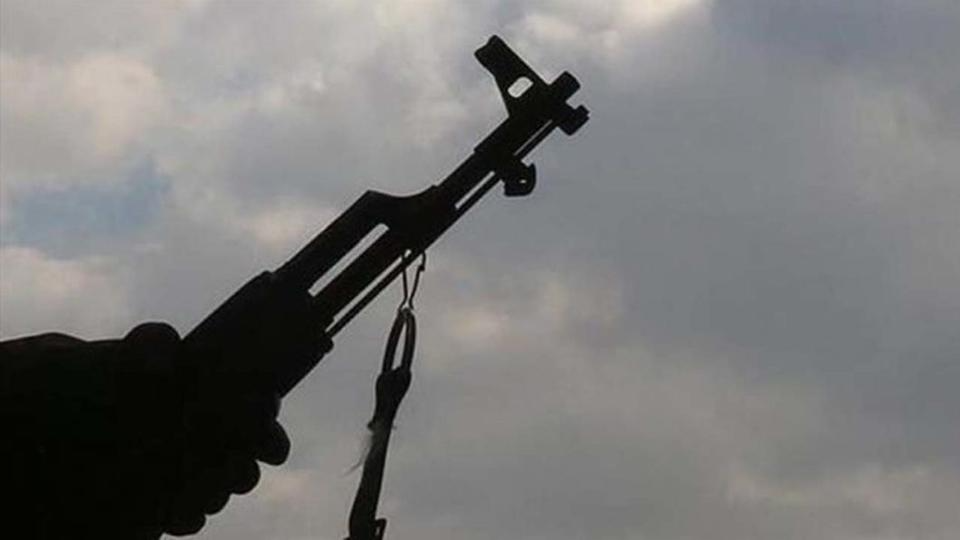
The South West Zonal office of the National Security Adviser has expressed dissatisfaction over proliferation of illicit small arms and light weapons in circulation estimated at over 6.2 across the country.
Dissatisfied by this trend, however, the South West Zonal Director of the National Centre for the Control of Small Arms and Light Weapons (NCCSALW), CP Abiodun Alamutu (rtd) disclosed that his centre has concluded arrangements towards diverting attention from merely policing the nation’s borders in the zone to collaborating with the traditional institutions, religious leaders and other relevant stakeholders in mopping up weapons that are already in circulation.
Alamutu stated this while delivering his address at the 1-Day Seminar on Effective Post-Judgment Management of Small Arms and Light Weapons, organized by NCCSALW which was held in Abeokuta, the Ogun State capital.
This was just as the Commissioner of Police in Ogun Command, Bode Ojajuni advocated for a synergy among all the security agencies across the South West zone for a coordinated mopping up exercise of Small Arms and Light Weapons in a bid to keep the zone safer.
Speaking in an interview, Alamutu disclosed that NCCSALW has discovered that the principal enabler of insecurity, banditry, terrorism in Nigeria is the proliferation of the over five million Small Arms and Light Weapons (SALW) that are concentrated in the hands of the non-state actors and as such, mopping them up becomes necessary if the country must overcome the insecurity challenges it is currently battling.
“So far, we have discovered that a large chunk of these arms are in the hands of non-state actors. That explains why we want to now shift our focus to mopping up those illicit arms that are already in circulation.
“The bulk of the successes we have recorded has been at the border points, those that are about to come into our society and we have made tremendous successes in that, but now, we want to divert our attention into mopping up those that are already in circulation”.
“That is why we require the active collaboration of stakeholders, of traditional rulers, NGOs, community leaders to talk into the minds of these criminals so that those that will involuntarily bring out these arms will, if I can see, think of the possibility of granting amnesty to them”.
Commenting on the urgency of the collaboration, Alamutu explained that the collaboration was already ongoing.
“We are trying to enlarge it. We are working in concert with the special police, who will give clear instructions that it could be on a monthly basis or quarterly. Police formations throughout the country must render returns of illicit arms in their possession and hand them over to the center: there will not be need for us to remind them or request for it before it is done”.
“We have the political will, but the challenge, which I must admit, is that it remains the porosity of our borders. And I’m sure the government, the center, is working towards that to find a lasting solution by way of technology so that those porous borders will be effectively manned via the use of technology”.
Earlier in his lecture, Dr. Olawunmi, an Associate Professor of International Relations, Intelligence and Strategic Studies from the Chrisland University, Abeokuta, recommended that policy makers in the country, which included the Federal Ministry of Justice, the Police and NCCSALW must adopt a 6-months time frame within which to document a national post-judgment SALW management.
We’ve got the edge. Get real-time reports, breaking scoops, and exclusive angles delivered straight to your phone. Don’t settle for stale news. Join LEADERSHIP NEWS on WhatsApp for 24/7 updates →
Join Our WhatsApp Channel