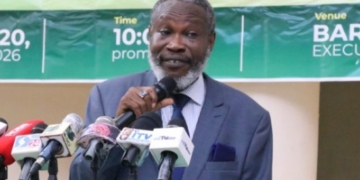

The Rural Electrification Agency (REA) has said that Nigeria’s new mini-grid framework by the Nigerian Electricity Regulatory Commission (NERC), has moved the country’s off-grid power sector from small-scale pilots to a more ambitious, utility-style market, with 48 interconnected mini-grid sites now under construction across 19 states.
The managing director of the agency, Abba Aliyu, said the projects are being delivered under a programme tagged ‘ ‘Interconnected Mini-Grid (IMG) regulatory framework’ which he described as proof that regulatory reforms can translate into real infrastructure, jobs and access for underserved communities.
Speaking during a benchmarking visit by Zanzibar Utilities Regulatory Authority (ZURA) to the REA, in Abuja on Thursday, Aliyu said the interconnected mini-grid projects cut across 10 electricity distribution companies (DisCos) and are being rolled out as one unified programme under the Interconnected Mini-Grid (IMG) regulatory framework introduced by the NERC.
Speaking during the visit, leader of the ZURA delegation, and a World Bank Consultant at ZURA, Dr William Gboney, said the visit was aimed at facilitating knowledge exchange on system dispatch, grid stability management, balancing operations and coordination mechanism in Nigeria.
Gboney, described Nigeria as one of Africa’s leading countries in off-grid electrification and mini-grid regulation.
He said the benchmarking visit was organised to enable Zanzibar’s electricity regulator to learn from Nigeria’s experience in off-grid regulation, geospatial planning and project implementation.
He noted that universal electricity access now goes beyond grid connectivity, stressing that power supply must also be reliable, affordable and capable of supporting productive economic activities.
Also speaking, the director of Stakeholder Management Division at the NERC, Maryam Yaya Abubakar, who led the ZURA delegation, said the visit was aimed at building Zanzibar’s capacity in renewable energy, particularly in mini-grid development.
She said Nigeria has recorded significant progress in the mini-grid space, with REA playing a pivotal role in the achievements.
Continuing the REA said the scheme is expected to deliver 252,505 new and improved electricity connections when completed, alongside 213.3 megawatts-peak (MWp) of solar photovoltaic capacity, 166.1 megawatt-hours (MWh) of storage and 82.5 megawatts of peak load.
The MD Aliyu, said the policy shift has changed the size and scale of mini-grid investment in Nigeria, allowing developers and renewable energy service companies to think beyond the old small-project model.
“The mini-grid regulations last year had a cap of 1 megawatt. We can’t build a mini-grid above 1 megawatt. What we showed the regulator, the economics and the technical data, they changed the regulation. Now we can build a mini-grid of up to 10 megawatts interconnected and 5 megawatts isolated,” he said.
He said the regulatory change had opened the door for larger, more bankable projects and helped reshape the market from a contractor-led space into one increasingly driven by developers and utility-scale operators.
“We are no more contractors. They come, fix all, do this. But when we created that ecosystem and opportunity, they started transition from contractors to developers. And now that we have 1,350 mini-grids, we ask them that you have to start to move from developers to a utility-scale managed company,” he added.
Aliyu said the REA now works with more than 150 Renewable Energy Service Companies, or RESCOs, some of which already manage portfolios of around 30 megawatts and are increasingly expanding beyond Nigeria.
He said the reforms were not limited to regulation alone, but were also supported by a much broader planning and data strategy designed to target communities and productive-use assets more precisely.
According to him, the agency has mapped more than 700,000 communities nationwide, alongside 51,022 hospitals, 11,129 markets, 170 schools, 7,979 factories, 407 functioning mini-grids, 57 dams and 2,194 feeders across distribution company networks.
Aliyu said the data-driven approach is intended to determine the least-cost way of electrifying each location, whether through solar home systems, isolated or interconnected mini-grids, or grid extension.
He explained that the agency no longer treats rural electrification as a blanket exercise in which all communities are served the same way, saying the new model is based on demand, population density, cost and long-term commercial viability.
“What you are seeing is not just the map of Nigeria with colour. Behind the map are layers and layers and layers of data that give us a direction of how we should interact and when we should interact and how we should interact and where should we intervene,” he said.
Aliyu said the approach is especially important because Nigeria still faces a major electricity access gap. He said the country’s access rate stands at 61.2 per cent, leaving about 80 million people without electricity, adding that many of them are not only unserved but also underserved, receiving fewer than six hours of supply a day.
He said the REA’s work is therefore focused on both expanding access and improving reliability in communities that are already connected but poorly served.
The REA boss also linked electricity access to wider economic growth, arguing that inadequate power supply has contributed to the decline of manufacturing and other productive activities in parts of the country.
He cited the southwestern and northwestern regions, where he said there were about 250 to 300 factories in the 1980s, compared with only 40 to 70 functioning factories today, with the drop in electricity and investment affecting jobs and industrial output.
Beyond access, Aliyu said the agency is also preparing Nigeria for a future in which electricity demand will rise sharply because of population growth, the electrification of everything and the energy needs of artificial intelligence and data centres.
He added that the world’s biggest economies are already planning around that shift, and that Nigeria must do the same if it wants to benefit from the next phase of energy growth.
Aliyu also said the REA is working to expand local solar manufacturing, noting that the country is expected to hit 3.7 gigawatts of manufacturing capacity by the end of next year, while some Nigerian photovoltaic panel manufacturers have already begun exporting to Ghana.
He said the long-term goal is to reduce dependence on imported solar products, attract Chinese manufacturers to set up in Nigeria and build a stronger domestic value chain around renewable energy equipment.
The agency maintained that the mini-grid programme and the broader electrification strategy are central to Nigeria’s goal of achieving universal electricity access by 2060.
We’ve got the edge. Get real-time reports, breaking scoops, and exclusive angles delivered straight to your phone. Don’t settle for stale news. Join LEADERSHIP NEWS on WhatsApp for 24/7 updates →
Join Our WhatsApp Channel