Prof. Iliyasu Yusuf of Federal University, Dutsima, has called on government and stakeholders to leverage Artificial Intelligence (AI) to address Nigeria’s pressing socio-economic and security challenges.
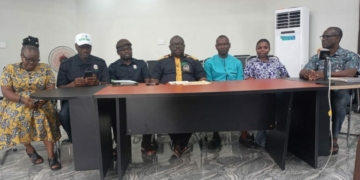
He made the call while presenting a paper at the five-day maiden national conference of the Aminu Kano Academic Scholars Association, organised in collaboration with Al-Qalam University, Katsina.
The conference, themed “Harnessing AI for Sustainable Human Capital Development, Scientific and Academic Advancement, Security Enhancement, Healthy Living and Climate Change Mitigation in Nigeria,” brought together academics and experts to explore innovative solutions to national development issues.
Prof. Yusuf described AI as a key driver of the Fourth Industrial Revolution, noting that its adoption could help Nigeria overcome persistent challenges such as poverty, insecurity, unemployment, and weak infrastructure.
According to him, the country requires innovative, data-driven approaches to improve living standards and drive sustainable growth.
“AI offers Nigeria a viable pathway to address its development challenges more effectively and enhance global competitiveness,” he said.
Speaking on security, the professor said AI can significantly improve intelligence gathering, crime prediction, and response strategies.
He explained that predictive analytics can help identify crime patterns, forecast potential threats, and support proactive policing, particularly in tackling banditry, kidnapping, and cybercrime. “AI-powered systems can shift our security approach from reactive to preventive,” he noted.
Prof. Yusuf also highlighted AI’s potential to transform the education sector through personalized learning and digital skills development.
He said AI-powered platforms can help bridge learning gaps, especially in overcrowded classrooms, while equipping young people with relevant skills for the global digital economy.
Enhancing Healthcare Delivery On healthcare, he noted that AI can support early disease detection, improve diagnostic accuracy, and expand access to medical services through telemedicine.
He added that AI tools could help address the shortage of healthcare workers and reduce the prevalence of fake and substandard drugs through verification systems.
The professor further explained that AI can assist in predicting floods, monitoring deforestation, and improving agricultural productivity through smart farming techniques.
He said these applications are crucial in mitigating the impact of climate change on Nigeria’s environment and economy.
While acknowledging the opportunities, Prof. Yusuf stressed the need for deliberate policies, investment in digital infrastructure, and improved access to electricity and internet services.
He also called for capacity building and ethical frameworks to guide the deployment of AI technologies. “AI must be implemented in a way that is inclusive, responsible, and tailored to Nigeria’s realities,” he said.
Prof. Yusuf concluded that with the right approach, AI could serve as a powerful catalyst for sustainable development and national transformation.
Earlier, the Deputy Vice Chancellor of the Academy, Ahmed Umar Zango, thanked the local organising committee for the successful organisation of the conference, urging participants to take advantage of the conference to enhance their knowledge.
We’ve got the edge. Get real-time reports, breaking scoops, and exclusive angles delivered straight to your phone. Don’t settle for stale news. Join LEADERSHIP NEWS on WhatsApp for 24/7 updates →
Join Our WhatsApp Channel