
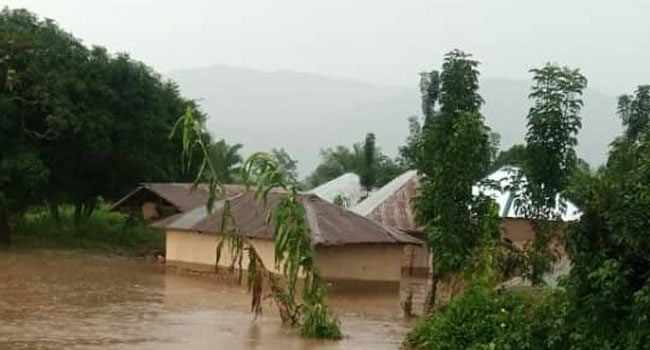
The Nigerian Meteorological Agency (NiMet) has issued a warning that 19 states across the country may experience flash flooding in the coming days due to expected heavy early rains.
In an advisory released on Thursday, NiMet explained that the flooding risk is heightened because dry, hardened soils will prevent water from penetrating the ground, leading to increased surface runoff.
The states likely to be affected are: Zamfara, Nasarawa, Kwara, Oyo, Lagos, Ogun, Ekiti, Delta, Imo, Anambra, Enugu, Ebonyi, Akwa Ibom, Cross River, Rivers, Edo, Ondo, and Bayelsa.
According to the agency, possible impacts of the flash floods include flooded roads, traffic disruptions, damage to homes, farmland, and critical infrastructure, blocked drainage systems, power outages, telecommunications disruptions, and increased risks of injuries and waterborne diseases.
NiMet advised residents to take proactive measures by clearing blocked drainage around their homes and staying updated with official weather and flood alerts.
The agency also cautioned motorists and pedestrians to avoid driving or walking through flooded areas.
It further called on relevant authorities and stakeholders to strengthen coordination, preparedness, and emergency response mechanisms to mitigate flood-related risks.
This warning comes after the federal government recently alerted that 14,118 communities in 33 states and the Federal Capital Territory (FCT) are at risk of severe flooding in 2026.
The agency had also earlier issued a nationwide alert, especially in 12 states, over rising temperatures, warning that the conditions could trigger heat stress.
The states listed by NiMet include Niger, Kebbi, Sokoto, Zamfara, Katsina, Kano, Yobe, Jigawa, Bauchi, Gombe, Borno, and Adamawa.
NiMet, in an advisory released on its website, said that rising temperatures across Nigeria may pose health risks, particularly in the northern states.
The heat index projections indicate critical heat levels across parts of the North, Central, and Southern regions of Nigeria. The temperature ranges are Northern states: 40 – 45°C, Central states: 35 – 38°C and Southern states: 33 – 35°C.
The advisory further stated that other states not listed are likely to experience the effects of the heat, noting that other inland areas in southern states could be affected.
NiMet urged residents to take precautionary measures to reduce the risk of heat-related illnesses.
The agency said the presence of fine dust particles over parts of the northern states, combined with extreme heat, would increase health risks, including heat exhaustion, heat stroke, and possible meningitis outbreaks.
We’ve got the edge. Get real-time reports, breaking scoops, and exclusive angles delivered straight to your phone. Don’t settle for stale news. Join LEADERSHIP NEWS on WhatsApp for 24/7 updates →
Join Our WhatsApp Channel