Let me tell you a story most Nigerians already know but are too polite to say out loud. A politician attends a university convocation. He gives a speech, shakes some hands, and possibly writes a cheque. A few weeks later, something remarkable happens , a miracle of sorts, if you will. The man wakes up as a Doctor. Not because he sat through years of postgraduate research. Not because he defended a thesis before a panel of experts. Just because a university decided to confer on him an honorary degree and nobody told him or he chose not to remember that honorary and earned are two very different things. From that day, his letterhead changes, his aides call him Doctor, and he signs official documents with the prefix as though he actually studied for it.
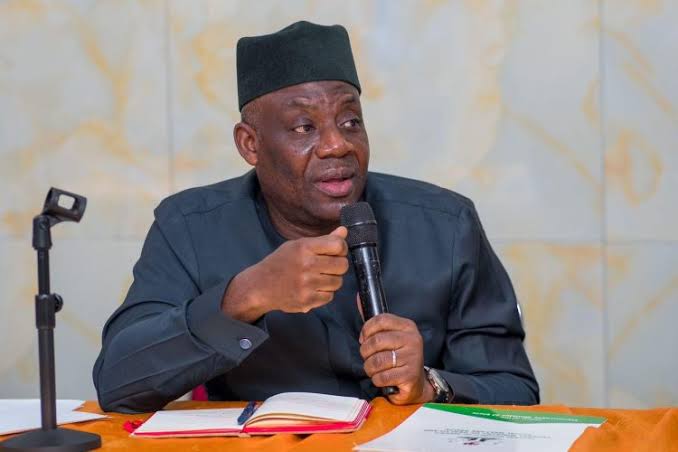
This has been going on in Nigeria for so long that we have almost normalised it. So I was genuinely pleased when the Federal Government, through the Minister of Education Dr. Tunji Alausa, announced on Wednesday that the Federal Executive Council had approved a uniform policy to regulate the award and use of honorary degrees by Nigerian universities.
The policy, among other things, prohibits recipients from prefixing “Dr.” to their names in official academic or professional settings and requires that all honorary degrees be clearly marked as “honorary” or “honoris causa” on certificates and any references to them.
It is about time. Long overdue, if I am being honest.
The abuse of honorary degrees in this country has reached scandalous proportions. What was originally a dignified tradition universities honouring distinguished individuals who had made exceptional contributions to society, science, the arts or public service has been prostituted into something closer to a commercial transaction. Some of our universities have been conferring these degrees with a cheerfulness that suggests the criteria is less about the recipient’s contributions to humanity and more about what he or she can contribute to the institution’s building fund.
A man donates money to a university or sits on its governing council, and suddenly he is an honorary doctor. A politician in power who can influence budgetary allocations gets a degree. A businessman with deep pockets gets one. God forbid the institution should honour a schoolteacher who spent forty years educating children in a rural community with no electricity that kind of contribution doesn’t come with a cheque.
Mind you, the policy also targets something that has always irritated me personally the practice of serving public officials receiving honorary degrees from universities that may have interests before government. Let us be straightforward about what that arrangement often looks like. A university needs something from a ministry or a government agency.
The minister or director-general or permanent secretary suddenly finds himself being nominated for an honorary degree. He accepts, attends convocation in full academic regalia, gets photographed receiving the scroll, and from that point uses the title “Doctor” on every official document, business card and press release. Is that an honour or is that an inducement? In some jurisdictions, that exchange would attract serious scrutiny. In Nigeria, we frame it as a milestone and put it in the newspapers.
The new policy also addresses something the Minister called a “misnomer” — the practice of universities without doctoral programmes conferring honorary doctorates. This is important and I am glad it is being tackled. Think about it for a moment. If a university does not award earned PhDs, what exactly is the standard against which it is measuring the honorary doctorate it is conferring?
An honorary doctorate is supposed to represent the highest honour an academic institution can bestow. It is a symbolic elevation to the level of the institution’s most advanced scholarship. If the institution has no doctoral programme, that symbolism is hollow. It is like a driving school issuing a pilot’s licence. The form exists but the substance is absent.
Like I have said previously on this page, the problem with Nigeria is rarely the absence of good policies , it is the absence of enforcement. We have had guidelines on this before. The Keffi Declaration, developed by the Committee of Vice-Chancellors of Nigerian Universities, was supposedly already in place as a guiding framework for the conferment of honorary degrees.
But it lacked legal backing and, more importantly, it lacked teeth. Vice-chancellors nodded at the declaration and then proceeded to do largely as they pleased. The question worth asking now is what changes? The minister says the National Universities Commission will issue compliance guidelines, monitor convocation ceremonies and publish an annual list of legitimate honorary degree recipients. He also says sanctions will be developed and enforced against universities that violate the policy.
That last sentence is where every Nigerian who has watched our regulatory history should pay close attention. Sanctions will be developed. Not that they already exist, ready to deploy on day one. They will be developed. That gap between policy announcement and enforcement infrastructure is where Nigerian reforms go to die. I hope this one is different.
The second concern is cultural. The use of “Dr.” by honorary degree recipients is not just a Nigerian problem but it is an especially acute one here because of how titles function in our society. In Nigeria, titles are currency. They signal status, command deference and open doors. “Doctor” is one of the most prized. Many recipients of honorary degrees are not going to voluntarily stop using the prefix because a policy says so, not when they have spent years building their identity around it, not when their supporters and allies have already absorbed the title as part of how they address and describe the person. Culture will resist this policy quietly and persistently. The government will need more than a circular to the NUC to change that.
There is also the question of accountability for the institutions themselves. The minister says autonomy does not permit universities to violate national regulations and that “autonomy does not equate to the right to break the law in this country.” Fair enough. But governing councils of Nigerian universities include powerful political figures whose patronage the institutions depend on.
A vice-chancellor who declines to confer an honorary degree on a politically connected individual may find that his institution suddenly faces difficulties with accreditation renewals, funding approvals or capital project releases. These are real pressures. The policy needs to be accompanied by a protection framework for vice-chancellors and registrars who want to comply but face institutional pressure to do otherwise.
None of this is to diminish the announcement itself. The direction is right. Honorary degrees should be reserved for people who have genuinely distinguished themselves scholars, scientists, humanitarians, artists, institution builders not as a tool for currying favour with the powerful or extracting donations from the wealthy. The annual published list of legitimate honorary degree recipients is a particularly good idea. Transparency is often the cheapest and most effective regulatory tool we have.
But let us watch the implementation. Let us see whether a minister with real political connections receives an honorary degree in the next twelve months and uses the title “Dr.” without consequence. Let us see whether any university is actually sanctioned for a violation. Let us see whether the NUC actually monitors those convocation ceremonies with the rigour being promised.The announcement is welcome. The work is just beginning.
We’ve got the edge. Get real-time reports, breaking scoops, and exclusive angles delivered straight to your phone. Don’t settle for stale news. Join LEADERSHIP NEWS on WhatsApp for 24/7 updates →
Join Our WhatsApp Channel