There is a ritual in Nigeria’s power sector that has been performed so many times it has become almost ceremonial. A new minister is appointed. A presidential spokesman issues a statement full of impressive credentials. The minister appears before a Senate committee, makes careful promises, and is confirmed. And then nothing changes. The lights stay off. The generators keep running. And the cycle begins again with the next minister.
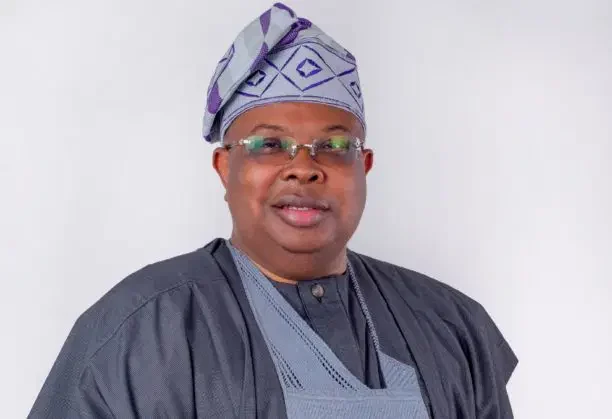
President Bola Tinubu has now nominated Joseph Olasunkanmi Tegbe as Minister of Power, following the resignation of Adebayo Adelabu, who departed to pursue an elective office. Tegbe comes with a substantial curriculum vitae: over 35 years of experience across public and private sectors, a former senior partner at KPMG Africa, advisory roles spanning fiscal policy and regulatory reform, and current service as Director General of the Nigeria-China Strategic Partnership.
On paper, it is the profile of a competent technocrat. The problem is that Nigeria’s power sector has never lacked competent technocrats. What it has consistently lacked is the structural conditions that would allow any technocrat, however capable, to make a material difference.
Let the record speak plainly. Nigeria has not generated more than 5,000 megawatts of electricity in over 65 years of independence. Not under military rule, not under civilian government, not under the privatisation experiment that began under President Olusegun Obasanjo, not under the sector reforms that followed. Five thousand megawatts for a country of over 220 million people a figure that South Africa, with a quarter of Nigeria’s population, has surpassed many times over despite its own electricity crisis. This is not a management problem that a better curriculum vitae will solve. It is a structural failure of historic proportions.
Tegbe, to his credit, has shown more self-awareness than some of his predecessors. At his Senate screening, he declined to promise 24-hour power supply, pledging instead to deliver visible improvement within the shortest time possible. That is a more honest starting point than the extravagant vows that have historically accompanied such appointments. But visible improvement is a phrase with very wide margins. Nigerians have been promised improvement in various formulations for three decades. What they need is not better messaging ,they need electricity.
Complicating matters further is the architecture around Tegbe’s appointment. President Tinubu has simultaneously appointed Rilwan Lanre Babalola as Special Adviser on Power and Chairman of a Presidential Task Force on Power Sector Reset and Restoration, operating under a direct presidential mandate with a 90-day implementation blueprint.
This is an arrangement that raises more questions than it answers. Where does ministerial authority end and task force authority begin? If Babalola, a former power minister himself, reports directly to the president, what precisely is Tegbe’s operational space? The redesignation of the energy adviser’s office as Special Adviser on Oil and Gas was meant to “avoid duplication of functions.” The current arrangement appears to have introduced new ones.
Nigeria’s power sector does not suffer from a shortage of oversight structures. It suffers from a shortage of results. There are currently more agencies, task forces, committees, and reform programmes in the electricity value chain than the sector has coherent policy. The Nigerian Electricity Regulatory Commission, the Nigerian Bulk Electricity Trading Company, the Transmission Company of Nigeria, the Rural Electrification Agency, the generation companies, the distribution companies each with its own mandate, its own leadership, and its own interpretation of what reform means. Adding a presidential task force to this architecture without resolving the underlying dysfunction is not reform. It is bureaucratic layering.
The generator cartel question cannot be sidestepped. For years, informed observers have argued that the absence of stable grid power is not entirely accidental that powerful commercial interests with stakes in the generator import and distribution business have had reasons to ensure the grid never becomes reliable enough to make their products redundant.
Whether this is accurate as conspiracy or merely accurate as a description of perverse incentives, the effect is the same: billions of naira flow annually into generator fuel and maintenance rather than productive economic activity. Any minister serious about reform must be prepared to confront that ecosystem, which means confronting interests with significant political connections.
Meanwhile, the solar energy market is quietly growing. In the absence of grid power, Nigerian households and businesses have been building off-grid solar capacity at considerable personal expense. This is not a solution it is a coping mechanism that places the cost of state failure onto individuals but it is a reality that any minister must engage with. The question for Tegbe is whether his regulatory background, sharpened at KPMG and in engagements with NERC and NBET, equips him to build policy frameworks that accelerate the solar transition while pursuing grid stability.
The Nigeria-China Strategic Partnership background carries its own implications. China has been a significant source of infrastructure financing in Nigeria, and the power sector has been among the areas of engagement. Chinese-funded power projects have had mixed results across Africa some delivering capacity, others delivering debt without commensurate output. If Tegbe’s appointment is partly intended to leverage those bilateral relationships for investment in the sector, that is a legitimate strategy, but it must be accompanied by contract transparency and performance frameworks that previous Chinese-financed projects have not always attracted.
This newspaper has said before on this page, and says again: the power sector will not be transformed by ministers alone. It requires consistent policy, credible tariff regimes, enforcement of commercial discipline across the value chain, and the political will to break vested interests that profit from the status quo. Tegbe may have the credentials. He may even have the intentions. But until the President demonstrates a willingness to pursue structural reform rather than structural announcements, every minister of power will be, as his predecessors were, a competent person asked to perform miracles without the tools to do so. The lights will tell us, as they always do, whether this time is different.
We’ve got the edge. Get real-time reports, breaking scoops, and exclusive angles delivered straight to your phone. Don’t settle for stale news. Join LEADERSHIP NEWS on WhatsApp for 24/7 updates →
Join Our WhatsApp Channel