Deutsche Partners Holding (DPH) said it has successfully unlocked over $600 million into the Nigerian economy over the past year, even as it blamed a system intentionally designed for failure and a deep trust deficit for crippling the nation’s progress.
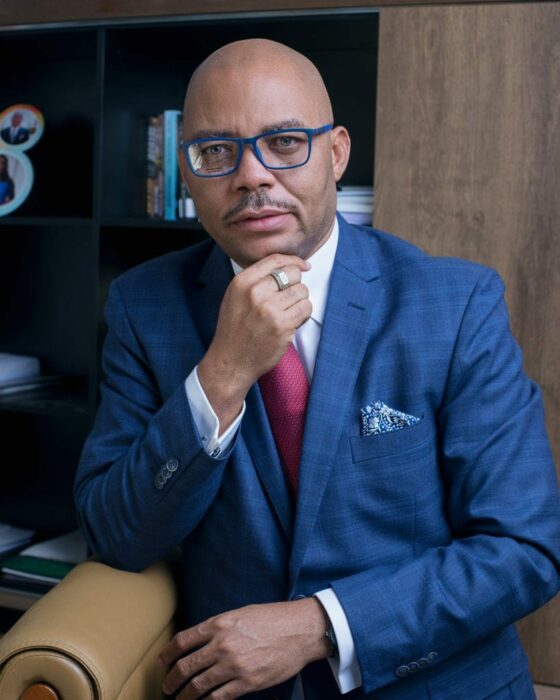
The convener of the 2026 Infrastructure Dialogue, Dr Onuoha Nnachi, made this known on Wednesday while speaking at the fifth edition of the Dialogue held in Abuja, themed “Powering the African Future: Leadership, Entrepreneurship, Finance and Investment.”
Nnachi, who is also the managing partner of Deutsche Partners Holding (DPH), traced the forum’s origin to a frustrating 18-month consulting job for the federal government between 2014 and 2015.
“In 2014-2015, DPH, Price Waterhouse, and Phillip Consulting were engaged to develop a master plan for infrastructure development for Nigeria. We concluded that the infrastructure deficit in Nigeria was about $30.1 trillion.
“But after the 2015 political transition, the new government showed no interest. The government that came after that period wasn’t interested in what we did. I got stuck, having worked for 18 months to produce very bright and intelligent documents. I said, ‘The idea cannot die.’ So we took a private initiative,” he said.
He provided specific figures to demonstrate the Dialogue’s impact, saying: “Between last year and this year, we’ve been able to unlock over $600 million into the Nigerian economy from different contributions.
“The African Development Bank, we raised funds for one project. The Calabar Super Highway, we raised $100 million for the federal government for that project. The Kano-Maradi railway, we raised about $183 million, of which $150 million has been released.
“We are using this to fill a gap. That is what we wanted the government to do, but they’re not doing it. So we picked up the entire challenge ourselves.”
Earlier, the President of the Abuja Chamber of Commerce and Industry (ACCI) and Chairman of Day One, Chief Emeka Obegolu, commended the organisers.
“I would like to sincerely commend Deutsche Partners Holding for convening this timely dialogue focused on infrastructure financing and economic development.
“Infrastructure remains the foundation of every thriving economy. There can be no development without infrastructure. We all agree as a country that we have an infrastructure deficit, and everybody has a role to play,” he said.
Obegolu also said that Nigeria is one of the best investment destinations presently, and that the only challenge the country has is the perception of risk.
“Even in real estate, not many countries achieve the returns you are achieving in Nigeria. The investments are there for foreign investors. We just need to address the security issues that are putting us down.
“As long as we address that and build trust, we will attract the necessary investments from outside Nigeria to support the growth of this country,” he said.
He described the gathering as a room where financiers are meeting the private sector and the government, open for foreign investors, saying it is a good room.
Also delivering a goodwill message, Dr Jobson Oseodion Ewalefoh, Director-General and CEO of the Infrastructure Concession Regulatory Commission (ICRC), put the current infrastructure gap at a staggering $2.3 trillion.
“Nigeria is at a crossroads. Despite our abundant resources and vibrant population, we have a staggering $2.3 trillion infrastructure deficit across transport, energy, ICT, agriculture, aviation, and housing sectors.
“With an annual investment requirement of $100 billion and public spending covering less than 30 percent of this need, traditional procurement models are no longer enough. Mobilisation of private capital is not just an option, it is an absolute necessity,” he said.
He reaffirmed that Public-Private Partnerships (PPPs) remain Nigeria’s strategic answer. “They are not merely financing tools, they are powerful catalysts for infrastructure renewal, economic growth, and poverty alleviation,” he said.
Ewalefoh who represented by Dr Amanze Okere, a director in ICRC, announced that in August 2025, with presidential approval, the ICRC issued updated PPP guidelines decentralising project approval powers.
“Ministries can now approve projects up to N20 billion, while agencies may approve those up to N10 billion. Projects exceeding these thresholds remain subject to Federal Executive Council approval. This reform is already empowering MDAs to deliver projects more swiftly.
“By next month, June 2026, we intend to present to PPP stakeholders a model PPP Agreement, prepared with the Federal Ministry of Justice, to improve transaction time so projects achieve faster commercial and financial closure.
“We intend to publish in the near future a pipeline of eligible projects for investment in Nigeria’s PPP sphere, an update from previously published versions.
“As stakeholders convene here, we are confident that these two days of dialogue will strengthen collaboration between the public and private sectors needed to build lasting economic resilience,” he said.
The 2026 Infrastructure Dialogue continues on Thursday, with participants hopeful that the hundreds of millions already unlocked can grow into billions, if the trust deficit is finally bridged.
We’ve got the edge. Get real-time reports, breaking scoops, and exclusive angles delivered straight to your phone. Don’t settle for stale news. Join LEADERSHIP NEWS on WhatsApp for 24/7 updates →
Join Our WhatsApp Channel