A Nigerian fashion entrepreneur and business executive, Rotimi Ramalan, is seeking to cut production costs and secure supply chains, with China.
Ramalan, who completed an 18-day industrial and business tour of China focused on textile sourcing, manufacturing technology, and renewable energy discussions.
Ramalan said the trip was part of the international expansion plans of his fashion brand, RNR Global Emporium, and aimed to identify opportunities for improving production quality, technology transfer, and industrial collaboration between Nigeria and China.
During the visit he attended the Changjiang Fabric Market and the Guangzhou International Textile City, meeting suppliers and manufacturers of shirt fabrics, linen, wool, cashmere, suit materials, and various garment accessories.
He said the visits offered exposure to contemporary textile standards and international fabric trends.
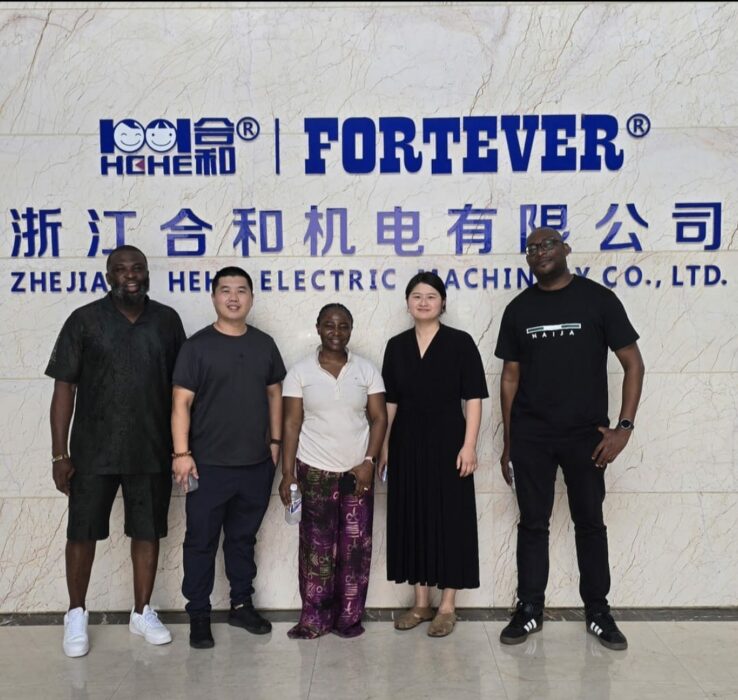
Ramalan and a delegation, which included the Forever Sole African distributor from Nigeria, travelled to Zhuji to inspect the production facility of Forever electric monogram machines.
The delegation observed more than 25 industrial embroidery and monogram machines used in garment customisation and mass production.
He described the factory visit as evidence of the role industrial cooperation can play in supporting technology exchange and manufacturing partnerships between the two countries. “We are looking beyond retailing alone. The goal is to build manufacturing capacity, create employment opportunities, and establish sustainable industrial partnerships that can benefit both nations,” he said.
Other stops included the Sijiqing Silk Market and a high-capacity production warehouse, where the delegation observed silk production and automated systems for large-scale garment output. The group also visited the Kinbo Fashion Accessories Market to review a range of finishing materials and accessory components.
In addition to textile and manufacturing meetings, Ramalan held talks with a Chinese solar manufacturer about the production and supply of solar panels to support factory operations and improve energy efficiency at his facilities in Nigeria. He said integrating renewable energy into manufacturing operations was part of a broader strategy.
Analysts note the tour reflects growing efforts by Nigerian entrepreneurs to engage with international manufacturing networks as the country’s creative and industrial sectors evolve.
We’ve got the edge. Get real-time reports, breaking scoops, and exclusive angles delivered straight to your phone. Don’t settle for stale news. Join LEADERSHIP NEWS on WhatsApp for 24/7 updates →
Join Our WhatsApp Channel