The frequent recurrence of civilian deaths during Nigerian military air operations has become worrisome. Residents in northern Nigeria have increasingly expressed concern over civilian casualties resulting from military operations targeting bandits and insurgents.
In just one month, the Nigerian Air Force bombed two markets on the Yobe-Borno border and in Zamfara State, leaving behind hundreds of deaths.
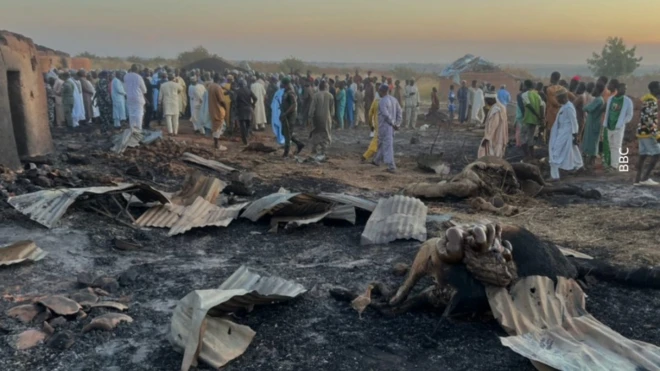
On April 11, more than 100 civilians were reportedly killed in an airstrike on a weekly market in Jilli on the Yobe-Borno border. The military claimed it had carried out a successful strike on a bandits’ location, but following public outcry, the Air Force subsequently opened an investigation into the incident.
In the latest incident, which occurred in Tumfa village in Zurmi Local Government Area (LGA) of Zamfara State, a Nigerian Air Force operation led to the killing of about 100 people in a crowded market on Sunday, May 11. Eyewitnesses said most of the casualties were women, who made up the majority of traders at the market.
The Nigerian Air Force had, in the past, admitted to “accidental” or “mistaken” airstrikes that resulted in civilian casualties between 2017 and 2025. Such incidents were often attributed to wrong coordinates or misidentified targets during counter-insurgency operations.
Among the notable incidents were the January 2025 airstrike in Dangebe village, Maradun LGA of Zamfara State, where 15 people were killed; the December 2024 bombing in Sokoto State that left more than 10 people dead; the January 2024 Nasarawa bombing that reportedly killed about 85 herders; the December 2023 Tudun Biri incident in Kaduna State in which dozens of villagers were killed; the September 2021 strike in Buhari village, Yobe State; and the 2017 bombing of an Internally Displaced Persons (IDP) camp in Rann, Borno State.
Apart from the latest two incidents, which the military claimed were direct hits on identified enemy targets, the rest were bombs meant for terrorists and bandits that ended up falling on civilians.
The airstrikes in Jilli and Tumfa have once again raised difficult questions about the conduct of Nigeria’s counter-insurgency and anti-banditry operations.
In the Jilli incident, the military authorities defended the strike, claiming it was an intelligence-driven precision operation that targeted a known insurgent enclave and logistics hub after strict surveillance protocols. On its part, the Borno State Government said the market had been closed for five years after it was discovered that terrorists were using it. In the latest incident in Tumfa village, however, the Defence Headquarters (DHQ) flatly denied that there were civilian casualties in the airstrike. It said the bombing targeted a “confirmed terrorist structure, occupied exclusively by armed non-state actors who posed a direct and active threat to civilian lives.”
However, worried by this trend, the United Nations High Commissioner for Human Rights, Volker Türk, has demanded independent investigations into airstrikes by Nigerian and Chadian forces in northern Nigeria that killed dozens of civilians.
He lamented reports of high civilian casualties in attacks by Chadian fighter jets against Boko Haram camps on remote islands in the vast marshland shared by Nigeria, Cameroon, Niger and Chad, which reportedly killed dozens of Nigerian fishermen working on islands under Boko Haram control, where civilians are forced to pay taxes to the jihadist group.
The UN rights chief urged both militaries to take all necessary precautions to avoid harm to civilians, saying military operations, including those against Boko Haram and Islamic State West Africa Province, must be conducted in full compliance with international humanitarian law and international human rights law.
Similarly, the National Human Rights Commission (NHRC) has raised concerns over the growing number of civilians killed in military airstrikes in Nigeria, warning that repeated bombardments of local communities and marketplaces are eroding public trust and violating fundamental human rights protections.
The rights body also cited recent incidents in Jilli Market in Yobe State, Shiroro Market in Niger State and Tumfa Market in Zamfara State, where airstrikes reportedly claimed civilian lives within a span of two months.
As a newspaper, we are similarly alarmed by the recurring bombardment of civilian spaces during military operations. We are concerned that, despite the protestations of the military high command, the principles of distinction, necessity, proportionality and accountability — which are central obligations guiding military engagements under international humanitarian law, particularly in civilian-populated communities affected by conflict — are not being strictly adhered to. We are equally concerned that the military may be treating civilian deaths as unavoidable “collateral damage”.
We, however, urge security agencies to strengthen intelligence gathering, improve operational precision and adopt stricter precautionary measures before carrying out aerial offensives. Bombs are not precision hardware in crowded civilian spaces. A market contains men, women and children. Women selling food items in village markets are not combatants. Infants strapped to their mothers’ backs cannot be classified as collateral damage.
Consequently, we align with the calls by both the UN and Nigerian rights bodies for transparent and independent investigations into all incidents involving civilian casualties from airstrikes, and for the reports to be made public. Where certain individuals are found culpable of unnecessary bloodshed, such officials must be identified and prosecuted accordingly.
The normalisation of such untoward operations could only widen the trust deficit between local communities and the military. In many conflict-affected areas, residents now fear both terrorists and the security forces supposedly sent to protect them. This erosion of trust weakens intelligence gathering, fuels resentment and ultimately undermines the fight against insurgency and banditry itself.
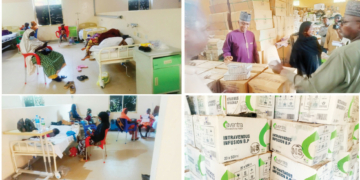
The repeated denial of civilian casualties by military authorities also damages institutional credibility. In the age of mobile phones, eyewitness accounts, videos and independent investigations, blanket denials often diminish public confidence in the military. It is difficult to reconcile official claims of “zero civilian casualties” with testimonies from grieving families, overwhelmed hospitals and humanitarian organisations documenting deaths and injuries.
While we deeply appreciate military personnel for their sacrifices in the long war against insurgents, including paying the ultimate price, we cannot fail to demand utmost accountability when repeated bombardments of civilian spaces lead to the deaths of non-combatants.
We’ve got the edge. Get real-time reports, breaking scoops, and exclusive angles delivered straight to your phone. Don’t settle for stale news. Join LEADERSHIP NEWS on WhatsApp for 24/7 updates →
Join Our WhatsApp Channel