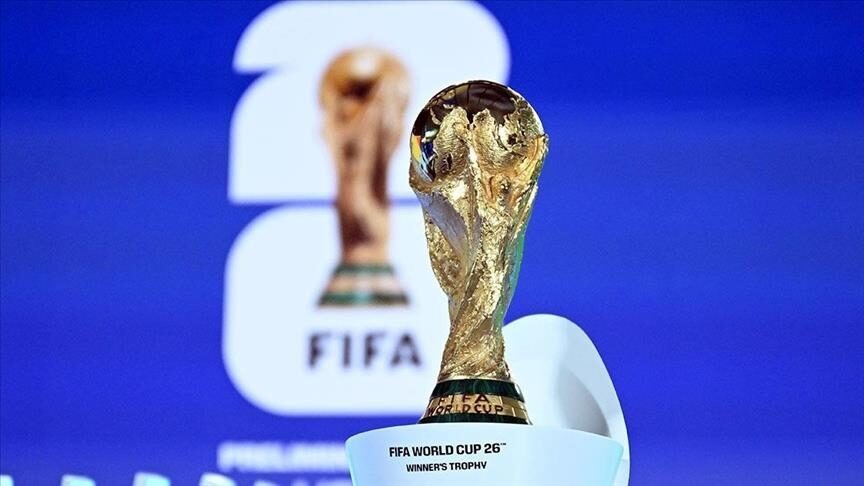
Today, the 2026 FIFA World Cup competition begins. The 23rd edition of the planet’s most-watched sporting event, held every four years, like other editions before it, is by any measure the most ambitious and glamorous yet. For the first time in the tournament’s near-century history, 48 nations will contest football’s grandest prize, up from the 32 that have competed since 1998.
For the first time, three nations , the United States of America, Mexico and Canada share the burden and privilege of hosting it. And for the first time, the African continent sends 10 teams to the competition. It is a tournament of firsts, and the world has every reason to be excited by what lies ahead.
The expansion of the field from 32 to 48 teams is the most structurally significant change since FIFA introduced the modern group stage format. Its logic is sound: football is a genuinely global game, and the old format left too many nations perpetual spectators. Four countries will make their World Cup debut at this edition, nations whose football-mad populations have waited generations for this moment. We welcome that widening of the tent, even as we note that expanded formats carry their own risks the dilution of quality, the scheduling strain, and the potential for meaningless group-stage matches. FIFA must ensure the spirit of competition is not sacrificed on the altar of commercial expansion.
The tournament’s history is worth pausing over as it kicks off. Eight nations have won the World Cup across its 23 editions. Brazil, with five titles, remains the gold standard , the only team to have appeared in every single edition of the competition. Germany and Italy have four titles apiece; Argentina three, with their most recent triumph coming in Qatar in 2022 in what many judged the finest World Cup final ever played.
France, Uruguay, England and Spain have each tasted glory at least once. Notably, every World Cup in history has been lifted by a team from either Europe or South America. No nation from Africa, Asia, or North and Central America has ever reached a final. That is a sobering statistic that the expanded format alone will not change overnight.
The defending champions, Argentina, arrive in North America carrying enormous expectation. Lionel Messi, widely regarded as the greatest player the game has produced, is likely playing his last World Cup, and the emotional freight of that reality will hang over every Argentine match. Bookmakers favour Spain, France and Argentina as the likely winners. Spain’s possession-based model, rebuilt around a golden generation of technically gifted young players, makes them a formidable proposition. France possess perhaps the deepest squad in world football. Argentina has the pedigree and the motivation of champions. It will be a compelling contest among these three.
For the African continent, there is genuine cause for optimism. Ten African nations at a single World Cup is an historic achievement, and the continent will expect a strong collective showing. Morocco blazed a trail at the 2022 Qatar tournament, becoming the first African side to reach a semi-final a performance that rewrote assumptions about what African football can achieve on the world stage. The hope now is that Morocco’s breakthrough was not an aberration but a marker of a rising continent. We urge each of the 10 African representatives to play without fear, to carry their nations’ aspirations with dignity, and to push as far as their talent allows.
Yet for Nigeria, this tournament begins with an ache that no amount of pageantry can fully mask. The Super Eagles are absent for the second consecutive World Cup. That fact cannot be dressed up or explained away. Nigeria failed to qualify for Qatar in 2022 , failed again now .While 10 other African nations celebrate in North America, Nigeria’s 220 million football-mad citizens watch from their living rooms.
The comparison with Italy is instructive, and deeply uncomfortable. Italy, four-time world champions, also missed two consecutive World Cups. The Italian Football Federation responded by holding people accountable coaches were sacked, federation officials lost their positions, and a structural reckoning followed. In Nigeria, the opposite has been true. There has been no accountability, no reckoning, no serious interrogation of why a country of Nigeria’s size and talent pool continues to miss the world’s biggest tournament. Officials retain their positions; the Football Federation carries on as though failure is a natural condition. This is not acceptable.
We have said on this page before that Nigerian football suffers not from a shortage of talent but from a crisis of governance. The Nigeria Football Federation has for too long operated as a patronage network rather than a professional sporting body.
Appointments are made on the basis of politics, not competence. Coaches are hired and fired on sentiment rather than strategy. Domestic football, the bedrock from which national teams must be built, languishes in neglect. Until those in charge of Nigerian football are held to the same standard of accountability that attends every other serious footballing nation, qualification for major tournaments will remain an aspiration rather than an expectation.
There is also a political shadow over this tournament that deserves comment. The United States government has denied visas to officials, referees and supporters from certain countries, preventing them from attending matches. This is a matter of serious concern. The World Cup is not merely a sporting event, it is a rare occasion when the world gathers in something approaching genuine common cause. Using it as an instrument of political leverage undermines the values that sport, at its best, embodies. FIFA and the host nations must do more to guarantee that football remains a space where geopolitical divisions yield, however briefly, to the universal pleasure of the beautiful game.
But let those concerns not crowd out the joy of the occasion. A new World Cup will produce new heroes, forge new memories, and announce to the world players whose names we do not yet know. Let the games begin.
We’ve got the edge. Get real-time reports, breaking scoops, and exclusive angles delivered straight to your phone. Don’t settle for stale news. Join LEADERSHIP NEWS on WhatsApp for 24/7 updates →
Join Our WhatsApp Channel