From the advancing sands of the Sahel to shrinking farmlands and vanishing forests, northern Nigeria has long been at the forefront of climate change. Communities that once depended on fertile soil, grazing routes, and reliable rainfall are increasingly confronting desertification, drought, deforestation, and the loss of livelihoods.
What is the solution? One agency is offering the answer and striving to tackle the challenge with clinical accuracy. That agency is the National Agency for the Great Green Wall (NAGGW).
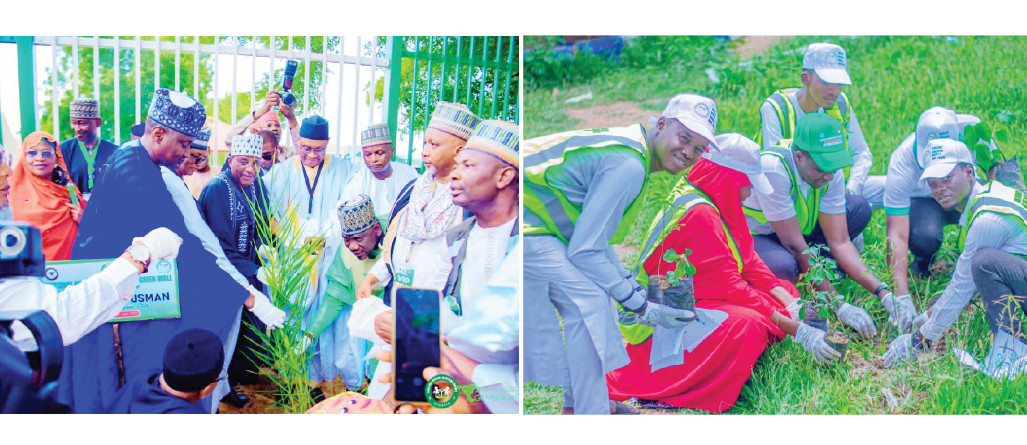
To restore degraded lands, promote afforestation, and build climate resilience across Nigeria’s 11 frontline states, all in the north, NAGGW launched an ambitious tree-planting programme that aims not only to restore ecosystems but also to generate economic opportunities for millions of vulnerable Nigerians.
Saleh Abubakar, the Director-General of NAGGW, announced that the agency has launched a five-year programme to plant 50 million date palm trees across the 11 frontline states affected by desertification. He said the initiative is part of broader efforts to enhance environmental sustainability and climate adaptation in northern Nigeria.
According to him, NAGGW had already commenced implementation, distributing 5 million date palm seedlings, and plans to significantly scale up afforestation activities by 2030. “We began with a humble start, planting a few million trees each year, but this year, we became ambitious to plant 20 million trees,” he said.
Beyond date palms, the agency is also focusing on indigenous and economic tree species such as tamarind and other vanishing forest trees that are gradually becoming scarce across the region.
Nigeria remains one of the key participating countries in the Great Green Wall initiative due to the environmental vulnerability of states in the northern region, where climate pressures continue to exacerbate insecurity, migration, and poverty. The Great Green Wall initiative itself is a continental African project designed to combat desertification and land degradation across the Sahel belt stretching from Senegal to Djibouti.
Over the years, NAGGW has evolved from merely planting trees to becoming a comprehensive agency for ecological restoration and livelihood support. Throughout the states of Adamawa, Bauchi, Borno, Gombe, Jigawa, Kano, Katsina, Kebbi, Sokoto, Yobe, and Zamfara, the agency has undertaken projects involving shelterbelt development, integrated farming systems, water-harvesting infrastructure, and community empowerment initiatives.
By promoting the cultivation of date palms and other economic trees, NAGGW aims to generate alternative sources of income for rural households while rehabilitating degraded ecosystems.
Date palms, in particular, are regarded as highly resilient to arid conditions and capable of supporting both environmental and economic stability. In many Sahelian communities, the crop provides food, shade, animal feed, and commercial value.
Analysts believe the decision to scale up economic tree planting could help improve rural incomes while reducing pressure on natural forests that are increasingly exploited for fuelwood and charcoal.
Apart from afforestation, the agency has also intensified public sensitisation campaigns to discourage indiscriminate logging and promote environmental consciousness among local communities.
Good enough, Nigeria Abubakar stressed that state governments already possess laws against illegal tree felling and timber exploitation, adding that NAGGW’s role is largely centred on advocacy, awareness creation and community mobilisation.
“We tell people everywhere we go that their lives depend on the environment. If the environment becomes too harsh, they cannot survive there,” he said.
According to experts, NAGGW’s interventions are vital, as Nigeria loses thousands of hectares of arable land every year to desert encroachment and unsustainable human activities, such as indiscriminate tree felling and charcoal production. They argue that Nigeria is at risk of plunging into a deeper environmental and humanitarian crisis if NAGGW’s interventions are not maintained.
The agency’s interventions are also increasingly aligned with global climate commitments, including carbon sequestration, ecosystem restoration and sustainable land management. Nigeria’s participation in the African Great Green Wall initiative has continued to attract support from development partners and environmental organisations seeking long-term solutions to climate vulnerability in the Sahel.
Another major area where NAGGW is expanding its intervention is women’s participation in climate action and environmental governance.
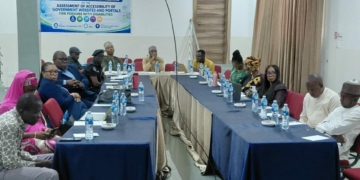
Recently, the NAGGW, in furtherance of its determination to boost women’s participation in climate action, spearheaded the validation of the Green Women Platform, an initiative of the Pan-African Great Green Wall across nations, designed to place women at the centre of environmental restoration, climate resilience and sustainable development.
The DG of NAGGW described the platform as a major step towards ensuring that women are not merely seen as victims of climate change but as leaders of environmental solutions.
According to the DG, the initiative would provide women with increased access to economic opportunities in reforestation, renewable energy, sustainable agriculture, and green enterprises.
“The platform presents a significant opportunity for Nigeria and the Pan-African Great Green Wall initiative to move from concept to action,” he stated during the validation workshop in Abuja.
He asserted, and quite rightly so, that women remain central to land management and food production across rural northern communities, making their inclusion vital to the success of climate adaptation programmes.
The Green Women Platform is expected to establish governance structures and implement a practical action plan centred on empowering women through climate-smart agriculture, land restoration, and environmental entrepreneurship.
Experts say such inclusion could be transformative, particularly in communities where women bear the greatest impact of climate change and environmental degradation, including water shortages, declining agricultural yields, and household food insecurity.
For many Nigerians, climate change is no longer just an abstract concept but a harsh reality reflected in displacement, food insecurity, and declining livelihoods. To an average Nigerian living in vulnerable communities, climate change signifies loss of income, displacement, and tough living conditions.
In recent years, the agency has also adopted community-based approaches that promote private participation in forestry development. Abubakar revealed that the government now champions private forest ownership, enabling individuals and communities to invest in timber production, orchards, and sustainable forest management.
Environmental advocates view this policy direction as a strategic attempt to reduce pressure on public forests while promoting long-term investment in ecological sustainability.
Despite these interventions, significant challenges persist. Limitations in funding, insecurity in parts of the North-East, and weak enforcement of environmental laws continue to hinder restoration efforts. In many rural regions, poverty still fuels illegal logging and the unsustainable use of natural resources.
Nonetheless, environmental stakeholders argue that the growing scale of NAGGW’s interventions reflects increasing recognition that environmental security is directly tied to economic stability and national development.
For communities battling desertification, shrinking water sources and declining agricultural yields, the success of the Great Green Wall initiative may ultimately determine whether future generations inherit productive landscapes or expanding deserts.
As Nigeria grapples with worsening climate pressures, the agency’s ambitious target of planting millions of trees represents more than an environmental campaign. For many vulnerable communities across the Sahel belt, it has become a race to restore livelihoods, preserve ecosystems and secure survival in one of Africa’s most climate-threatened regions.
Now more than ever, there is a pressing need to strengthen NAGGW, whose renewed strategy now combines environmental restoration with economic sustainability.
We’ve got the edge. Get real-time reports, breaking scoops, and exclusive angles delivered straight to your phone. Don’t settle for stale news. Join LEADERSHIP NEWS on WhatsApp for 24/7 updates →
Join Our WhatsApp Channel