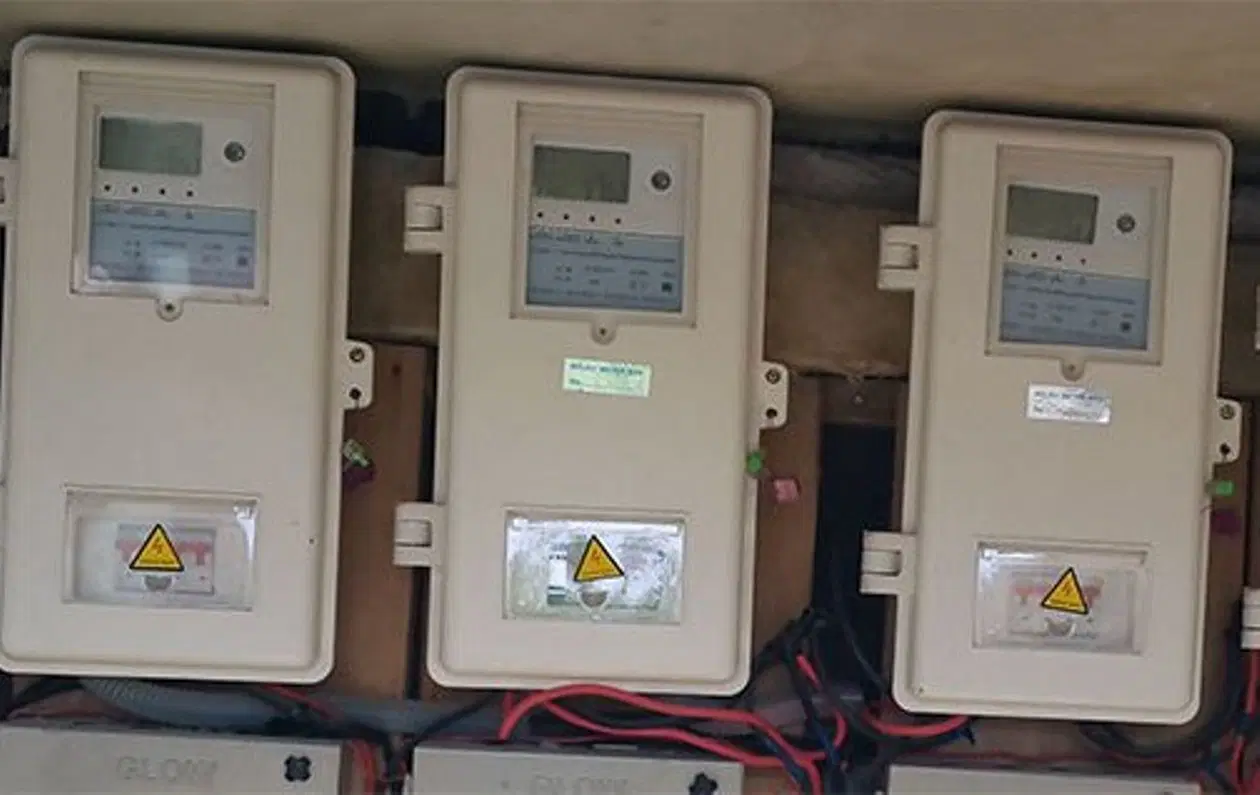
Residents of Byazhin, Kubwa and Dei-Dei communities in the Bwari area council of the Federal Capital Territory (FCT) have raised fresh concerns over persistent and excessive estimated electricity billing, despite poor and irregular power supply.
The residents who spoke to LEADERSHIP in Abuja at the weekend accused the electricity distribution company, Abuja Electricity Distribution Company (AEDC) of imposing arbitrary charges on households and small businesses without corresponding power consumption.
Many of them said the situation had become unbearable amid the rising cost of living, adding that the inability to access prepaid meters had further worsened their plight.
The residents urged AEDC to intensify efforts on mass distribution and installation of prepaid meters to ensure transparency, accountability and fairness in electricity billing.
A resident of Dei-Dei, Suleiman Sani, described estimated billing system as exploitative and disconnected from the realities faced by consumers who often endure prolonged blackouts.
According to him, households are still slammed with huge bills even after spending days without electricity supply.
“Sometimes, we stay without power for days, yet the bills still come with huge amounts,” he lamented.
Sani explained that many families were already struggling to survive under current economic conditions and could no longer cope with the increasing electricity charges.
He argued that prepaid meters would help consumers monitor their actual electricity usage and eliminate arbitrary billing practices.
“I believe if we have the prepaid meters, the charges will be less because it will only go high when there’s light and you use appliances,” he said.
The resident disclosed that although he was still making efforts to acquire a prepaid meter for his household, the process had not been easy.
Another resident, Okechukwu Anthony, expressed concern that the continued use of estimated billing in several communities was unfair, especially to low-income earners already burdened by inflation and rising living expenses.
He noted that the absence of prepaid meters had created room for inconsistencies and disagreements between consumers and electricity providers.
According to her, estimated billing lacks transparency because there is no reliable way of determining the exact amount of electricity consumed by each household.
“Many residents are being charged for electricity they did not consume. Also, it is difficult for the electricity company to actually measure what a household had consumed within the stipulated period. So there is this and many inconsistencies, but with the meter, it is different,” he said.
Anthony further appealed to electricity providers to improve power supply across affected communities, saying residents were subjected to unnecessary hardship by paying high bills without enjoying stable electricity.
He stressed that many households now spend additional money on fuel and alternative power sources to cope with the erratic electricity supply.
In Kubwa, another resident, Comfort Agbo, who operates a resturant, said the rising electricity charges were crippling small businesses and reducing profits.
Agbo urged the AEDC to speed up the installation of prepaid meters in communities yet to benefit from the initiative.
She explained that transparent billing would help consumers properly track their usage and reduce disputes over electricity charges.
“Prepaid meters will help consumers monitor their usage and avoid exploitation through estimated bills. It is important because apart from our household, the rising charges are negatively affecting our businesses too.
“The bills are too high for small businesses like mine. I spend more on electricity and fuel, leaving little or no profit. We hardly have light for long hours, yet the bills keep increasing every month,” she said
She also called on stakeholders in Nigeria’s power sector to invest more in electricity infrastructure, improve customer service delivery and restore public confidence in the system.
The residents collectively maintained that access to prepaid meters would not only ensure fairness in billing but also encourage energy conservation and strengthen trust between consumers and electricity distribution companies.
They warned that unless urgent steps were taken to address the challenges of estimated billing and poor power supply, more households and small businesses could face severe economic hardship.
We’ve got the edge. Get real-time reports, breaking scoops, and exclusive angles delivered straight to your phone. Don’t settle for stale news. Join LEADERSHIP NEWS on WhatsApp for 24/7 updates →
Join Our WhatsApp Channel