By Bashir Ibrahim Hassan
One year to the end of President Bola Ahmed Tinubu’s first term in office, as Nigerians and indeed the wider world assess the administration’s scorecard, a pertinent question arises: who are the biggest contributors to the success stories being recorded?
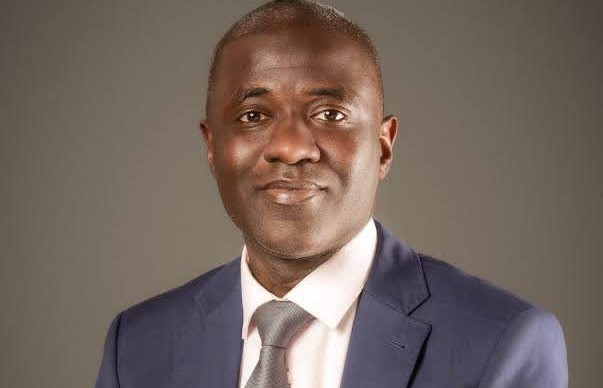
A very strong candidate is Aminu Maida, Executive Vice Chairman/CEO, Nigerian Communications Commission (NCC). Listen to what Mr President himself said in the run-up to the third anniversary of his inauguration: “We took decisive action to stabilise the telecommunications sector, which remains one of the most important drivers of modern economic growth.”
The President noted that this intervention, coming after years of severe operational pressures and declining investment, has gradually restored confidence in the sector. According to him, telecom operators are expanding networks, investing in infrastructure, recruiting Nigerian talent and widening digital access across the country. “A connected Nigeria is a more competitive Nigeria,” Tinubu said, adding that digital infrastructure is now essential to commerce, education, innovation and national productivity.
Indeed, this optimism is corroborated by the National Bureau of Statistics (NBS), which recently reported that Nigeria’s telecommunications sector recorded its strongest real gross domestic product (GDP) growth in the first quarter of 2026, reinforcing its position as one of the country’s most resilient economic engines despite broader macroeconomic pressures.
According to NBS, the Telecommunications and Information Services sector expanded by 12.24 per cent in real terms year-on-year in Q1 2026, accelerating sharply from 7.82 percent in the corresponding period of 2025 and 4.04 per cent in Q1 2024. The performance made telecommunications one of the fastest-growing sectors in the Nigerian economy and a key contributor to overall GDP growth of 3.89 percent during the quarter.
The figures highlight a sector that has moved beyond post-pandemic recovery and into a new phase of structural expansion. Growth is increasingly being driven by rising data consumption, deeper broadband penetration, fintech adoption, enterprise digitisation, cloud services, and growing demand for the digital infrastructure underpinning artificial intelligence, e-commerce, and Nigeria’s broader technology ecosystem.
What is particularly notable is that telecoms is expanding at a pace more than three times faster than the overall economy. As businesses, financial institutions, government agencies, and consumers become increasingly dependent on digital platforms, telecommunications is evolving from a standalone industry into critical national infrastructure – powering productivity, financial inclusion, innovation, and economic competitiveness across multiple sectors.
This is the kind of good news that defines successful administrations. It is the kind of news that governments point to when they argue that reforms are beginning to yield results. And Maida, who has shown since his appointment on October 11, 2023 that he is equal to the task entrusted to him, deserves his share of the applause.
Telecommunications, on a massive scale, is changing Nigerians’ lives for the better. It powers commerce, banking, education, healthcare, entertainment, social interaction, public administration and the everyday productivity of millions of Nigerians. It is difficult to imagine modern Nigeria functioning without it. Yet where is the applause for the monumental impact it is making? Why, instead, is the loudest conversation often about the “poor network” that regularly hampers mobile telephony services?
To be sure, those frustrations are real. Nobody enjoys dropped calls, sluggish internet speeds or intermittent connectivity. Consumers are right to demand better service. But public frustration sometimes obscures a larger truth: beneath the complaints and the occasional outages, one of the most significant transformations in Nigeria’s economy is quietly taking place.
For many Nigerians, dropped calls, poor connectivity and slow internet speeds have become accepted inconveniences of modern life. However, what is often missing from public discourse is an appreciation of the structural challenges involved in delivering reliable telecommunications services in a country of more than 200 million people spread across vast and diverse terrain.
It is also easy to overlook the fact that the NCC under Maida has been guided by principles of fairness, firmness and forthrightness in carrying out its responsibilities as the nation’s telecommunications regulator. “I think there is a lot that we can do better,” he admits. “So, using the right regulatory framework, we can change things.” That statement is important because it reflects neither complacency nor defensiveness. Rather, it reflects an understanding that regulation must evolve continuously to meet changing realities.
In an era where many public officials seek visibility, Maida appears more interested in results. Like his late father, Maida Wada, the respected journalist and former managing director of the News Agency of Nigeria (NAN), Aminu Maida goes about his duties with little fanfare. He is self-effacing, quietly efficient and guided by a strong sense of professionalism in confronting intricate and multidimensional challenges.
His academic credentials are formidable. With a doctor of philosophy (PhD) in Electrical and Electronic Engineering from the University of Bath in the United Kingdom, a Master’s degree in Information Systems Engineering from Imperial College London and a Postgraduate Diploma in Entrepreneurship from Cambridge Judge Business School, he is as articulate as they come. Yet credentials alone do not solve problems.
Before his appointment as Executive Vice Chairman/CEO of the NCC, Maida served as Executive Director, Technology and Operations at the Nigeria Inter-Bank Settlement System (NIBSS), where he oversaw critical technology infrastructure supporting the country’s financial ecosystem.
Prior to that, he was Chief Technology Officer at ARCA Payments Network. Earlier still, he worked with British Telecom as a Lead Consultant and with Cisco Systems in the United Kingdom. This combination of telecommunications, technology and payments experience has proven valuable in understanding the increasingly interconnected nature of Nigeria’s digital economy. Over the past two years, improving Quality of Service has become a central regulatory priority for the Commission.
What perhaps distinguishes him is a clear understanding of the role of regulation in driving growth, innovation and consumer protection. He has also been quick to acknowledge the productive working relationship he enjoys with Dr. Bosun Tijani, minister of Communications, Innovation and Digital Economy.
– Hassan contributed this from Abuja
We’ve got the edge. Get real-time reports, breaking scoops, and exclusive angles delivered straight to your phone. Don’t settle for stale news. Join LEADERSHIP NEWS on WhatsApp for 24/7 updates →
Join Our WhatsApp Channel