By CHIKA IZUORA, ABIODUN SIVOWAKU, ANDREW OJIEZEL, OLAMIDE OJUOKAIYE, Lagos
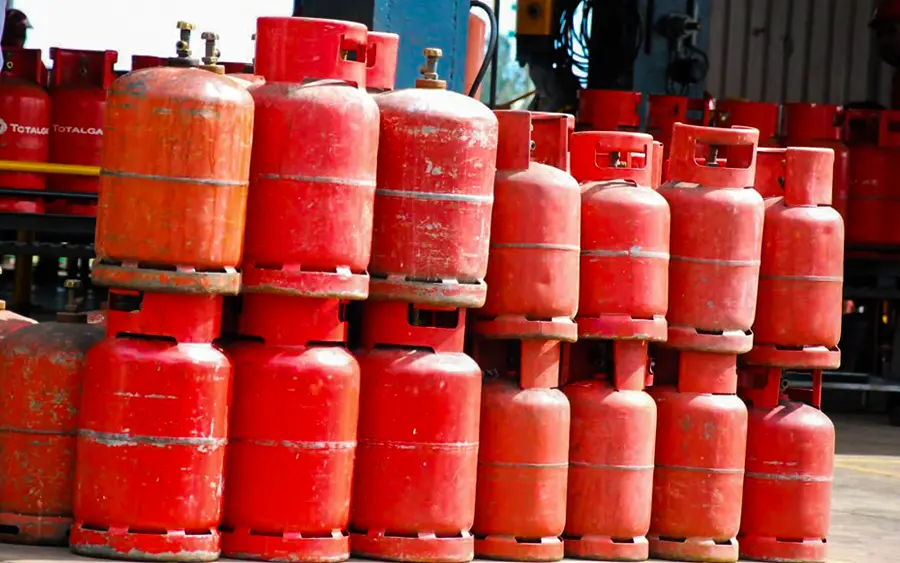
There are indications that the price of Liquefied Petroleum Gas (LPG), also called cooking gas, would soon come down following the resumption of importation by marketers and off-takers.
However, LEADERSHIP gathered from marketers that the distribution structure they adopted is currently creating uncertainty about the pricing structure.
While the product sells between N1,800 and N1,700 per kg in some outlets, distributors have fixed their prices at N1,900 to N2,000 per kg.
The chairman of the Liquefied Petroleum Gas Retailers Association of Nigeria, Ayobami Olarinoye, highlighted that there is a gap between key marketers and plant operators who are licensed to import the product.
Olarinoye notes that a price hike might persist despite expectations of fresh supply, including cargoes from NLNG.
The Nigerian Midstream and Downstream Petroleum Regulatory Authority (NMDPRA) reported that about 4.8 million kilogrammes of LPG were consumed daily in April at a peak price of N1,450 per kilogramme, translating to N209.5 billion for the month. With prices now hovering around N2,050, total consumer spending on LPG is projected to surge by an additional N88 billion this month.
He attributed the price spike to a combination of global supply disruptions, rising logistics costs and local market constraints.
According to him, the LPG market has been particularly affected by geopolitical developments, which disrupted key supply routes and reduced output from major producing regions.
Olarinoye said that, though the resumption of importation is expected to make the product available, marketers prefer to service their outlets first, while distributors who reach out more to consumers receive only insignificant quantities, even at the prices the marketers charge their retail outlets.
They adjust their prices because they are in business, selling at N1,900-N2,000 per kg.
He said the importation of the products commenced when Dangote Refinery decided to export much of its LPG, as that is more profitable.
Our correspondent gathered that while Dangote initially supplied about 10 per cent of its available LPG for local commercial use, the remaining two-thirds of its LPG production is dedicated as commercial feedstock for its polypropylene and fertiliser manufacturing plants.
On the other hand, the refinery now exports a large quantity of the product to other West African countries to earn more value.
Despite the localised volume split, Dangote’s intervention initially stabilised the domestic cooking gas market.
The refinery’s ex-depot price then serves as a benchmark that forces competing depots and marketers to keep retail prices in check.
The massive price drop outpaces competitors like Matrix, Ardova, and NIPCO.
However, when the refinery begins operating more on commercial considerations and volume exports, marketers like Ardova return to importing the product, but the exchange rate keeps the price rising.
Olarinoye, however, said many marketers are unwilling to import due to the high exchange rate, and when those products arrive, they prefer to service their outlets to retain customer satisfaction.
He observed that LPG shipments into the country have done little to improve availability as prices soar and consumers groan under rising energy costs.
The retailers said cooking gas supply remained severely constrained, warning that scarcity and high prices may persist if the government fails to address the situation.
The situation has made it extremely difficult for retailers to obtain gas from plant operators, thereby worsening supply challenges in the downstream market.
The price hike has further worsened the misery Nigerians already faced with high cost of living pressures, with headline and food inflation at 26.50 per cent and 16.09 percent in April 2026.
The development worsened the affordability of cooking gas for the majority of Nigerians, who are now hit with an increased burden.
Our correspondent, who monitored the situation, reports that a gas station in Ikeja is selling at N1,700 per kilogramme.
A customer who came around to refilled said he checked many other stations, the one selling at N1,700 is the cheapest. And once the price goes up here, it’s usually more expensive elsewhere.
“On June 1st, I bought gas at N1,600, thinking it was already high, but I did not know that the price would rise further.” Among the stations I checked around Ikeja, the cheapest remains N1,700,” he said.
A gas attendant at Oba-Akran explained that supply is low, saying, “We don’t even get gas; we are going to stop selling.” He mentioned that the small amount of gas they currently have was brought in from Port Harcourt.
“At the Mega Station in Abattoir, Agege, I had to buy it at N1,850 when my wife called to say our gas had finished yesterday. The one selling at N1,700 in Ikeja is still better. But in some areas, street agents sell even higher. At Allen, prices range between N2,200 and N2,300.
A consumer in Agege said he bought at N2,000, blaming the rising costs on the current government. He pointed out that during Buhari’s time, the APC blamed the PDP, but now, under another APC government, gas prices are still climbing, showing the problem lies with them.
Findings by LEADERSHIP from OPIC, along Lagos-Ibadan Expressway down to Magboro showed that prices of cooking gas, kerosene and charcoals have, as of Tuesday, June 9, risen above the reach of the ordinary people.
At Ketu Market and also in Apapa Ajegunle markets, a litre of kerosene has risen to N2,100. Inside Magboro, a litre of kerosene is N2,500, a small nylon pack of charcoal, which would barely be enough to boil water, is N400, and the prices of coal-pots have risen as most people who cannot access firewood have now resorted to charcoal-pots.
Meanwhile, eateries are smiling at banks as most people have set aside their homemade cooking until the prices of kerosene or cooking gas come down.
However, Mr Aliu Alibalogun, a resident in Magboro and others charged the government to set up a price control mechanism.
“Now we are all witnesses to the high cost of goods and services. But unfortunately, even the Tinubu-led administration might bring down the prices later, traders will not; they only react to price increments but will not adjust whenever the prices of those goods and services are brought down.”
It would be recalled that due to severe supply shortages and exchange rate instability, cooking gas prices in parts of Lagos range from N1,700 to N2,700 per kilogram. The price of 50kg at the “All Seasons Gas” station is N100,000; at the major Gas Depot, “Dee Tawak Petroleum and Gas”, inside Magboro, 12.5kg refills exceed N23,500; while at dealers on the Opic, Lagos-Ibadan Expressway, it is N1,750 for 12.5kg.
Residents of the Arepo community along the Lagos-Ibadan Expressway are also grappling with a fresh rise in cooking gas prices following the shutdown of Greg Gas, one of the area’s major LPG plants.
The development has reduced consumer supply options and triggered sharp price increases across the community, forcing many households to spend more on a basic cooking necessity.
Findings in the area showed that Julanky Filling Station, operating a gas plant within the community, is selling 12 kilograms of cooking gas for about N21,500. However, the situation is even worse in several neighbourhood retail outlets and local gas shops, where the same quantity now sells for as much as N24,000, raising concerns among residents already battling rising living costs.
Some residents told LEADERSHIP that the closure of Greg Gas has effectively created a supply gap, leaving consumers with limited alternatives and exposing them to higher prices.
They lamented that cooking gas, once considered a relatively affordable and cleaner cooking fuel, is increasingly unaffordable for many families, with some households reportedly reducing consumption or reverting to alternative energy sources.
Residents have called for urgent intervention to address supply challenges and encourage greater competition in the local LPG market. While community stakeholders warned that unless more outlets are brought into operation and supply stabilises, consumers in these border towns and other neighbouring communities may continue to face escalating prices, further worsening the economic burden on households.
We’ve got the edge. Get real-time reports, breaking scoops, and exclusive angles delivered straight to your phone. Don’t settle for stale news. Join LEADERSHIP NEWS on WhatsApp for 24/7 updates →
Join Our WhatsApp Channel