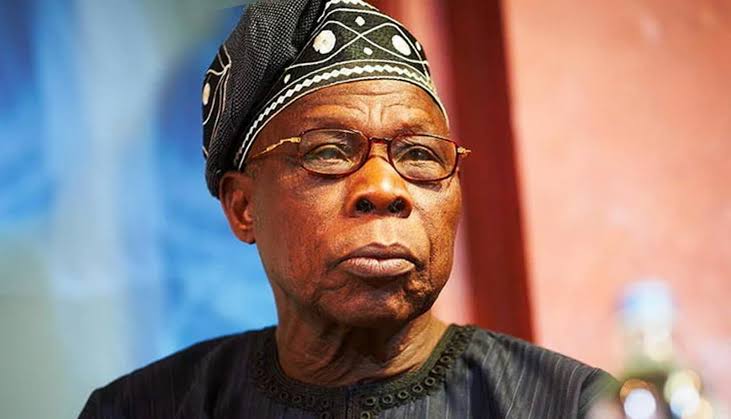
Former President Olusegun Obasanjo has recounted how the Sultan of Sokoto played a key role in helping to resolve sensitive national issues involving the annual Hajj pilgrimage and the introduction of women’s voting rights in Northern Nigeria during his time as military Head of State.
Obasanjo spoke on Saturday in Abuja at the public presentation of three books in honour of former Head of State, General Abdulsalami Abubakar, held at the Presidential Villa.
He said he often sought the counsel of respected national figures, including the Sultan of Sokoto, Sir Kashim Ibrahim and Chief Adebo, when confronted with complex governance challenges.
According to him, one of the most difficult issues at the time was the rising cost of supporting Nigerian pilgrims to Mecca, which had become financially unsustainable for the government.
He recalled that in 1976, about 150,000 Nigerians performed the Hajj with government support, but economic realities made it impossible to maintain the same level of funding the following year.
Obasanjo said he was advised by the late Sir Kashim Ibrahim to consult the Sultan of Sokoto, a meeting which ultimately helped shape a workable solution.
“When I told Sir Kashim Ibrahim, he said, ‘Go to the Sultan.’ Within 48 hours, I was in Sokoto,” he said.
The former President explained that the Sultan helped facilitate discussions that led to a significant reduction in the number of pilgrims to about 48,000, making the arrangement more sustainable.
He said the outcome was widely accepted and helped the government avoid public backlash.
Obasanjo also narrated how he later consulted the Sultan on concerns surrounding the participation of women in elections in Northern Nigeria ahead of the 1979 polls.
He said there were fears that women’s participation might trigger resistance in some communities.
According to him, the Sultan dismissed the concerns and assured him of his support, including a symbolic commitment that helped ease tensions.
“He said, ‘Go home. On the day of election, my wife will be the first to go out and vote,’” Obasanjo recalled.
He said the gesture helped build confidence and ensured a peaceful introduction of women’s participation in the electoral process.
Obasanjo added that the experiences reinforced the importance of dialogue, consultation, and reliance on traditional institutions in managing sensitive national issues.
We’ve got the edge. Get real-time reports, breaking scoops, and exclusive angles delivered straight to your phone. Don’t settle for stale news. Join LEADERSHIP NEWS on WhatsApp for 24/7 updates →
Join Our WhatsApp Channel