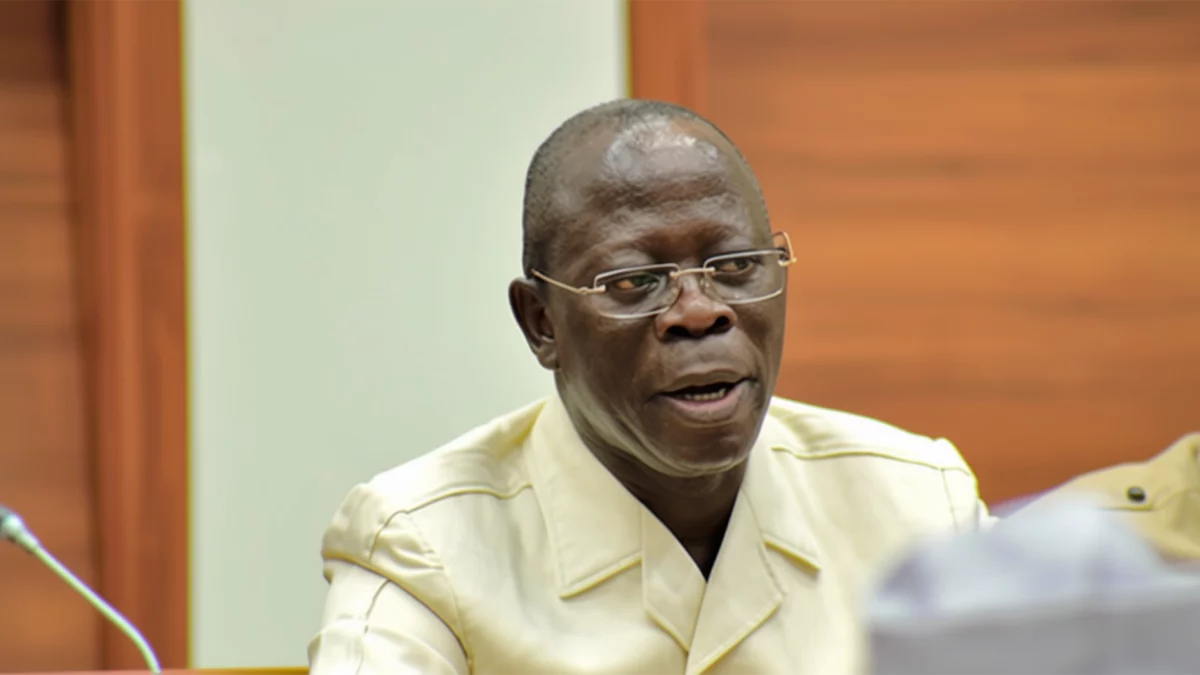
Senator Adams Oshiomhole, representing Edo North Senatorial District, has revealed that some lawmakers questioned the authenticity of signatures on to the committee report that recommended the suspension of the Senator representing Kogi Central, Natasha Akpoti-Uduaghan, from the Senate in 2025, describing the controversy as one of the most challenging moments for the 10th Senate.
Oshiomhole made the disclosure during an interview on AIT’s ‘One-on-One’ programme in Abuja while reflecting on major events that shaped the Senate’s activities over the past legislative year.
The former Edo State governor was responding to remarks reportedly made by the Senate Leader, Opeyemi Bamidele, who described the suspension of Senator Natasha as the lowest point of the Senate’s legislative activities in the last year and perhaps one of the most controversial developments of the current Assembly.
When asked whether he agreed with that assessment, Oshiomhole responded affirmatively.
“If he said that, yes,” he said, adding that the controversy surrounding the matter went beyond the disciplinary action itself and touched on questions about the process that led to the committee’s recommendation.
According to Oshiomhole, concerns emerged after some members of the committee allegedly challenged the inclusion of their names on the report despite not endorsing its findings.
“There are even people who claimed that their signatures were forged on that document,” he stated.
The Senator recalled that Senator Ireti Kingibe had allegedly informed him that she neither signed nor supported the report, yet her name appeared among those listed as endorsing its recommendations.
He explained that under Senate procedures, committees serve as critical instruments for legislative oversight and investigations. Such committees are expected to conduct hearings, receive submissions from interested parties, review evidence and arrive at findings and recommendations before presenting their reports to the Senate for consideration at plenary.
Oshiomhole stressed that committee reports derive their legitimacy from the collective endorsement of members, which is typically signified through their signatures.
“The members of the committee are expected to sign that report because it is the collective decision of the committee. To sign is to endorse,” he said.
He further noted that lawmakers who disagree with a committee’s findings have the right to withhold their signatures or formally register their dissent.
“Where members do not accept the content, they can abstain from signing it,” he added.
The Edo North Senator also dismissed suggestions that attendance registers could serve as substitutes for signatures endorsing committee reports, insisting that mere attendance at a meeting does not amount to agreement with the conclusions reached.
According to him, questions raised by some lawmakers regarding the endorsement process contributed significantly to the controversy that followed Senator Natasha’s suspension and fueled public debate about the matter.
Oshiomhole maintained that strict adherence to parliamentary procedures remains essential to preserving the credibility of the Senate and public confidence in its decisions.
He emphasised that committee reports must accurately reflect the positions of members and comply with established legislative rules to safeguard the integrity of the lawmaking process.
We’ve got the edge. Get real-time reports, breaking scoops, and exclusive angles delivered straight to your phone. Don’t settle for stale news. Join LEADERSHIP NEWS on WhatsApp for 24/7 updates →
Join Our WhatsApp Channel