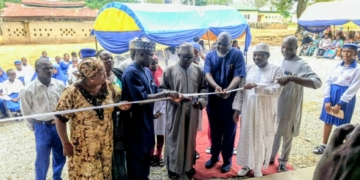
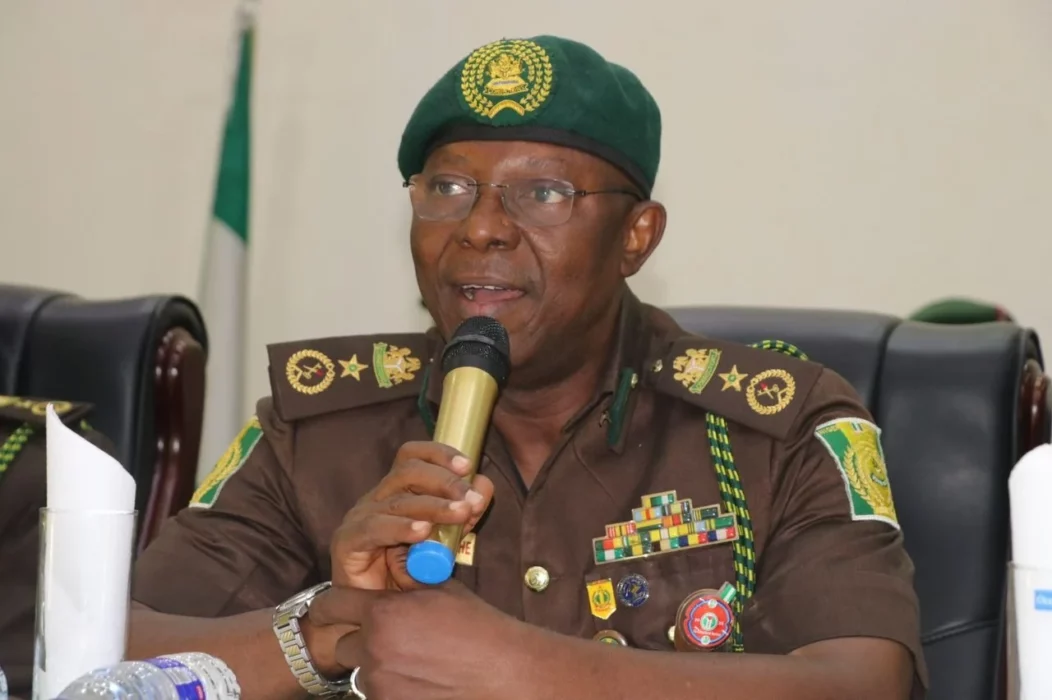
The Nigerian Correctional Service (NCoS) has recorded a historic breakthrough in correctional administration with the country’s first-ever parole release under the Nigerian Correctional Service Act, 2019, as the Controller General of Corrections, Sylvester Ndidi Nwakuche, announced the reappointment of members of the National and State Parole Boards for a fresh three-year tenure.
Addressing stakeholders during the reappointment ceremony in Abuja, Nwakuche described the development as a landmark achievement in Nigeria’s correctional reform journey.
Nwakuche, who was represented at the event by the Deputy Controller, Human Resources, Ado Sale, said the milestone followed the successful release of parolees in Umuahia, Abia State, on June 11, 2026 , the first official parole release since the enactment of the NCoS Act.
He said, “Four days ago, the Nigerian Correctional Service recorded a moment that will be written into the annals of correctional history in this country: the first-ever official release of parolees under the NCoS Act 2019,” the Controller-General said.
He noted that the event demonstrated that the parole system established under the Act was now fully operational, describing it as “living proof” that years of planning and institutional reforms were yielding results.
Nwakuche said the National Parole Board, established under the NCoS Act, plays a critical role in coordinating parole administration nationwide, evaluating eligible inmates for supervised release, handling appeals and complaints, and ensuring uniform implementation across the federation.
He commended members of the Board for their contributions since their inauguration in August 2022, saying their efforts had culminated in the historic parole release recorded in Abia State.
He announced the reappointment of the National Parole Board and the continuation of State Parole Boards across the 36 states and the Federal Capital Territory (FCT) for another three years, effective immediately.
Charging members to justify the confidence reposed in them, Nwakuche urged them to uphold integrity, transparency, professionalism and fairness in all parole decisions, stressing that their responsibilities directly impact public safety, justice delivery and offender rehabilitation.
He also called on government institutions, criminal justice stakeholders and development partners to continue supporting the parole system, describing offender reintegration as a shared national responsibility.
He further revealed that the breakthrough in Abia State saw the release of 10 inmates under the parole framework established by the NCoS Act, marking the first practical implementation of parole in Nigeria.
The CG said the development represents a major shift towards modern correctional practices centred on rehabilitation, reintegration, restorative justice and the decongestion of custodial centres.
Nwakuche explained that parole is a globally recognised correctional mechanism that allows carefully selected inmates to return gradually to society under supervision while maintaining public safety and accountability.
He expressed confidence that the programme would reduce recidivism, strengthen rehabilitation efforts, support successful community reintegration and ease overcrowding in correctional facilities nationwide.
The CG particularly commended the Abia State command, the State Parole Board, the judiciary and other criminal justice stakeholders for pioneering the initiative and setting a model for implementation across the country.
Earlier, the founder and executive director/president of Prisoners’ Rehabilitation and Welfare Action (PRAWA), Prof Uju Agomoh, emphasised the need for deliberate and sustained support for the implementation of non-custodial measures across the country. She noted that effective implementation of parole requires adequate funding, operational resources, and collaboration among the public sector, private sector, and regulatory institutions.
Prof Agomoh stressed the importance of integrating all aspects of the non-custodial justice system, explaining that offenders serving non-custodial sanctions in communities should remain under appropriate supervision while efforts are made to promote reconciliation between offenders, victims, families, and affected communities.
According to her, community justice and restorative justice mechanisms are critical to ensuring that all stakeholders remain connected and engaged in the rehabilitation and reintegration process.
She described the symbolic presentation of awards during the event as a recognition of outstanding contributions to the advancement of non-custodial measures, while encouraging recipients and stakeholders to continue strengthening the system.
The PRAWA president also highlighted the importance of information, education, and communication materials in supporting implementation and increasing public awareness.
She called for wider dissemination of such materials to enable Nigerians to better understand and embrace non-custodial measures as a permanent feature of the country’s justice system.
The PRAWA president further noted that community participation remains essential to the success of the initiative, adding that community service programmes and other non-custodial interventions should be showcased to demonstrate their impact and encourage greater public support.
She also commended the provision of uniforms and other materials for professional officers and offenders engaged in community service programmes, describing them as important tools for effective implementation.
We’ve got the edge. Get real-time reports, breaking scoops, and exclusive angles delivered straight to your phone. Don’t settle for stale news. Join LEADERSHIP NEWS on WhatsApp for 24/7 updates →
Join Our WhatsApp Channel