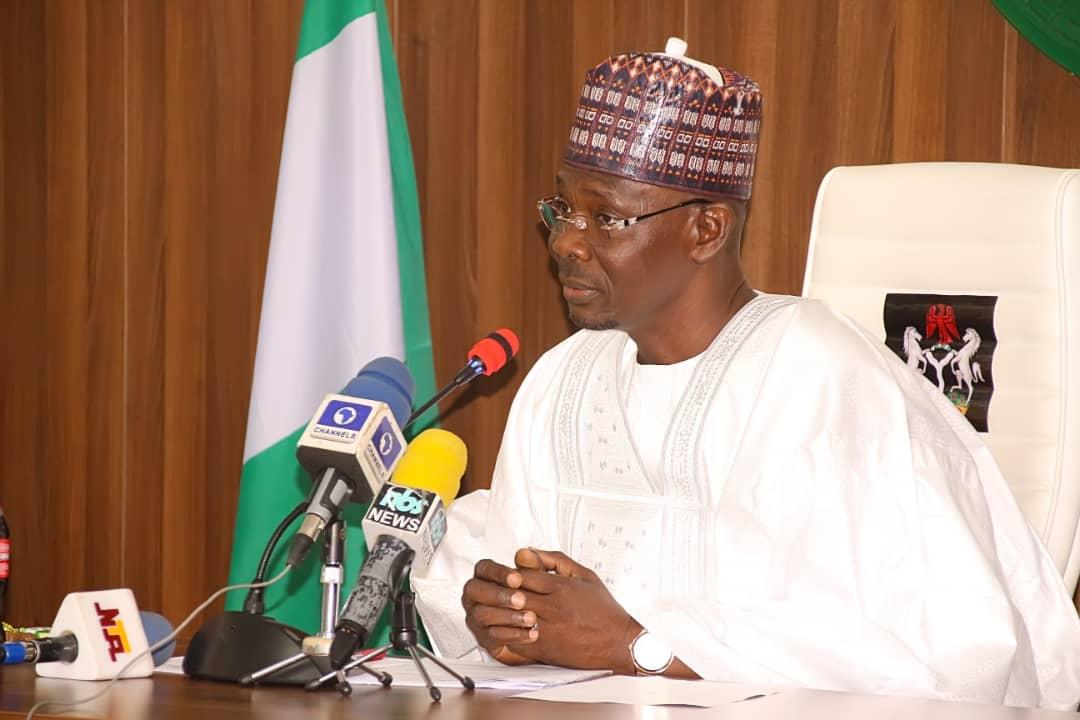
Governor Abdullahi Sule has chaired the inaugural meeting of the Nasarawa State Low Emission Development Strategy, NASLEDS, Steering Committee at the Government House, Lafia, as the state formally began its push to transition 1 million households to cleaner cooking alternatives by 2030.
Nasarawa is one of three states selected by the Federal Government for the Clean Cookstove Pilot Project, alongside Lagos and Akwa Ibom. The steering committee will serve as the apex governance organ for NASLEDS, handling policy direction, oversight, and coordination of the 10-year plan.
Survey Data Sets the Baseline
Habiba Balarabe, Director-General of the Nasarawa State Human Capital Development Agency and secretary to the technical working group, presented findings from a comprehensive cooking fuel survey conducted in March 2026. The survey covered 1,232 households and 334 businesses across six local government areas.
The data showed 82.4% of households in the state currently cook with firewood or charcoal, with over 40% reporting health problems linked to cooking smoke. Women and girls bear 93.2% of cooking responsibility across surveyed households.
Despite the heavy reliance on traditional fuels, 92.5% of households indicated willingness to switch to cleaner cooking technologies — a rate nearly double the national average of 52%.
Three-Phase Plan to 2035
Adnan Aminu, speaking for project consultant Murty International Limited, outlined the draft NASLEDS roadmap spanning 2026 to 2035.
Phase 1: 2026-2028 will focus on distributing 125,000 improved cookstoves, establishing three pilot briquette production facilities, and launching a behavioural change communication campaign.
Phase 2: 2029-2031 targets scaling up and transitioning 100,000 households to liquefied petroleum gas through a pay-as-you-go model. The model allows households to purchase gas in 0.5kg or 1kg quantities.
Phase 3: 2032-2035 aims to reach over 80% of households with clean cooking solutions, establish 25 briquette production facilities, and pilot electric cooking using mini-grid power systems.
The improved cookstoves will use briquettes produced from agricultural waste abundant in Nasarawa, including rice husk, sawdust, and cassava stalks. Total investment for the plan is estimated at $62.4 million, expected to be financed largely through carbon credit revenues and blended financing mechanisms.
The meeting also highlighted that Wamba Local Government Area accounts for the highest volume of charcoal production in the state, with approximately 10 trucks leaving the area daily for markets across Nigeria, including Kano.
Governor’s Directive
Governor Sule commended his deputy, Dr. Emmanuel Akabe, who chairs the technical working group, and the consultants for the quality of work delivered. He expressed satisfaction with the high percentage of households willing to transition, but noted that rural communities would require sustained sensitisation since firewood gathering is not perceived as a cost.
The Governor directed all steering committee members to attend the stakeholder validation workshop scheduled for Wednesday. He urged them to engage critically with the draft documents to ensure the strategy fits Nasarawa’s realities.
“I want to reaffirm the commitment of the Nasarawa State Government to this initiative. We believe strongly that this is the right thing to do,” Governor Sule stated.
The NASLEDS framework aligns with Nigeria’s Nationally Determined Contributions and the national long-term low emission development strategy, which targets net zero emissions by 2060.
We’ve got the edge. Get real-time reports, breaking scoops, and exclusive angles delivered straight to your phone. Don’t settle for stale news. Join LEADERSHIP NEWS on WhatsApp for 24/7 updates →
Join Our WhatsApp Channel